Course note: এই lecture-এ National University syllabus-এর terminology exam alignment-এর জন্য বজায় রাখা হয়েছে। Modern phylogeny যেখানে traditional textbook classification থেকে আলাদা, সেখানে দুটো framework স্পষ্টভাবে আলাদা করে দেখানো হয়েছে।
Chordate Plan and Classification
The Puzzle: দেখতে আলাদা, body plan-এ এক
একটি Ascidia, একটি Branchiostoma, একটি shark, একটি pigeon এবং একজন মানুষকে পাশাপাশি রাখলে external appearance দেখে এদের একই phylum-এ রাখার কারণ বোঝা কঠিন। Adult Ascidia-তে তো typical “fish-like” body-ও নেই। তবু এরা সবাই chordate।
এখানেই প্রথম বড় শিক্ষা:
Classification appearance-এর তালিকা নয়; এটি shared body-plan, development এবং derived characters-এর উপর দাঁড়ানো evidence-based explanation।
এই lecture শেষে তুমি বুঝতে পারবে:
- chordate হওয়ার জন্য কোন characters সত্যিই diagnostic;
- কেন adult-এ character অনুপস্থিত হলেও embryonic/larval evidence গুরুত্বপূর্ণ;
- notochord আর vertebral column এক জিনিস নয় কেন;
- endostyle–thyroid relationship কেন evolutionary evidence;
- Urochordata, Cephalochordata এবং vertebrate lineages কীভাবে আলাদা;
- NU 223101-এর linear study sequence-কে evolutionary ladder হিসেবে পড়া ভুল কেন;
- ক, খ ও গ বিভাগের classification প্রশ্ন কীভাবে লিখতে হয়।
1. Chordata কী?
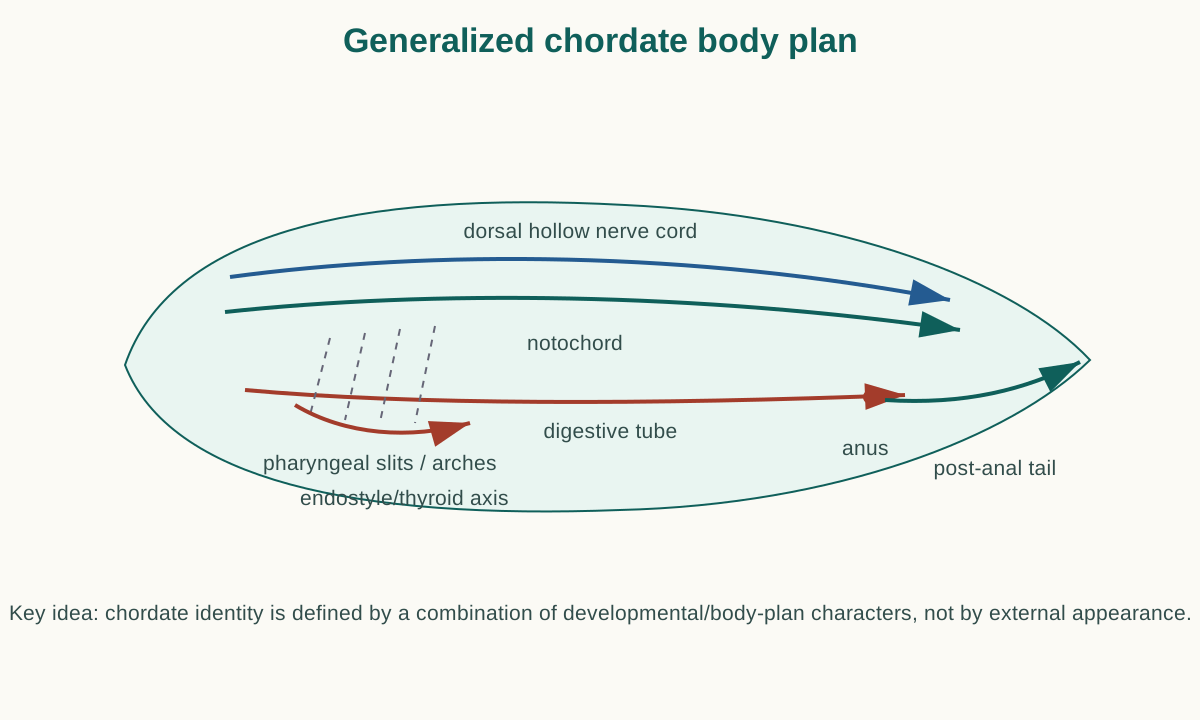
Chordata হলো bilaterally symmetrical, triploblastic, coelomate deuterostome animals-এর একটি phylum, যাদের জীবনচক্রের কোনো না কোনো stage-এ chordate body plan-এর characteristic structures দেখা যায়।
সবচেয়ে গুরুত্বপূর্ণ diagnostic set হলো:
- Notochord
- Dorsal hollow nerve cord
- Pharyngeal slits / pharyngeal apparatus
- Endostyle or its vertebrate homologue, the thyroid
- Post-anal tail
এই পাঁচটির সবকটি adult-এ সব chordate-এ দৃশ্যমান থাকতে হবে না। অনেক ক্ষেত্রে এগুলো embryonic বা larval stage-এ থাকে, পরে পরিবর্তিত, reduced বা lost হয়।
2. Diagnostic character আর general character-এর পার্থক্য
একটি general character অনেক taxon-এ থাকতে পারে। যেমন bilateral symmetry chordate-এ আছে, কিন্তু arthropod বা annelid-এও আছে। তাই এটি একা chordate শনাক্ত করতে পারে না।
একটি diagnostic character taxon শনাক্ত করতে বেশি শক্তিশালী evidence দেয়। যেমন notochord chordate identity বোঝার কেন্দ্রীয় character।
Chordata-এর general characters
- bilateral symmetry
- triploblastic organization
- true coelom
- deuterostome developmental ancestry
- organ-system grade of organization
- complete alimentary canal
- internal axial support prominent in many groups
- cephalization vertebrates-এ strongly developed
- segmented axial musculature বিশেষত cephalochordates ও vertebrates-এ গুরুত্বপূর্ণ
Socratic checkpoint
Question: “Animal swims” এবং “animal has a notochord”—দুটির মধ্যে classification-এর জন্য কোন evidence শক্তিশালী?
Answer logic: Swimming হলো ecological/functional trait; unrelated animals independentভাবে swimming body form অর্জন করতে পারে। Notochord body-plan/developmental evidence, তাই এটি অনেক বেশি diagnostic।
3. পাঁচটি chordate hallmark গভীরভাবে
3.1 Notochord
Notochord হলো mesoderm-derived flexible axial supporting rod, যা digestive tube-এর dorsal দিকে এবং dorsal nerve cord-এর ventral দিকে থাকে।
প্রধান কাজ
- embryonic body axis স্থাপন করা;
- axial support দেওয়া;
- segmental muscle contraction-এর বিরুদ্ধে flexible resistance তৈরি করা;
- vertebrate embryo-তে neural tube এবং axial skeleton patterning-এ developmental signalling role রাখা।
কোন group-এ কী হয়?
- Branchiostoma: adult-এও notochord থাকে এবং anterior end পর্যন্ত বিস্তৃত।
- Tunicate larva: tail region-এ notochord থাকে; adult ascidian-এ lost হয়।
- Lamprey/hagfish: notochord গুরুত্বপূর্ণ axial structure হিসেবে persistent।
- Jawed vertebrates: embryo-তে notochord থাকে; vertebral column develop হওয়ার সঙ্গে সঙ্গে অধিকাংশ অংশ replaced/reduced হয়।
Notochord ≠ vertebral column
| Notochord | Vertebral column |
|---|---|
| mesodermal axial rod | serial skeletal vertebrae |
| সব chordate lineage-এর defining developmental structure | vertebrate innovation |
| flexible | cartilage/bone দ্বারা comparatively rigid support |
| embryo-তে universal chordate hallmark | vertebrates-এ characteristic |
Exam trap: “Vertebrates-এর notochord নেই” লেখা ভুল। সঠিক হলো: vertebrate embryo-তে notochord থাকে; পরে vertebral column-এর বিকাশের সঙ্গে এটি largely replaced বা transformed হয়।
3.2 Dorsal hollow nerve cord
Chordates-এর nervous system-এর characteristic central axis হলো dorsal hollow nerve cord।
এটি:
- ectoderm থেকে তৈরি;
- notochord-এর dorsal দিকে থাকে;
- tube-like lumen ধারণ করে;
- vertebrates-এ brain ও spinal cord-এর precursor।
কেন “dorsal” ও “hollow” গুরুত্বপূর্ণ?
অনেক protostome animal-এ principal nerve cords ventral এবং solid pattern-এর হতে পারে। Chordate-এ dorsal tubular nervous axis একটি major body-plan distinction।
Functional progression
Embryonic neural plate
        ↓
Neural folds
        ↓
Neural tube
        ↓
Anterior expansion → brain
Posterior tube → spinal cord
3.3 Pharyngeal slits, pouches and arches
Pharynx হলো mouth-এর posterior region। Chordates-এর development-এ এখানে paired pharyngeal structures তৈরি হয়।
Aquatic lower chordates ও fishes-এ
- water passage,
- filter feeding,
- respiration,
- gill support-এর সঙ্গে সম্পর্কিত।
Tetrapods-এ
external gill slit হিসেবে adult-এ না থাকলেও embryonic pharyngeal arches/pouches থেকে head–neck-এর বহু structure develop করে।
অতএব মানুষের adult গলায় “gill slit” খুঁজে না পেলেও embryology chordate relationship-এর evidence দেয়।
Important distinction
Pharyngeal slits থাকা মানেই vertebrate নয়। Hemichordates-এর মতো কিছু deuterostome-এও pharyngeal openings আছে। Chordate diagnosis তাই একটি character নয়, character combination-এর উপর দাঁড়ায়।
3.4 Endostyle ↔ Thyroid
Endostyle হলো lower chordates-এর pharyngeal floor-এ ciliated, mucus-secreting groove/organ। Filter feeding-এ mucus food particle trap করতে সাহায্য করে।
কিন্তু এর আরও গভীর evolutionary significance আছে:
- endostyle iodine concentrate/organify করতে পারে;
- thyroid-related genes এবং biochemical machinery-এর homology পাওয়া যায়;
- vertebrate thyroid-এর সঙ্গে evolutionary homology শক্তিশালী;
- lamprey ammocoete larva-র endostyle metamorphosis-এর সময় follicular thyroid-এ রূপান্তরিত হয়।
Evolutionary bridge
Non-vertebrate chordate endostyle
        ↓
Iodine-binding / thyroid-related molecular functions
        ↓
Lamprey larval endostyle
        ↓ metamorphosis
Follicular thyroid
        ↓
Vertebrate thyroid system
এই কারণে modern accounts প্রায়ই endostyle/thyroid-কে chordate hallmark হিসেবে গণ্য করে।
3.5 Post-anal tail
Post-anal tail হলো anus-এর posterior দিকে body extension।
কাজ
- fishes ও lancelets-এ locomotion;
- terrestrial vertebrates-এ balance, display, communication;
- কিছু lineage-এ reduction বা loss।
Humans-এর ক্ষেত্রে
Human embryo-তে transient tail region থাকে। Development-এর সঙ্গে এটি regress করে; adult-এ external post-anal tail থাকে না। Coccyx tail-bearing ancestry-এর skeletal remnant/derivative, কিন্তু adult coccyx-কে “post-anal tail” বলা ঠিক নয়।
4. একই chordate character কোথায় visible থাকে?
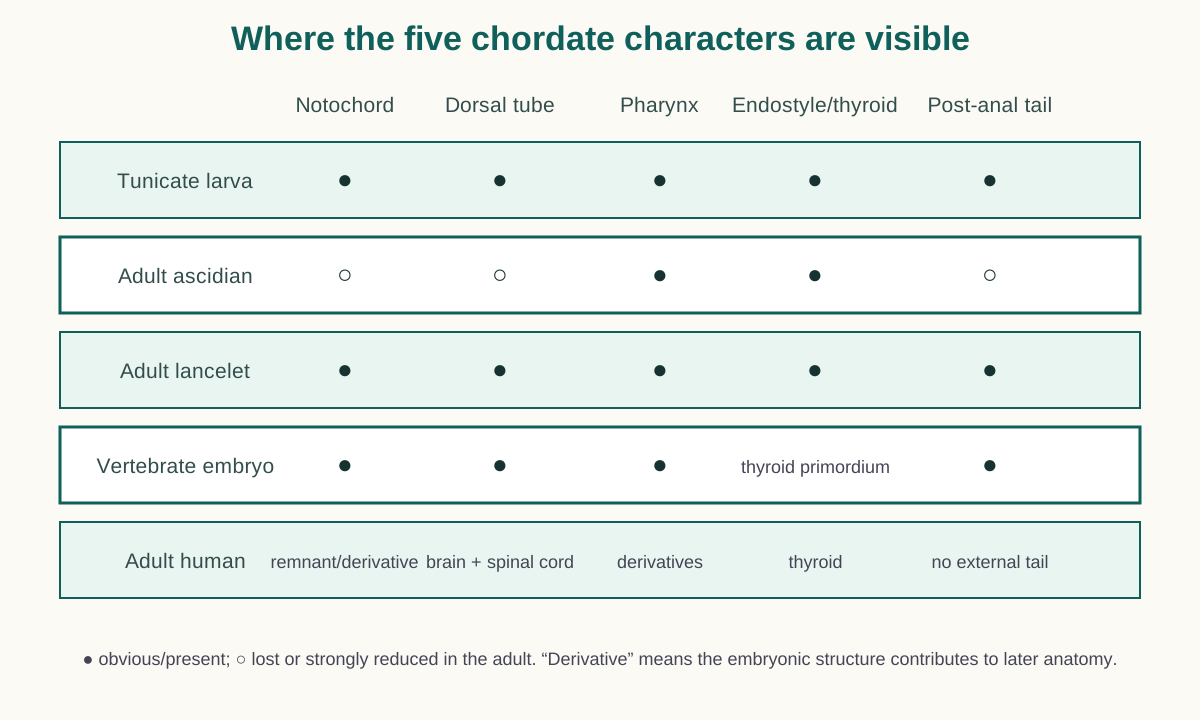
এই table-টির lesson খুব গুরুত্বপূর্ণ:
Adult morphology alone classification-এর সব evidence দেয় না। Developmental stage অনেক সময় hidden relationship প্রকাশ করে।
Ascidia এর classic example। Adult sessile filter feeder-এ notochord ও dorsal nerve cord নেই, কিন্তু tadpole larva-তে chordate hallmarks খুব স্পষ্ট।
5. Chordate body plan-এর আরও গুরুত্বপূর্ণ features
পাঁচ diagnostic character ছাড়াও chordates-এর comparative anatomy বোঝার জন্য কয়েকটি broad pattern গুরুত্বপূর্ণ।
5.1 Deuterostome relationship
Chordates deuterostome evolutionary lineage-এর অংশ। Echinoderms ও hemichordates-এর সঙ্গে deep ancestry share করে। Classical embryology-তে blastopore fate, radial cleavage এবং enterocoely deuterostome pattern হিসেবে শেখানো হয়, যদিও real developmental diversity textbook summary-এর চেয়ে বেশি complex।
5.2 Internal axial support
Notochord প্রথম axial support; vertebrates-এ cartilage/bone-based endoskeleton এবং vertebral column complex support system তৈরি করে।
5.3 Segmented musculature
Branchiostoma-এর myotomes এবং vertebrates-এর axial muscles comparative segmentation দেখায়।
5.4 Closed circulatory tendency
Cephalochordates ও vertebrates-এ closed vascular pattern prominent; তবে “সব chordate-এর একই circulatory system” বলা যাবে না। Tunicate circulation structurally unusual এবং heart flow periodically reverse করতে পারে।
6. Chordata-এর তিন living major lineages
Modern phylogeny broadly তিনটি extant chordate lineage চিনে:
- Cephalochordata — lancelets
- Tunicata (traditional Urochordata) — tunicates/sea squirts
- Vertebrata / Craniata — hagfishes, lampreys এবং jawed vertebrates
Important modern correction
Older morphology-based teaching-এ অনেক সময় Cephalochordata-কে vertebrates-এর closest living relative বলা হতো। Molecular phylogenomics দেখায় Tunicata + Vertebrata একটি clade (Olfactores) এবং Cephalochordata earlier-branching chordate lineage।
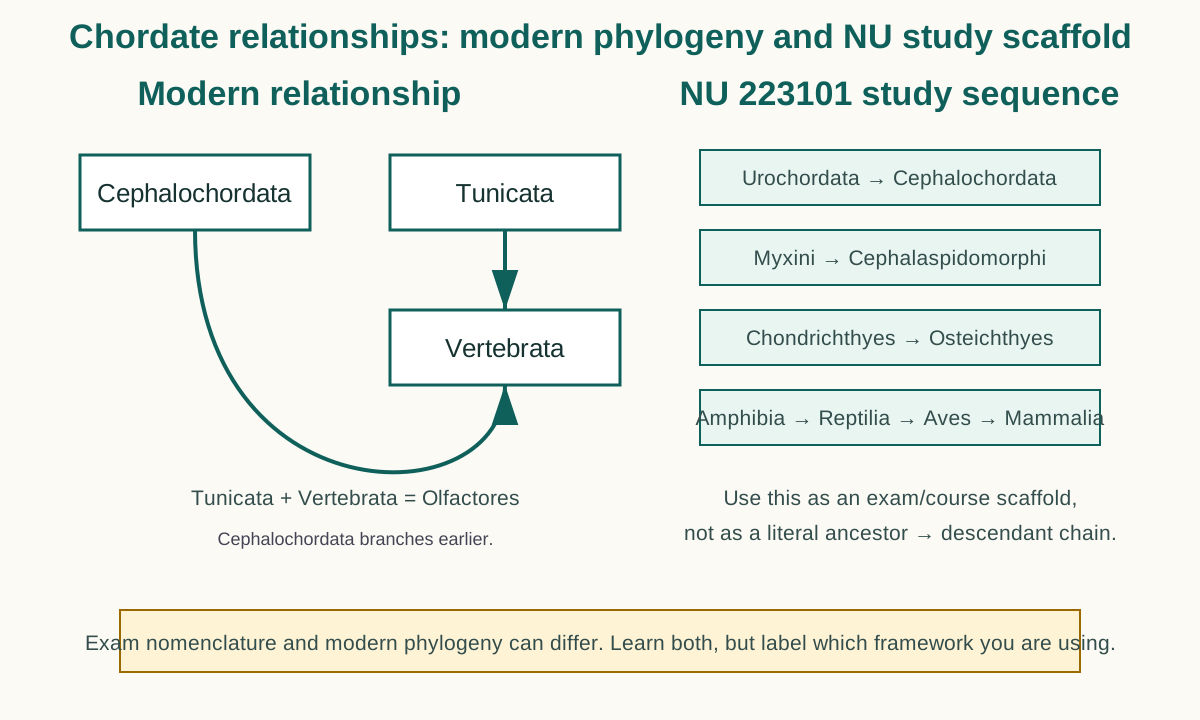
Exam rule
NU syllabus-এর sequence:
Urochordata → Cephalochordata → Myxini → Cephalaspidomorphi → Chondrichthyes → Osteichthyes → Amphibia → Reptilia → Aves → Mammalia
এটি study scaffold, ancestor-to-descendant chain নয়।
কোন modern animal “পরবর্তী group-এ পরিণত হয়েছে” এমনভাবে answer লিখবে না।
7. NU 223101 Taxon Map
National University syllabus broad classification up to orders, general ও diagnostic characters, examples এবং affinities চায়। Type study হিসেবে Ascidia, Branchiostoma, Myxine, Petromyzon, Scoliodon, Labeo rohita, Bufo, Hemidactylus, Columba livia এবং Homo sapiens নির্ধারিত।
7.1 Urochordata / Tunicata
Diagnostic idea
Adult body সাধারণত sac-like; tunic দ্বারা আবৃত। Tadpole larva-তে notochord ও dorsal nerve cord prominent; adult ascidian-এ tail, notochord ও অধিকাংশ dorsal nerve cord lost/reorganized।
Course representative
Ascidia
Exam significance
Adult appearance দেখে chordate identity বোঝা যায় না; development decisive evidence।
7.2 Cephalochordata
Diagnostic idea
Notochord adult stage-এ থাকে এবং anterior tip পর্যন্ত যায়; cranium ও vertebral column নেই; segmented myotomes; pharynx large filter-feeding organ।
Course representative
Branchiostoma
Key order
Amphioxiformes / Branchiostomiformes terminology sourceভেদে পরিবর্তিত হতে পারে।
7.3 Myxini
Diagnostic idea
Jawless marine craniates; hagfish। Slime glands prominent; keratinous tooth plates; paired fins absent; vertebral elements very reduced/absent in the classical sense।
Course representative
Myxine
Key order
Myxiniformes
Modern note
Hagfishes এবং lampreys molecular evidence অনুযায়ী together Cyclostomata গঠন করে।
7.4 Cephalaspidomorphi / lamprey group
NU syllabus পুরোনো/classical rank Cephalaspidomorphi ব্যবহার করে।
Diagnostic idea
Jawless, eel-like lampreys; suctorial oral disc; seven pairs of branchial openings typical; ammocoete larva।
Course representative
Petromyzon
Key order
Petromyzontiformes
7.5 Chondrichthyes
Diagnostic idea
Cartilaginous endoskeleton; placoid scales common; jaws and paired fins present; multiple gill slits; swim bladder absent; internal fertilization common, males with claspers।
Course representative
Scoliodon
Broad modern subdivision
- Elasmobranchii — sharks, skates, rays
- Holocephali — chimaeras
7.6 Osteichthyes — traditional exam usage
Traditional Zoology classification-এ bony fishes-কে Osteichthyes হিসেবে শেখানো হয়।
Diagnostic idea
Endoskeleton largely ossified; gills usually operculum দ্বারা covered; swim bladder frequently present; fin rays common।
Course representative
Labeo rohita
Order
Cypriniformes
Modern note
Modern cladistics-এ “bony vertebrates” বা Osteichthyes/Sarcopterygii-এর relationship tetrapods পর্যন্ত বিস্তৃতভাবে discuss করা হয়। NU exam-এ traditional fish-class usage অনুসরণ করবে, modern note আলাদা রাখবে।
7.7 Amphibia
Diagnostic idea
Ectothermic tetrapods; skin moist/glandular; larval aquatic respiration ও adult pulmonary/cutaneous respiration common; reproduction often water/moisture-dependent; anamniotic eggs।
Course representative
Bufo (modern genus treatments may place many former Bufo species elsewhere)
Living orders
- Anura — frogs and toads
- Caudata / Urodela — salamanders and newts
- Gymnophiona / Apoda — caecilians
7.8 Reptilia — NU exam framework
Diagnostic idea
Keratinized epidermal scales; amniotic development; lungs; internal fertilization; stronger terrestrial independence।
Course representative
Hemidactylus
Living orders
- Testudines
- Rhynchocephalia
- Squamata
- Crocodylia
Modern phylogenetic note
Birds archosaur lineage-এর অংশ। তাই modern cladistics-এ “reptiles excluding birds” paraphyletic framework হতে পারে। NU syllabus exam purpose-এ Aves-কে আলাদা class হিসেবে পড়ে।
7.9 Aves
Diagnostic idea
Feathers unique hallmark; forelimbs wings; lightweight but highly specialized skeleton; endothermy; four-chambered heart; rigid lungs + air sacs; hard-shelled amniotic eggs।
Course representative
Columba livia
Order
Columbiformes
Taxonomy note
Modern bird taxonomy dozens of living orders recognize করে এবং molecular data অনুযায়ী order-level arrangement update হয়। Exam-এ departmental/prescribed classification follow করবে।
7.10 Mammalia
Diagnostic idea
Hair, mammary glands, three middle-ear ossicles, muscular diaphragm, heterodont teeth typical, endothermy।
Course representative
Homo sapiens
Order
Primates
Major evolutionary groups
- Monotremata — egg-laying mammals
- Marsupial lineages
- Placental mammals
8. Agnatha, Cyclostomata ও Gnathostomata
এই terms ক-বিভাগে খুব গুরুত্বপূর্ণ।
Agnatha
Agnatha = jawless vertebrates বোঝাতে traditional descriptive grouping। Living forms হলো hagfishes ও lampreys।
Cyclostomata
Modern molecular evidence অনুযায়ী hagfishes + lampreys একটি monophyletic clade Cyclostomata।
Gnathostomata
Gnathostomata = jawed vertebrates। Chondrichthyes এবং bony-vertebrate lineageসহ tetrapods এই clade-এর অন্তর্ভুক্ত।
Jaw-এর evolutionary significance
Jaw acquisition:
- active predation/food processing বাড়ায়;
- paired appendage ও branchial-arch specialization-এর সঙ্গে major vertebrate radiation-এ যুক্ত;
- sensory ও locomotor systems-এর diversification-এর সঙ্গে coevolve করেছে।
9. Chondrocranium কী?
Chondrocranium হলো embryonic/primary cartilaginous neurocranium যা brain ও major sensory capsules-এর চারপাশে skeletal support গঠন করে।
Chondrichthyes-এ adult skull largely cartilaginous হওয়ায় termটি বিশেষভাবে noticeable, কিন্তু developmental chondrocranium শুধু sharks-এর property নয়; vertebrate skull development-এর broad concept।
One-mark answer:
“Brain ও প্রধান sense organs-কে ঘিরে গঠিত primary cartilaginous neurocranium-কে chondrocranium বলে।”
10. Affinity বলতে কী বোঝায়?
Affinity কেবল বাহ্যিক resemblance নয়। Taxa-এর মধ্যে shared structural, developmental এবং evolutionary characters-এর ভিত্তিতে relationship আলোচনা করাই affinity analysis।
একটি ভালো affinity answer-এর তিন অংশ:
- Similarities / shared characters
- Important differences
- Interpretation — similarities কী ধরনের relationship নির্দেশ করে এবং differences কেন taxonomic separation justify করে
Example
Branchiostoma ও vertebrates দুটিতেই notochord, dorsal tubular nerve cord, pharyngeal apparatus ও segmented axial muscles আছে। কিন্তু Branchiostoma-তে cranium, vertebral column, chambered heart ও complex paired sense organs নেই। তাই এটি vertebrate নয়, কিন্তু chordate body plan তুলনার জন্য মূল্যবান।
11. Classification কীভাবে logically করতে হবে?
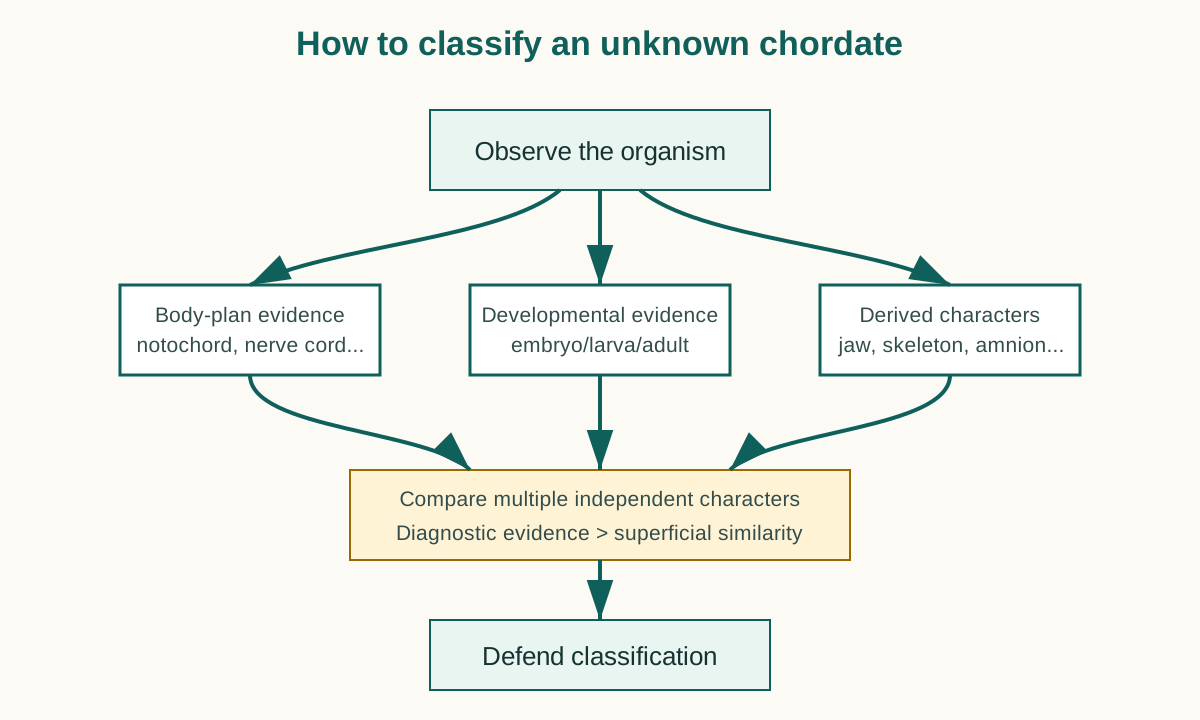
একটি unknown animal পেলে এই order অনুসরণ করো:
Step 1 — Superficial observation
Body shape, habitat, locomotion দেখো, কিন্তু verdict দিও না।
Step 2 — Body-plan characters
Notochord? dorsal nerve tube? pharyngeal apparatus? tail? endostyle/thyroid axis?
Step 3 — Development
Character adult-এ নেই? Larva/embryo-তে আছে কি?
Step 4 — Derived vertebrate characters
Cranium, vertebrae, jaws, paired appendages, amnion, feathers, hair, mammary glands ইত্যাদি।
Step 5 — Multiple evidence মিলাও
একটি character-এর উপর classification দাঁড় করিও না।
Step 6 — Closest alternatives বাদ দাও
“কেন এই group, পাশের group নয়?” — এই question classification answer-কে শক্তিশালী করে।
12. Socratic Case Studies
Case 1 — Adult Ascidia
Adult animal sessile; tail নেই; notochord নেই। Chordate?
Reasoning: larval stage-এ notochord, dorsal hollow nerve cord, post-anal tail এবং pharyngeal characters থাকে। Adult-এ pharyngeal basket ও endostyle থাকে। Developmental evidence chordate identity establish করে।
Case 2 — Whale
Streamlined body, fins-like flippers, aquatic habitat। Fish?
No. Mammary glands, hair during life history, lungs, three middle-ear ossicles, mammalian jaw/teeth and reproduction deeper diagnostic evidence। Aquatic shape convergent adaptation।
Case 3 — Bird and reptile
Bird feathered ও endothermic; reptile scaly ও ectothermic। সম্পূর্ণ unrelated?
No. Modern phylogeny birds-কে archosaur reptiles-এর lineage-এর মধ্যে স্থাপন করে। কিন্তু NU exam framework Aves ও Reptilia-কে separate classes হিসেবে পড়ায়। Framework label না দিলে answer ambiguous হতে পারে।
13. Traditional exam framework বনাম modern phylogeny
| বিষয় | Traditional / NU-friendly framing | Modern phylogenetic framing |
|---|---|---|
| Urochordata | lower chordate group | Tunicata; sister to Vertebrata within Olfactores |
| Cephalochordata | vertebrate-like lower chordate | earlier-branching living chordate lineage |
| Hagfish + lamprey | often separate traditional classes/groups | monophyletic Cyclostomata strongly supported |
| Osteichthyes | bony fish class | bony-vertebrate clades are nested more broadly |
| Reptilia + Aves | separate classes | birds are within archosaur/reptile lineage |
| “primitive” | ancestral-character language | avoid treating living taxa as inferior/unfinished |
Exam writing rule:
প্রথমে syllabus-compatible nomenclature ব্যবহার করো। শেষে ১–২ লাইনে modern note দেওয়া যায়, কিন্তু traditional answer-কে modern terminology দিয়ে এমনভাবে বদলে দিও না যাতে examiner-এর expected framework অস্পষ্ট হয়।
14. ক-বিভাগ — Complete Exam Capsule
1. Notochord কী?
Answer: Chordate embryo-তে digestive tube ও dorsal nerve cord-এর মাঝখানে অবস্থিত mesoderm-derived flexible axial supporting rod-কে notochord বলে।
2. Endostyle কী?
Answer: Lower chordates-এর pharyngeal floor-এ অবস্থিত ciliated mucus-secreting groove, যা filter feeding-এ food trap করে এবং vertebrate thyroid-এর homologous precursor হিসেবে বিবেচিত।
3. Agnatha কী?
Answer: Jaws-বিহীন vertebrate forms-কে traditionalভাবে Agnatha বলা হয়; living examples hagfish ও lamprey।
4. Gnathostomata কী?
Answer: Jaws-যুক্ত vertebrates-এর clade-কে Gnathostomata বলে।
5. Chondrocranium কী?
Answer: Brain ও major sensory organs-কে ঘিরে থাকা primary cartilaginous neurocranium-কে chondrocranium বলে।
One-mark rule
Term + precise definition + one distinguishing clue — ২–৩ sentence-এর বেশি নয়।
15. খ-বিভাগ — Model Answer 1
Urochordata ও Cephalochordata-এর মধ্যে পার্থক্য
| Feature | Urochordata / Tunicata | Cephalochordata |
|---|---|---|
| Adult habit | অধিকাংশ ascidian sessile | free-living/burrowing |
| Body covering | tunic present | tunic absent |
| Notochord | larval tail-এ; adult ascidian-এ lost | adult-এ persistent, anterior end পর্যন্ত |
| Dorsal nerve cord | larva-তে clear; adult-এ reduced | adult-এ persistent |
| Segmentation | myotomal segmentation adult ascidian-এ নেই | myotomes prominent |
| Pharynx | large filter-feeding basket | large filter-feeding pharynx |
| Circulation | heart present; flow reversal characteristic in many ascidians | true chambered heart absent |
| Reproduction | many ascidians hermaphrodite | sexes usually separate |
| Example | Ascidia | Branchiostoma |
Conclusion
দুটি group chordate হলেও Urochordata-তে larval chordate plan metamorphosis-এর পর strongly modified হয়, যেখানে Cephalochordata adult stage-এ classic chordate plan retain করে।
16. খ-বিভাগ — Model Answer 2
Notochord ও vertebral column-এর পার্থক্য
- Notochord continuous flexible rod; vertebral column serial vertebrae-এর chain।
- Notochord সব chordate lineage-এর developmental hallmark; vertebral column vertebrate specialization।
- Notochord embryo-তে early axial scaffold; vertebral column পরে cartilage/bone দিয়ে develop করে।
- Branchiostoma-তে notochord adult-এ principal support; mammals-এ vertebral column প্রধান support।
- Notochord-এর remnant কিছু vertebrate intervertebral-disc structures-এর সঙ্গে developmental relation রাখে, groupভেদে persistence ভিন্ন।
17. গ-বিভাগ — Model Long Answer
“Chordata-এর diagnostic characters আলোচনা কর এবং major groups-এর classification outline দাও।”
Introduction
Chordata হলো deuterostome animals-এর একটি major phylum। এদের life cycle-এর কোনো stage-এ notochord, dorsal hollow nerve cord, pharyngeal apparatus, endostyle/thyroid relationship এবং post-anal tail দেখা যায়। এই shared body-plan characters বাহ্যিক appearance-এর চেয়ে classification-এ বেশি গুরুত্বপূর্ণ।
A. Diagnostic characters
1. Notochord: mesodermal axial supporting rod; embryo-তে fundamental body-axis structure।
2. Dorsal hollow nerve cord: ectodermal neural tube; vertebrates-এ brain ও spinal cord তৈরি করে।
3. Pharyngeal slits/arches: feeding/respiration বা head-neck derivatives-এর সঙ্গে যুক্ত।
4. Endostyle/thyroid: lower chordates-এ endostyle; vertebrates-এ thyroid homologous system।
5. Post-anal tail: anus-এর posterior body extension, অন্তত developmental stage-এ।
B. General characters
Bilateral symmetry, triploblasty, coelom, deuterostome ancestry, complete gut এবং internal axial support chordate organization-এর broad features।
C. Major living chordate lineages
- Cephalochordata — Branchiostoma
- Tunicata/Urochordata — Ascidia
- Vertebrata/Craniata — jawless ও jawed vertebrates
D. 223101 comparative sequence
Myxini → lamprey group → Chondrichthyes → traditional Osteichthyes → Amphibia → Reptilia → Aves → Mammalia।
E. Evolutionary interpretation
এই sequence একটি teaching scaffold, সরাসরি ancestor–descendant chain নয়। Modern phylogeny Tunicata-কে vertebrates-এর sister group এবং hagfish + lamprey-কে Cyclostomata হিসেবে support করে।
Conclusion
Chordate classification-এর সবচেয়ে শক্তিশালী ভিত্তি হলো shared developmental body plan + derived characters + multiple lines of evidence। শুধু habitat বা external resemblance taxonomic relationship নির্ধারণ করতে পারে না।
18. Diagram Practice
Exam-এর জন্য অন্তত দুটি diagram practice করবে:
Diagram A — Generalized chordate
Label:
- dorsal hollow nerve cord
- notochord
- pharyngeal slits
- endostyle/thyroid position
- gut
- anus
- post-anal tail
Diagram B — Chordate relationship map
Cephalochordata, Tunicata এবং Vertebrata দেখিয়ে Tunicata + Vertebrata = Olfactores note করতে পারো; পাশে NU syllabus study sequence আলাদা box-এ দেখাবে।
19. Common Mistakes
ভুল 1 — “সব adult chordate-এ পাঁচটি character দেখা যায়”
না। কিছু character only larval/embryonic stage-এ থাকে।
ভুল 2 — “Notochord = backbone”
না। Notochord flexible axial rod; vertebral column আলাদা vertebrate skeletal structure।
ভুল 3 — “Ascidia adult-এ notochord নেই, তাই chordate নয়”
Developmental evidence ignore করা হচ্ছে।
ভুল 4 — “Branchiostoma vertebrate”
না। এটি cephalochordate; cranium ও vertebral column নেই।
ভুল 5 — “Fish → amphibian → reptile → bird → mammal” modern species-to-species chain
এটি evolutionary relationship-এর oversimplification। Living groups common ancestors share করে; এক modern group আরেক modern group-এর সরাসরি ancestor নয়।
ভুল 6 — “Bird reptile নয়” modern phylogeny-তে absolute statement
NU class framework-এ Aves separate; modern cladistics birds-কে reptilian/archosaur lineage-এর ভিতরে রাখে। Framework specify করবে।
20. Quick Revision Matrix
| Concept | One-line memory |
|---|---|
| Notochord | flexible embryonic axial rod |
| Dorsal nerve cord | neural tube → brain/spinal cord in vertebrates |
| Pharyngeal apparatus | feeding/respiration/head-neck development |
| Endostyle | mucus + iodine-related function; thyroid homology |
| Post-anal tail | body extends beyond anus at some stage |
| Tunicata | larva shows full chordate plan; adult often modified |
| Cephalochordata | adult retains classic chordate plan |
| Cyclostomata | living jawless vertebrates: hagfish + lampreys |
| Gnathostomata | jawed vertebrates |
| Affinity | shared evidence + differences + interpretation |
21. Self-Test
1. Adult human-এর external tail নেই। তাহলে মানুষ chordate কেন?
Chordate identity adult external tail-এর উপর নির্ভর করে না। Human embryonic development-এ transient post-anal tail এবং অন্যান্য chordate developmental characters থাকে; vertebrate-derived characters-ও chordate ancestry নিশ্চিত করে।2. Endostyle ও thyroid-এর relationship-এর সবচেয়ে striking living example কোনটি?
Lamprey ammocoete larva-র endostyle metamorphosis-এর সময় follicular thyroid-এ পরিবর্তিত হয়।3. Cephalochordata কি vertebrates-এর closest living sister lineage?
Modern molecular phylogenomics অনুযায়ী না। Tunicata + Vertebrata = Olfactores; Cephalochordata earlier-branching living chordate lineage।4. Classification-এ superficial similarity কেন বিপজ্জনক?
Similar habitat analogous/convergent features তৈরি করতে পারে। Multiple developmental ও structural diagnostic characters deeper relationship নির্ধারণে বেশি reliable।22. Transfer Challenge
একটি unknown aquatic animal-এর streamlined body ও fin-like appendage আছে। কিন্তু এটি lungs দিয়ে শ্বাস নেয়, young-কে milk feed করে এবং embryonic stage-এ hair follicles develop করে।
Question: fish না mammal?
Reasoning: aquatic shape ecological adaptation। Mammary glands, hair এবং mammalian developmental characters deeper diagnostic evidence। তাই এটি Mammalia-তে classify হবে।
23. Research-backed Update Notes
এই lecture-এর modern corrections চারটি জায়গায় বিশেষভাবে গুরুত্বপূর্ণ:
- Chordates-এর five-character framework-এ endostyle/thyroid relationship অন্তর্ভুক্ত করা যায়।
- Tunicates vertebrates-এর closest living sister lineage; cephalochordates earlier branch।
- Hagfishes + lampreys-এর monophyletic Cyclostomata recent genomic work-এ strongly supported।
- Traditional NU class/rank nomenclature modern cladistics-এর সঙ্গে সবসময় এক নয়; exam framework ও modern relationship আলাদা করে লিখতে হবে।
References for Course Authors / Further Verification
- National University B.Sc. Honours 2nd Year Zoology syllabus, paper 223101.
- OpenStax Biology 2e, “Chordates.”
- Delsuc F. et al. (2006), Nature: Tunicates and not cephalochordates are the closest living relatives of vertebrates.
- Marlétaz F. et al. (2024), Nature: The hagfish genome and the evolution of vertebrates.
- Endotext/NCBI Bookshelf: Ontogeny, Anatomy, Metabolism and Physiology of the Thyroid.
- Sugahara F. et al. (2022), study of cyclostome endostyle/thyroid development.
- The Reptile Database and IOC World Bird List for modern higher taxonomy.
Next Lecture
Lecture 02 — Ascidia: adult chordate identity, retrogressive metamorphosis, filter feeding and blood circulation.