Course note: National University terminology is retained for exam alignment. Where modern phylogeny differs from traditional textbook classification, the two frameworks are explicitly separated.
Chordate Plan and Classification
The Puzzle: radically different animals, one body-plan history
An Ascidia, a lancelet, a shark, a pigeon and a human look remarkably different. An adult ascidian does not even look like the “typical chordate” imagined from a fish-shaped diagram. Yet all are chordates.
The central principle of this lecture is therefore:
Classification is not a list of appearances. It is an evidence-based explanation built from shared body-plan features, development and derived characters.
By the end of this lecture you should be able to explain:
- which characters are genuinely diagnostic of chordates;
- why embryonic or larval evidence can be decisive even when an adult lacks a character;
- why a notochord is not the same thing as a vertebral column;
- why the endostyle–thyroid relationship matters;
- how Tunicata, Cephalochordata and vertebrate lineages differ;
- why the NU 223101 sequence must not be read as a literal evolutionary ladder;
- how to construct short and long exam answers on chordate classification.
1. What is Chordata?
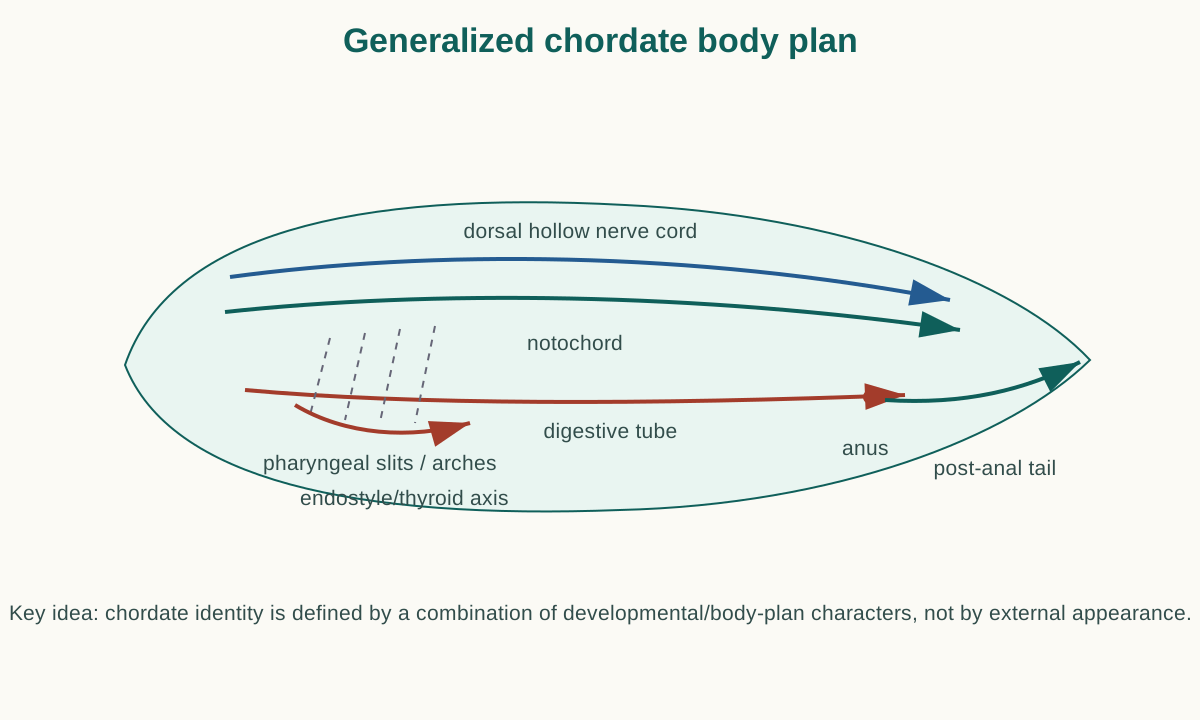
Chordata is a phylum of bilaterally symmetrical, triploblastic, coelomate deuterostome animals in which characteristic elements of the chordate body plan occur at some stage of the life cycle.
The five most useful diagnostic features are:
- Notochord
- Dorsal hollow nerve cord
- Pharyngeal slits / pharyngeal apparatus
- Endostyle or its vertebrate homologue, the thyroid
- Post-anal tail
Not every feature must remain obvious in every adult. A character may appear only in an embryo or larva and later be modified, reduced or lost.
2. Diagnostic characters versus general characters
A general character may occur in many unrelated groups. Bilateral symmetry, for example, is not restricted to chordates.
A diagnostic character has greater power to identify a lineage. The notochord is central because it belongs to the developmental architecture of chordates.
Broad general features of chordates
- bilateral symmetry;
- triploblastic organization;
- a true coelom;
- deuterostome ancestry;
- organ-system level organization;
- a complete alimentary canal;
- strong development of internal axial support in many groups;
- pronounced cephalization in vertebrates;
- important axial segmentation in cephalochordates and vertebrates.
Socratic checkpoint
Which is stronger evidence for classification: “the animal swims” or “the animal has a notochord”?
Swimming is an ecological function that evolved independently in many groups. A notochord is a developmental body-plan character and is therefore far more diagnostic.
3. The five chordate hallmarks
3.1 Notochord
The notochord is a flexible mesoderm-derived axial rod situated dorsal to the digestive tract and ventral to the dorsal nerve cord.
Major functions
- establishes and supports the embryonic body axis;
- provides flexible axial support;
- resists compression during axial muscle contraction;
- participates in developmental signalling that patterns the neural tube and axial skeleton in vertebrates.
Fate in major groups
- Branchiostoma: persists in the adult and extends to the anterior end.
- Tunicate larva: present in the tail; lost during ascidian metamorphosis.
- Lampreys and hagfishes: remains an important axial structure.
- Jawed vertebrates: prominent in the embryo; most of it is later replaced or reduced as the vertebral column develops.
Notochord is not a vertebral column
| Notochord | Vertebral column |
|---|---|
| continuous flexible axial rod | series of vertebrae |
| developmental hallmark of Chordata | major vertebrate skeletal innovation |
| present very early in development | develops later from skeletal tissues around the axial region |
| principal support in lancelets | principal axial support in most adult vertebrates |
Exam trap: It is incorrect to say that vertebrates “do not have a notochord.” Vertebrate embryos possess a notochord; its later fate varies.
3.2 Dorsal hollow nerve cord
The chordate central neural axis begins as a dorsal hollow nerve cord.
It is:
- derived from ectoderm;
- positioned dorsal to the notochord;
- tubular rather than a simple solid cord;
- the precursor of the brain and spinal cord in vertebrates.
Developmental sequence
Neural plate
    ↓
Neural folds
    ↓
Neural tube
    ↓
Anterior expansion → brain
Posterior tube → spinal cord
3.3 Pharyngeal slits, pouches and arches
Chordate development includes a repeated pharyngeal apparatus behind the mouth.
In aquatic lower chordates and fishes
The pharyngeal region may function in:
- passage of water;
- suspension feeding;
- respiration;
- support of the gills.
In tetrapods
Adult external gill slits are usually absent, but embryonic pharyngeal arches and pouches contribute to multiple head and neck structures.
Therefore, the absence of visible adult gill slits does not erase chordate ancestry.
Important caution
Pharyngeal openings by themselves are not enough to diagnose Chordata. Some non-chordate deuterostomes also possess them. Classification depends on a combination of characters.
3.4 Endostyle and thyroid
The endostyle is a ciliated, mucus-secreting organ in the floor of the pharynx of non-vertebrate chordates. Its mucus helps trap suspended food.
Its evolutionary importance is much greater:
- it can concentrate and organify iodine;
- it shares thyroid-related molecular features;
- it is homologous to the vertebrate thyroid system;
- in lamprey ammocoete larvae, the endostyle reorganizes into a follicular thyroid during metamorphosis.
Evolutionary bridge
Endostyle of non-vertebrate chordates
          ↓
Iodine handling + thyroid-related gene network
          ↓
Lamprey larval endostyle
          ↓ metamorphosis
Follicular thyroid
          ↓
Vertebrate thyroid system
This is why many modern descriptions include endostyle/thyroid among the chordate hallmarks.
3.5 Post-anal tail
A post-anal tail is an extension of the body posterior to the anus.
Its functions include:
- locomotion in many aquatic chordates;
- balance and display in terrestrial vertebrates;
- communication in some species.
Humans
Human embryos possess a transient tail region. It regresses during development; adults do not retain an external post-anal tail. The coccyx is a skeletal remnant associated with this evolutionary history, but it is not an external tail.
4. When are the chordate characters visible?
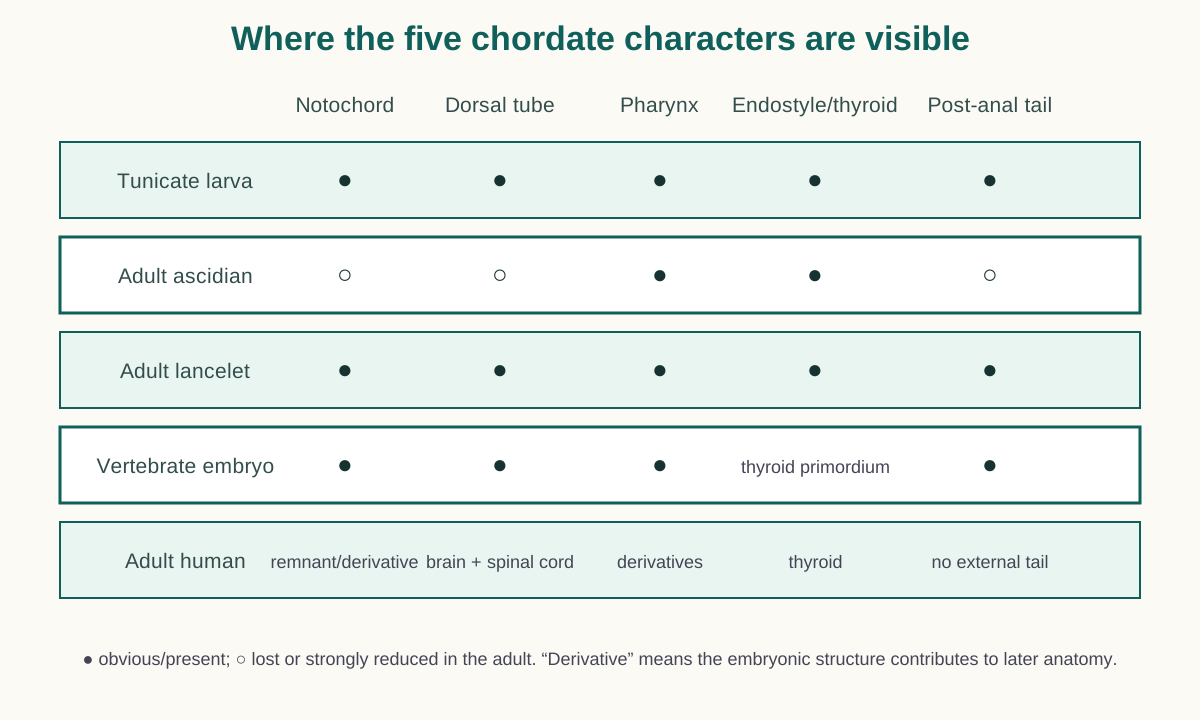
The key lesson is:
Adult morphology alone is not always sufficient. Development can reveal relationships hidden by metamorphosis or reduction.
The classic example is an ascidian: its larva displays the chordate plan much more clearly than the sessile adult.
5. Additional structural themes
5.1 Deuterostome ancestry
Chordates are part of the deuterostome radiation and share deep ancestry with echinoderms and hemichordates. Classical teaching emphasizes patterns such as blastopore fate and enterocoely, although real developmental diversity is more complex than a simple textbook rule.
5.2 Axial support
The notochord is the earliest axial support. Vertebrates subsequently evolved increasingly elaborate cartilaginous and bony endoskeletons and vertebral columns.
5.3 Segmented axial musculature
Lancelet myotomes and vertebrate trunk muscles illustrate an important comparative pattern of axial segmentation.
5.4 Circulatory diversity
Cephalochordates and vertebrates have strongly organized closed vascular patterns, but chordates do not all share one identical circulatory design. Tunicates are a striking exception, with unusual circulation and periodic reversal of heart pumping in many ascidians.
6. The three major living chordate lineages
Modern phylogeny recognizes three major extant chordate lineages:
- Cephalochordata — lancelets
- Tunicata (traditional Urochordata) — tunicates
- Vertebrata / Craniata — hagfishes, lampreys and jawed vertebrates
A major modern correction
Traditional morphology often placed cephalochordates as the closest living relatives of vertebrates. Molecular phylogenomics instead supports Tunicata + Vertebrata as the clade Olfactores, with Cephalochordata branching earlier.
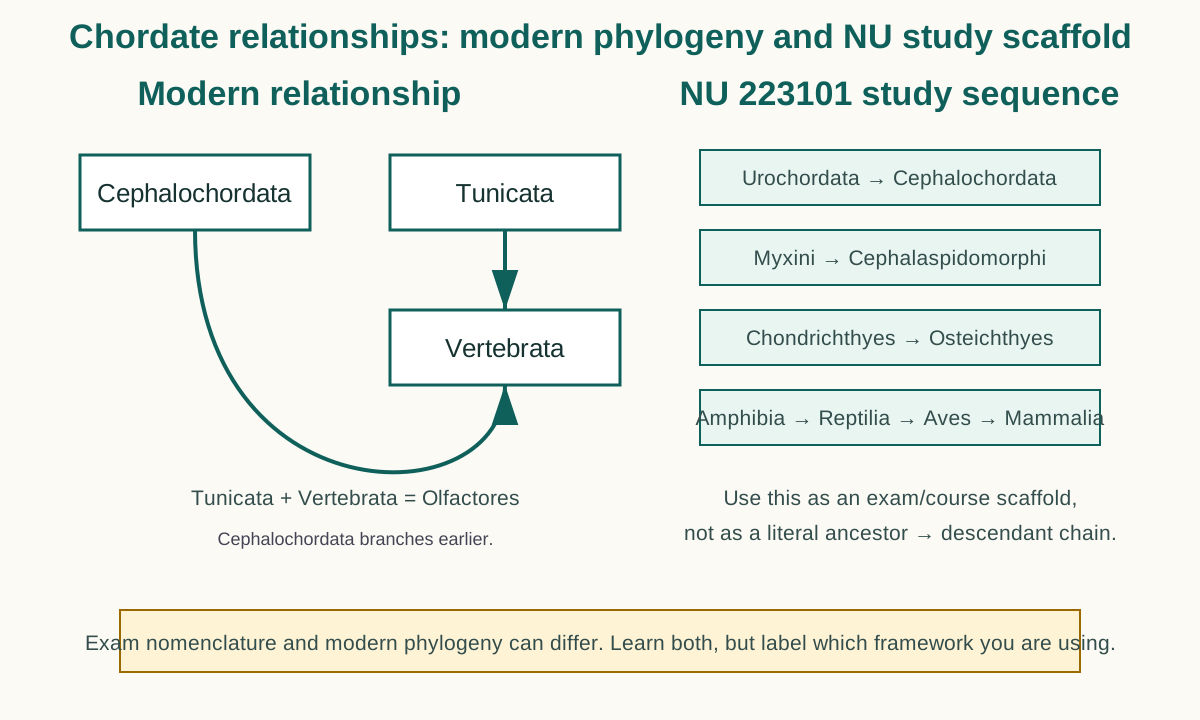
The NU sequence is a study scaffold, not a literal ancestor-to-descendant chain.
7. NU 223101 taxon map
The National University syllabus requires broad classification to orders, general and diagnostic characteristics, examples and affinities. The prescribed type studies are Ascidia, Branchiostoma, Myxine, Petromyzon, Scoliodon, Labeo rohita, Bufo, Hemidactylus, Columba livia and Homo sapiens.
Urochordata / Tunicata
Adult tunicates are often sac-like and covered by a tunic. The tadpole larva shows the chordate axial plan clearly.
Representative: Ascidia.
Cephalochordata
The adult retains the notochord, dorsal nerve cord and pharyngeal apparatus; the notochord reaches the anterior end. No cranium or vertebral column is present.
Representative: Branchiostoma.
Order name used in sources: Amphioxiformes/Branchiostomiformes may vary.
Myxini
Marine jawless craniates (hagfishes), famous for slime glands and keratinous tooth plates.
Representative: Myxine.
Order: Myxiniformes.
Cephalaspidomorphi / lamprey group
A traditional syllabus rank for lamprey-type jawless vertebrates. Lampreys have a circular oral disc and an ammocoete larva.
Representative: Petromyzon.
Order: Petromyzontiformes.
Chondrichthyes
Cartilaginous jawed fishes; placoid scales are common, several gill openings are typical, swim bladder is absent and males commonly possess claspers.
Representative: Scoliodon.
Major modern groups include Elasmobranchii and Holocephali.
Osteichthyes — traditional exam use
Bony-fish organization with an extensively ossified skeleton, opercular covering of the gills in typical teleosts, and frequent presence of a swim bladder.
Representative: Labeo rohita.
Order: Cypriniformes.
Amphibia
Anamniotic tetrapods with moist glandular skin and a life cycle often strongly tied to water or moist environments.
Representative: Bufo.
Living orders: Anura, Caudata/Urodela and Gymnophiona/Apoda.
Reptilia — NU exam framework
Amniotic vertebrates with keratinized integument and increased independence from water for reproduction.
Representative: Hemidactylus.
Living orders: Testudines, Rhynchocephalia, Squamata and Crocodylia.
Aves
Feathered, endothermic vertebrates with specialized lungs and air sacs, a four-chambered heart and hard-shelled amniotic eggs.
Representative: Columba livia.
Order: Columbiformes.
Mammalia
Vertebrates characterized by hair, mammary glands, three middle-ear ossicles and a muscular diaphragm.
Representative: Homo sapiens.
Order: Primates.
8. Agnatha, Cyclostomata and Gnathostomata
Agnatha is a traditional descriptive grouping for jawless vertebrates.
Cyclostomata is the modern clade containing living hagfishes and lampreys; recent genomic analyses strongly support its monophyly.
Gnathostomata contains jawed vertebrates.
The evolution of jaws was associated with major changes in feeding, branchial-arch specialization, locomotion and vertebrate diversification.
9. What is the chondrocranium?
The chondrocranium is the primary cartilaginous neurocranium surrounding and supporting the brain and major sensory capsules during vertebrate skull development.
It is especially obvious in cartilaginous fishes, but the developmental concept is much broader than Chondrichthyes alone.
10. What does “affinity” mean?
Affinity is not merely superficial resemblance. It is a reasoned comparison based on shared structural and developmental characters.
A strong affinity answer has three parts:
- shared characters;
- important differences;
- interpretation of the biological relationship.
11. A logical method for classification
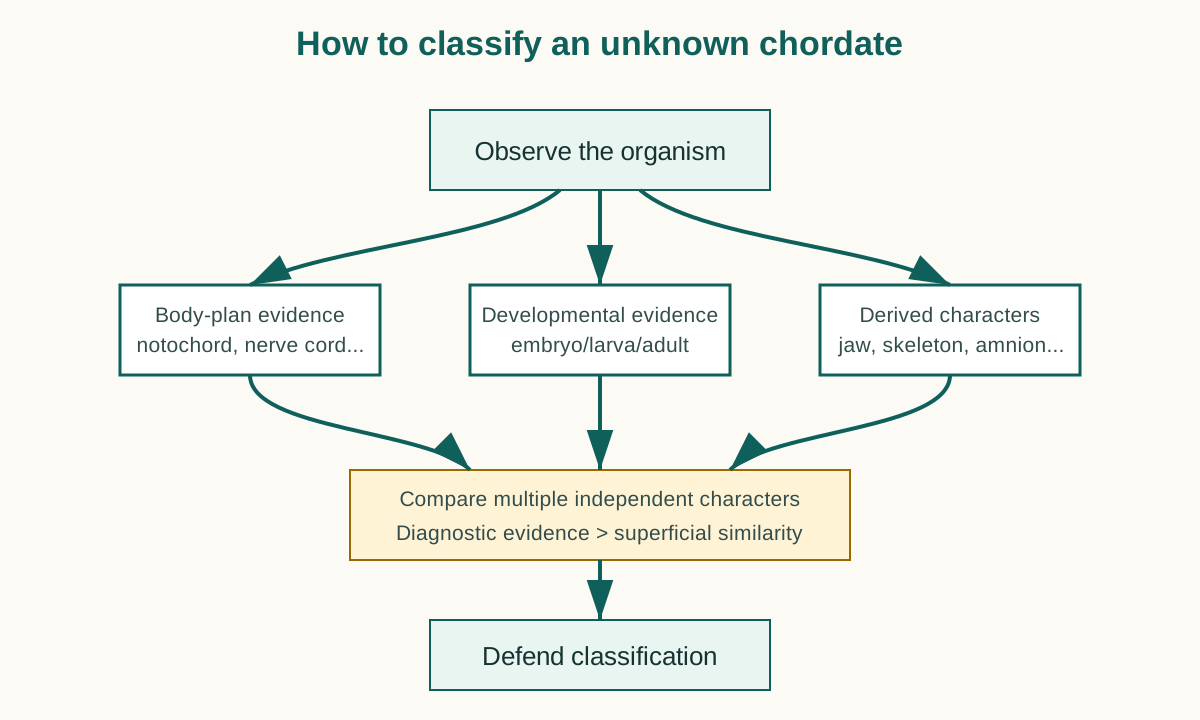
- Observe external form, but do not classify yet.
- Search for body-plan characters.
- Examine embryo or larva if adult features are reduced.
- Identify derived characters such as cranium, jaws, amnion, feathers, hair or mammary glands.
- Combine several independent lines of evidence.
- State why the chosen group fits better than its nearest alternative.
12. Socratic case studies
Adult Ascidia
No adult tail or notochord: still a chordate?
Yes. Larval developmental evidence reveals the chordate body plan.
Whale
Streamlined body and flippers: a fish?
No. Mammary glands, lungs, hair and mammalian developmental anatomy outweigh ecological resemblance to fishes.
Bird and reptile
Completely unrelated because feathers differ from scales?
No. Modern phylogeny places birds within the archosaur/reptile lineage, although the NU exam framework treats Aves and Reptilia as separate classes.
13. Traditional exam framework versus modern phylogeny
| Topic | Traditional / NU-friendly framing | Modern phylogenetic framing |
|---|---|---|
| Urochordata | lower chordate group | Tunicata; sister to Vertebrata within Olfactores |
| Cephalochordata | vertebrate-like lower chordate | earlier-branching living chordate lineage |
| Hagfish + lamprey | often separated in traditional schemes | monophyletic Cyclostomata |
| Osteichthyes | bony-fish class | bony-vertebrate clades are defined more broadly |
| Reptilia + Aves | separate classes | birds are nested within the archosaur/reptile lineage |
For exams, state the framework you are using.
14. Section A — one-mark answers
Notochord: a flexible mesoderm-derived axial rod located between the gut and dorsal nerve cord in chordates at least during development.
Endostyle: a ciliated mucus-secreting groove in the pharyngeal floor of non-vertebrate chordates, involved in filter feeding and homologous to the vertebrate thyroid system.
Agnatha: a traditional term for jawless vertebrates.
Gnathostomata: the clade of jawed vertebrates.
Chondrocranium: the primary cartilaginous neurocranium surrounding the brain and sensory capsules.
15. Section B — model answer
Differentiate Urochordata and Cephalochordata
| Feature | Urochordata / Tunicata | Cephalochordata |
|---|---|---|
| Adult habit | ascidians commonly sessile | free-living/burrowing |
| Covering | tunic present | tunic absent |
| Notochord | mainly larval tail in ascidians | persists throughout adult body |
| Dorsal nerve cord | reduced after metamorphosis in ascidians | persistent |
| Segmented myotomes | not prominent in adult ascidian | prominent |
| Pharynx | large filter-feeding basket | large filter-feeding pharynx |
| Circulation | heart present; reversal in many ascidians | no true chambered heart |
| Example | Ascidia | Branchiostoma |
Conclusion: Tunicates strongly remodel the larval chordate plan, whereas cephalochordates retain a conspicuous chordate plan in the adult.
16. Section C — model long answer
Discuss the diagnostic characters of Chordata and outline its major groups
Introduction
Chordata is a major deuterostome phylum defined by a shared developmental body plan rather than external appearance.
Diagnostic characters
- Notochord
- Dorsal hollow nerve cord
- Pharyngeal apparatus
- Endostyle/thyroid system
- Post-anal tail
General characters
Bilateral symmetry, triploblasty, coelom, complete gut and deuterostome ancestry.
Major living lineages
Cephalochordata, Tunicata and Vertebrata/Craniata.
223101 comparative sequence
Myxini → lamprey group → Chondrichthyes → traditional Osteichthyes → Amphibia → Reptilia → Aves → Mammalia.
Interpretation
This sequence is a teaching framework, not a literal chain of modern ancestors and descendants.
Conclusion
Strong chordate classification combines developmental body-plan evidence with derived characters and comparative anatomy.
17. Diagram practice
Draw and label a generalized chordate with:
- dorsal hollow nerve cord;
- notochord;
- pharyngeal slits;
- endostyle/thyroid position;
- gut;
- anus;
- post-anal tail.
Then draw a small relationship map that separates modern phylogeny from the NU study sequence.
18. Common mistakes
- Assuming all five chordate characters are visible in every adult.
- Calling the notochord a backbone.
- Rejecting Ascidia as a chordate because of adult appearance.
- Calling Branchiostoma a vertebrate.
- Reading fish → amphibian → reptile → bird → mammal as a chain of modern species transforming directly into one another.
- Mixing modern cladistic Reptilia with the separate Aves/Reptilia framework expected in a traditional exam answer.
19. Quick revision matrix
| Concept | Memory line |
|---|---|
| Notochord | flexible embryonic axial rod |
| Dorsal nerve cord | neural tube → brain/spinal cord |
| Pharyngeal apparatus | feeding, respiration and head–neck development |
| Endostyle | mucus + iodine-related functions; thyroid homology |
| Post-anal tail | body extends beyond anus at some stage |
| Tunicata | larva reveals the chordate plan strongly |
| Cephalochordata | adult retains the classic plan |
| Cyclostomata | living jawless vertebrates: hagfishes + lampreys |
| Gnathostomata | jawed vertebrates |
| Affinity | shared evidence + differences + interpretation |
20. Self-test
Why is a human a chordate if an adult human has no external tail?
Chordate identity does not require all features to remain externally visible in the adult. Human development includes a transient post-anal tail and other chordate developmental characters.What is the clearest living developmental link between endostyle and thyroid?
The ammocoete endostyle of lampreys reorganizes into a follicular thyroid during metamorphosis.Are cephalochordates the closest living sister group of vertebrates?
No. Modern phylogenomics supports Tunicata as the closest living sister lineage of Vertebrata within Olfactores.21. Transfer challenge
An unknown aquatic animal is streamlined and has fin-like appendages, but it breathes with lungs, feeds its young with milk and develops hair follicles.
Which evidence should dominate classification?
The mammary glands, hair and mammalian developmental anatomy are deeper diagnostic characters than the convergent aquatic body shape. The animal belongs to Mammalia.
22. Research-backed update notes
Modern evidence especially supports four corrections:
- the five-character model can include the endostyle/thyroid axis;
- Tunicata, not Cephalochordata, is the closest living sister lineage of vertebrates;
- hagfishes and lampreys form a strongly supported monophyletic Cyclostomata;
- traditional NU ranks and modern cladistics are not always identical, so the framework must be stated explicitly.
References for Course Authors / Verification
- National University B.Sc. Honours 2nd Year Zoology syllabus, paper 223101.
- OpenStax Biology 2e, “Chordates.”
- Delsuc F. et al. (2006), Nature: Tunicates and not cephalochordates are the closest living relatives of vertebrates.
- Marlétaz F. et al. (2024), Nature: The hagfish genome and the evolution of vertebrates.
- Endotext/NCBI Bookshelf: Ontogeny, Anatomy, Metabolism and Physiology of the Thyroid.
- Research on cyclostome endostyle/thyroid development.
- The Reptile Database and IOC World Bird List for current higher taxonomy.
Next Lecture
Lecture 02 — Ascidia: adult chordate identity, retrogressive metamorphosis, filter feeding and circulation.