Course note: NU syllabus classical ranks Myxini এবং Cephalaspidomorphi ব্যবহার করে। Modern genomic evidence living hagfishes ও lampreys-কে together monophyletic Cyclostomata হিসেবে strongly support করে।
Myxine and Petromyzon
The Puzzle: vertebrate হতে jaw কি আবশ্যক?
Jawed fishes আমাদের “typical vertebrate” ধারণা তৈরি করে। কিন্তু hagfish ও lamprey jawless। তবু তারা chordate নয় শুধু, living vertebrate/craniate radiation-এর প্রাচীন surviving branches।
এখানে core idea:
Absence of jaws does not mean absence of vertebrate identity. Jawless vertebrates retain a distinct evolutionary design.
এই lecture শেষে তুমি পারবে:
- Myxine ও Petromyzon-এর systematic position ও diagnostic features লিখতে;
- modern Cyclostomata concept বুঝতে;
- Myxine বনাম Petromyzon compare করতে;
- Petromyzon-এর buccal funnel, branchial basket এবং feeding/respiration relate করতে;
- ammocoete larva-এর structure ও feeding বুঝতে;
- lamprey life cycle ও metamorphosis explain করতে;
- endostyle → thyroid transformation relate করতে;
- ক/খ/গ model answer লিখতে।
1. Systematic Position
Myxine
- Phylum: Chordata
- Subphylum: Vertebrata / Craniata
- Group/Class in NU usage: Myxini
- Order: Myxiniformes
- Family: Myxinidae
- Genus: Myxine
Petromyzon
- Phylum: Chordata
- Subphylum: Vertebrata / Craniata
- Classical NU group: Cephalaspidomorphi / lamprey group
- Order: Petromyzontiformes
- Family: Petromyzontidae
- Genus: Petromyzon
Modern relation
Hagfishes + lampreys = Cyclostomata, sister to jawed vertebrates (Gnathostomata) in current molecular phylogeny।
2. Shared Cyclostome Characters
- jaws absent;
- paired fins absent;
- notochord persists in adult;
- cartilaginous cranial elements;
- single median nostril;
- keratinous tooth-like structures rather than true gnathostome teeth;
- eel-like body;
- gill pouches;
- no typical paired appendages;
- endoskeleton lacks extensive bone।
Important update
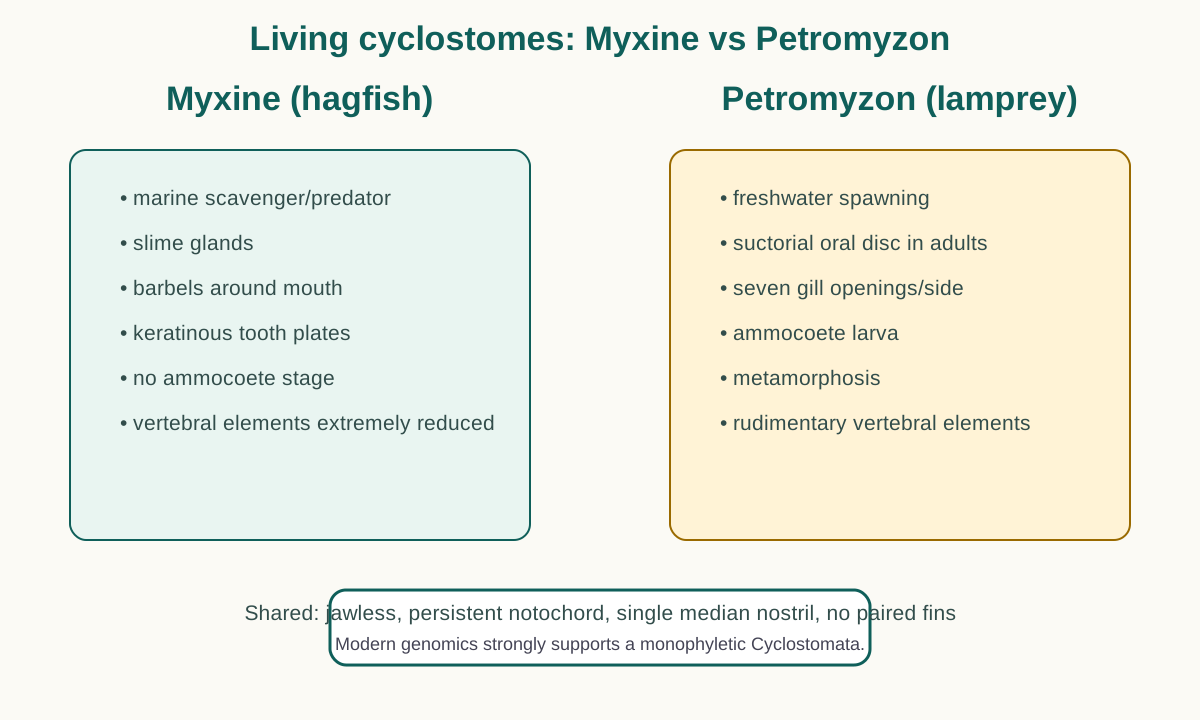
Recent hagfish genome studies strongly support cyclostome monophyly. Therefore hagfish simplicity should not automatically be interpreted as “pre-vertebrate”; many absent-looking features may represent secondary simplification.
3. Myxine: Habitat and Mode of Life
Myxine marine।
Typical ecology:
- bottom-dwelling;
- scavenging or opportunistic feeding;
- soft-bodied;
- powerful slime production;
- may enter dead/dying fish carcasses;
- knotting behavior body leverage ও slime removal-এ সাহায্য করে।
4. Myxine External Features
- elongated eel-like body;
- paired fins absent;
- median fin fold posteriorly;
- mouth terminal/subterminal with barbels;
- keratinous tooth plates;
- single median nostril;
- multiple slime gland pores along body;
- eyes reduced in many hagfishes;
- gill openings variable by lineage।
Slime as adaptation
Hagfish slime:
- rapid defensive expansion;
- predator gills clog করতে পারে;
- mechanical escape advantage দেয়।
এটি “primitive mucus” নয়; highly specialized defense।
5. Petromyzon External Features
- elongated body;
- no paired fins;
- circular oral disc/buccal funnel;
- horny teeth;
- median nostril;
- well-developed eyes in adult;
- typically seven pairs of external branchial openings;
- dorsal fins and tail fin region present।
6. Buccal Funnel
Adult lamprey-এর circular suctorial oral discকে buccal funnel বলা হয়।
Structure
- funnel-shaped mouth;
- horny teeth arranged on disc;
- rasping tongue apparatus;
- suction attachment সম্ভব করে।
Function
Parasitic species host fish-এর bodyতে attach করে tissue/fluid feed করতে পারে। তবে সব adult lamprey parasitic নয়; non-feeding adult formsও আছে।
Exam caution
“সব lamprey blood-sucking parasite” লেখা overgeneralization।
7. Branchial Basket and Respiration
Petromyzon-এর pharyngeal region branchial pouches দ্বারা specialized।
Typical seven paired gill pouches:
- internal opening pharyngeal region-এর সঙ্গে;
- external opening separate branchial aperture।
Adult attached feeding-এর সময় mouth host-এর সঙ্গে occupied থাকতে পারে। তখন branchial pouches external openings দিয়ে water in–out করে ventilation চালাতে পারে।
Functional separation
Lamprey velum এবং pharyngeal organization feeding ও respiration-এর streams separate করতে সাহায্য করে।
8. Ammocoete Larva
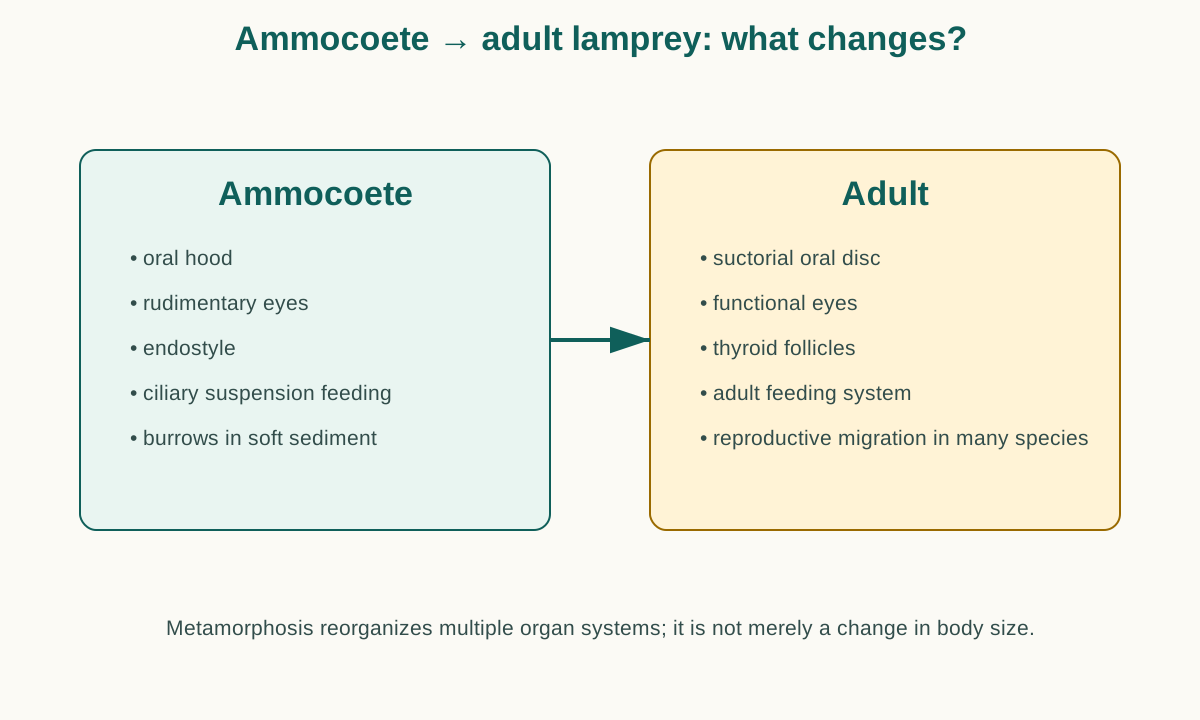
Ammocoete larva adult lamprey থেকে strikingly different।
Habitat
- freshwater stream/river sediment;
- soft mud/sand-এ burrowed;
- several years larval stage থাকতে পারে, species/environment অনুযায়ী variation।
External features
- small elongated body;
- oral hood;
- adult-like suctorial disc absent;
- eyes rudimentary;
- seven branchial openings;
- median fin fold;
- tail;
- pigment সাধারণত কম।
Feeding
Ammocoete suspension/filter feeder।
- cilia water current তৈরি করে;
- oral hood water/particle entry organize করে;
- endostyle mucus food capture করে;
- pharyngeal apparatus filter হিসেবে কাজ করে।
Why important?
Ammocoete:
- adult parasitic/non-feeding lamprey ecology থেকে ভিন্ন;
- endostyle–thyroid transition-এর key developmental model;
- metamorphosis-এর scale বোঝায়।
9. Ammocoete Endostyle → Adult Thyroid
Larval endostyle:
- filter-feeding organ;
- iodine-related physiology;
- multiple specialized epithelial zones।
Metamorphosis-এর সময় portions of endostylar epithelium reorganize হয়ে adult thyroid follicles তৈরি করে।
এই process chordate endostyle ও vertebrate thyroid homology-এর strongest living developmental evidenceগুলোর একটি।
10. Petromyzon Life Cycle
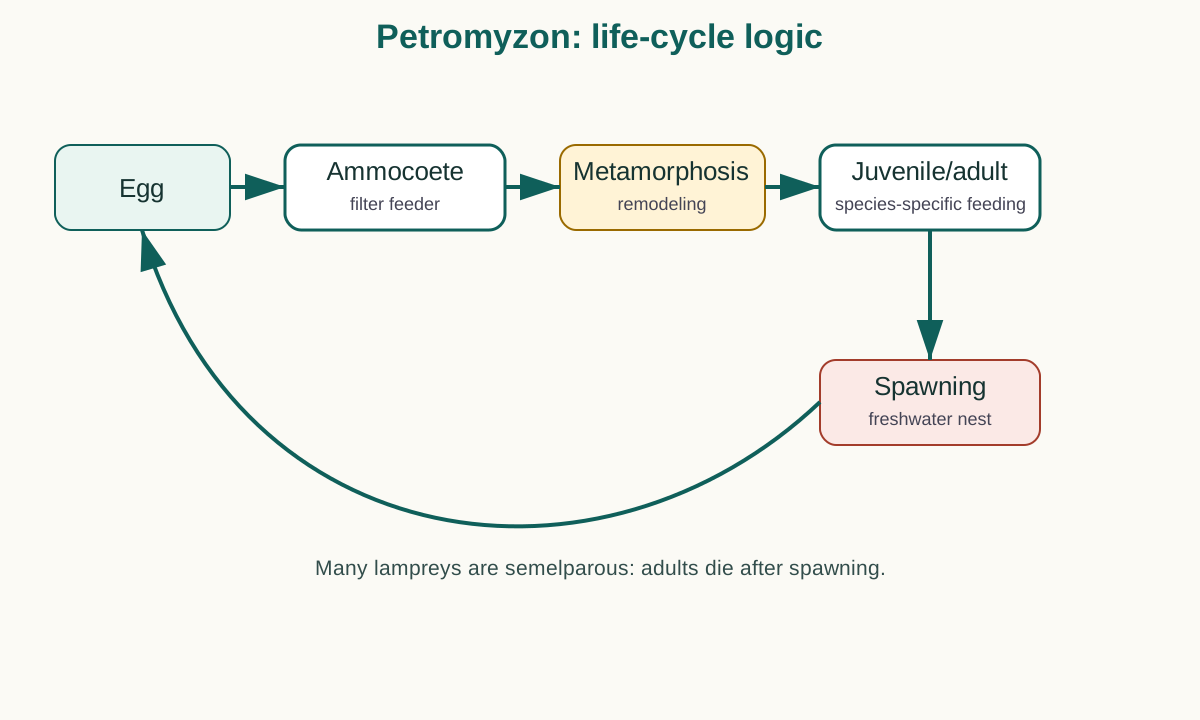
Simplified cycle:
Spawning adult
   ↓
Fertilized egg
   ↓
Proammocoete
   ↓
Ammocoete larva
   ↓  years of growth
Metamorphosis
   ↓
Juvenile / adult feeding phase
   ↓
Reproductive migration
   ↓
Spawning
Step 1 — Spawning
Many lampreys freshwater gravel beds-এ nest/depression create করে।
Step 2 — Egg and larva
Egg hatch করে proammocoete/ammocoete stage।
Step 3 — Long larval phase
Sediment-এ filter feeding, growth, energy storage।
Step 4 — Metamorphosis
Major remodeling:
- eyes develop;
- oral hood → adult oral disc;
- endostyle → thyroid;
- digestive tract remodels;
- gill/velum function changes;
- kidney/hematopoietic regions reorganize;
- sensory systems mature।
Step 5 — Juvenile/adult phase
Speciesভেদে parasitic feeding, nonparasitic adult stage, marine/lake migration ইত্যাদি হয়।
Step 6 — Reproduction
Many species semelparous: spawning-এর পর adult মারা যায়।
11. Myxine vs Petromyzon
| Character | Myxine | Petromyzon |
|---|---|---|
| Habitat | exclusively marine | freshwater spawning; many species migrate |
| Mouth | barbels + tooth plates | suctorial oral disc |
| Eyes | reduced | adult eyes well developed |
| Slime glands | very prominent | not comparable hagfish slime system |
| Ammocoete | absent | present |
| Metamorphosis | lamprey-type absent | pronounced |
| Vertebral elements | extremely reduced/absent in classical descriptions | rudimentary arcualia |
| Feeding | scavenging/predatory | parasitic or non-feeding, species dependent |
| Branchial openings | variable | typically 7 pairs |
12. Circulation
Both are vertebrate/cyclostome circulatory systems with a true heart, unlike Branchiostoma।
Lamprey heart includes:
- sinus venosus;
- atrium;
- ventricle;
- conus/bulbus-like outflow region depending on terminology।
Single circulation pattern:
Heart → gills → systemic tissues → heart
13. Excretion
Cyclostomes possess vertebrate nephric systems।
Lamprey larval and adult kidney organization changes across metamorphosis; adult functional kidney is opisthonephric/mesonephric-type in classical terminology।
Hagfish osmoregulation is unusual among vertebrates because body fluids are much closer to seawater osmolarity than in most vertebrates।
14. Reproduction
Hagfish
- separate sexes;
- reproductive biology relatively slow/poorly observed in many species;
- direct development, no ammocoete stage।
Lamprey
- separate sexes;
- gonads mature near reproductive migration;
- gametes released during spawning;
- external fertilization;
- larval ammocoete follows।
15. Cyclostomes and Vertebrate Evolution
What they tell us
Cyclostomes help reconstruct:
- pre-jaw vertebrate body plan;
- early cranial/sensory evolution;
- origins of adaptive immune systems;
- genome duplication history;
- jawless feeding adaptations।
What they do not mean
They are not “failed fishes” or direct ancestors of sharks/bony fishes। They are modern lineages sharing ancient common ancestry with gnathostomes।
16. ক-বিভাগ — Exam Capsule
Ammocoete larva কী?
Lamprey-এর filter-feeding, burrowing larval stage-কে ammocoete larva বলে।
Cyclostomata কী?
Living jawless vertebrate clade containing hagfishes and lampreys।
Buccal funnel কী?
Adult lamprey-এর circular suctorial oral disc, bearing horny teeth।
Myxine-এর defensive specialization কী?
Extensive slime gland system।
Endostyle-এর fate কী?
Lamprey metamorphosis-এর সময় endostyle-এর epithelial parts adult thyroid follicles-এ reorganize হয়।
17. খ-বিভাগ — Model Answer 1
Myxine ও Petromyzon-এর পার্থক্য
Exam-এ 5–7 major points:
- marine vs freshwater-spawning/migratory;
- barbels vs oral disc;
- reduced vs developed eyes;
- slime glands vs absent;
- ammocoete absent vs present;
- marked metamorphosis absent vs present;
- adult feeding ecology different।
18. খ-বিভাগ — Model Answer 2
Ammocoete larva-এর গঠন
Mention:
- elongated fish-like body;
- oral hood;
- rudimentary eyes;
- seven branchial openings;
- median fin fold;
- endostyle;
- burrowing habit;
- filter feeding।
Conclusion: adult lamprey-এর oral disc, developed eyes ও thyroid larval stage-এ absent/undeveloped।
19. গ-বিভাগ — Model Long Answer
“Petromyzon-এর life cycle বর্ণনা কর।”
Introduction
Petromyzon indirect development ও prolonged ammocoete stage দেখায়।
Stages
- spawning;
- fertilization and egg;
- proammocoete;
- ammocoete larva;
- prolonged filter-feeding growth;
- metamorphosis;
- juvenile/adult phase;
- reproductive migration;
- spawning and adult death in many species।
Metamorphic changes
oral disc, eye, thyroid, gut, gill/velum, kidney এবং sensory systems reorganization।
Diagram
Life-cycle arrows labelled।
20. Common Mistakes
- Hagfishকে lamprey larva বলা।
- সব lamprey parasite বলা।
- Ammocoete adult-like sucker আছে লেখা।
- Endostyle adult-এ unchanged থাকে বলা।
- Hagfish + lamprey modern relation ignore করে “completely unrelated jawless fishes” বলা।
- Cyclostomesকে living ancestors of jawed fishes বলা।
21. Quick Revision Matrix
| Feature | Myxine | Petromyzon |
|---|---|---|
| key identity | hagfish | lamprey |
| mouth | barbels + tooth plates | oral disc |
| defense | slime | suction/teeth |
| larva | no ammocoete | ammocoete |
| eye | reduced | adult well developed |
| habitat | marine | freshwater spawning; variable adult habitat |
| modern clade | Cyclostomata | Cyclostomata |
22. Self-Test
Why does cyclostome monophyly matter?
It means hagfishes and lampreys share a more recent common ancestor with each other than either does with jawed vertebrates; hagfish simplification cannot automatically be read as a pre-vertebrate condition.Why is ammocoete not simply a small adult?
Its feeding mode, oral structures, eyes, endostyle and multiple organ systems differ and are remodeled during metamorphosis.23. Transfer Challenge
একটি jawless vertebrate marine, has barbels, extreme slime production, and no ammocoete larva.
Diagnosis: Myxine/hagfish lineage, not lamprey।
24. Research-backed Update Notes
- 2024 chromosome-scale hagfish genomic studies strongly support cyclostome monophyly.
- Ammocoete metamorphosis restructures eyes, oral apparatus, endostyle/thyroid, kidney, gut and other systems.
- Lamprey life cycles vary among species; parasitic feeding is not universal.
References for Course Authors / Verification
- National University Zoology syllabus, paper 223101.
- Marlétaz et al., Nature (2024), hagfish genome and vertebrate evolution.
- Nature Ecology & Evolution (2024), hagfish genome and WGD history.
- Reviews of lamprey development and ammocoete metamorphosis.
- Studies of cyclostome endostyle–thyroid development.
Next Lecture
Lecture 05 — Scoliodon: shark body plan, Chondrichthyes classification and urinogenital system.