Myxine and Petromyzon
The Puzzle
Hagfishes and lampreys are jawless, yet they belong to the living vertebrate/craniate radiation.
The absence of jaws does not erase vertebrate identity.
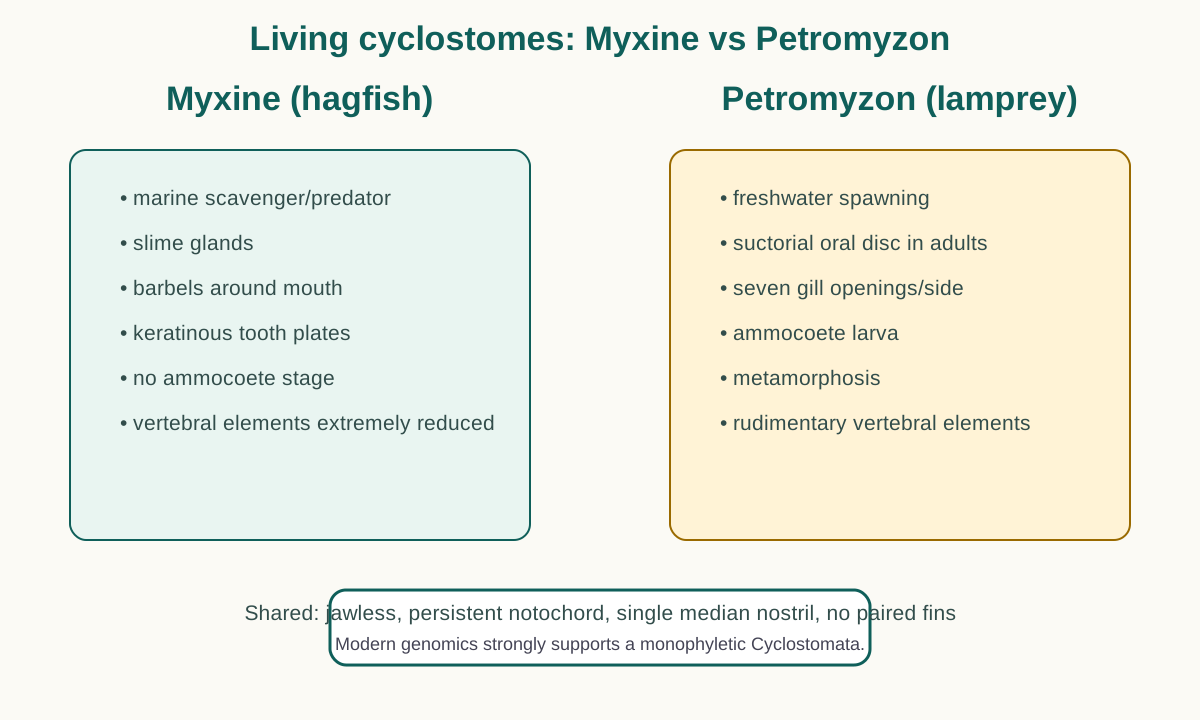
Modern genomic evidence strongly supports hagfishes and lampreys together as Cyclostomata, sister to jawed vertebrates.
1. Systematic position
Myxine
Chordata → Vertebrata/Craniata → Myxini → Myxiniformes → Myxinidae → Myxine.
Petromyzon
Chordata → Vertebrata/Craniata → classical lamprey group/Cephalaspidomorphi → Petromyzontiformes → Petromyzontidae → Petromyzon.
2. Shared cyclostome characters
- jaws absent;
- paired fins absent;
- persistent notochord;
- cartilaginous cranial elements;
- single median nostril;
- keratinous tooth-like structures;
- gill pouches;
- eel-like body;
- little or no bone.
Recent hagfish genome analyses strongly confirm cyclostome monophyly and show that some hagfish simplifications are derived rather than simply “primitive.”
3. Myxine
Hagfishes are marine bottom-dwellers and scavengers/opportunistic predators.
Important features:
- barbels around the mouth;
- keratinous tooth plates;
- abundant slime glands;
- reduced eyes in many species;
- no ammocoete stage;
- knotting behavior that assists feeding, leverage and slime removal.
Hagfish slime is a sophisticated defensive adaptation, not a sign of primitiveness.
4. Petromyzon
Adult lampreys possess:
- circular oral disc;
- horny teeth;
- rasping tongue apparatus;
- median nostril;
- functional eyes;
- usually seven pairs of branchial openings;
- median fins but no paired fins.
5. Buccal funnel
The buccal funnel is the circular suctorial oral disc of the adult lamprey.
In parasitic species it enables attachment to a host. However, not every lamprey species feeds parasitically as an adult.
6. Branchial basket and respiration
Lampreys have a specialized branchial region with paired gill pouches. In attached adults, respiratory water can be pumped in and out through the branchial openings while the mouth remains occupied with feeding.
The velum and pharyngeal organization help separate feeding and respiratory streams.
7. Ammocoete larva
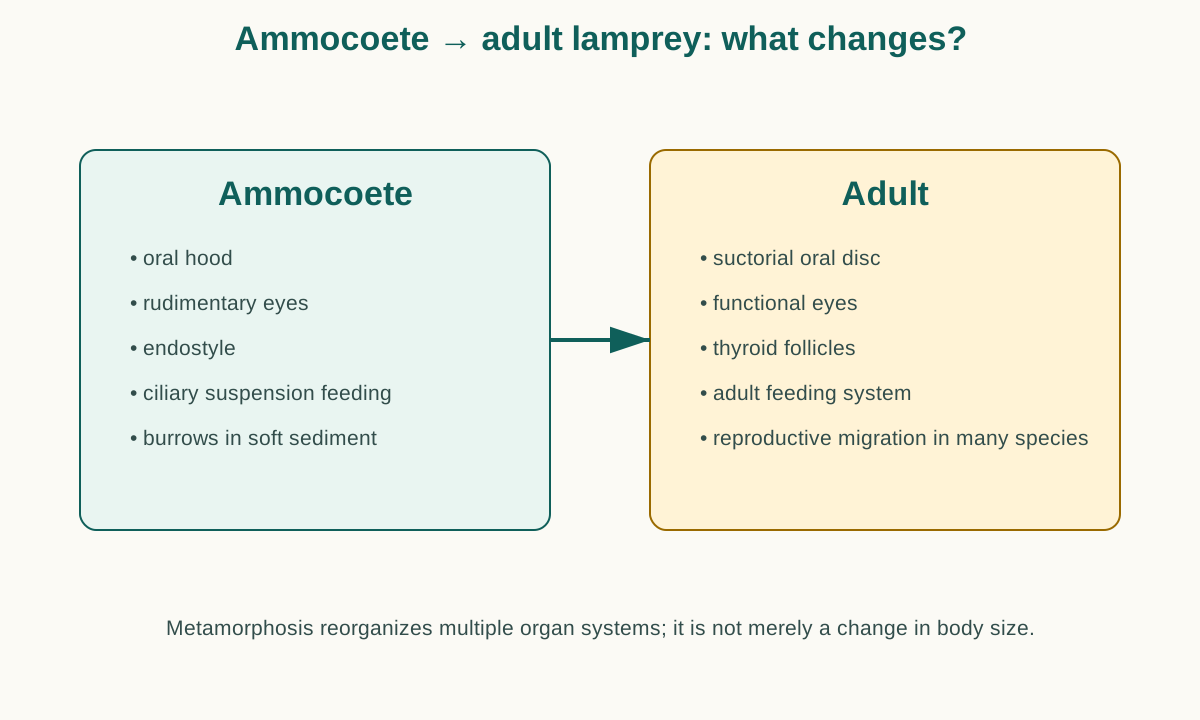
The ammocoete is a burrowing freshwater suspension feeder.
Features:
- oral hood;
- rudimentary eyes;
- seven branchial openings;
- median fin fold;
- endostyle;
- ciliary filter-feeding pharynx;
- long larval duration in many species.
8. Endostyle to thyroid
During metamorphosis, parts of the larval endostyle reorganize into adult thyroid follicles. This is among the strongest developmental demonstrations of endostyle–thyroid homology.
9. Lamprey life cycle
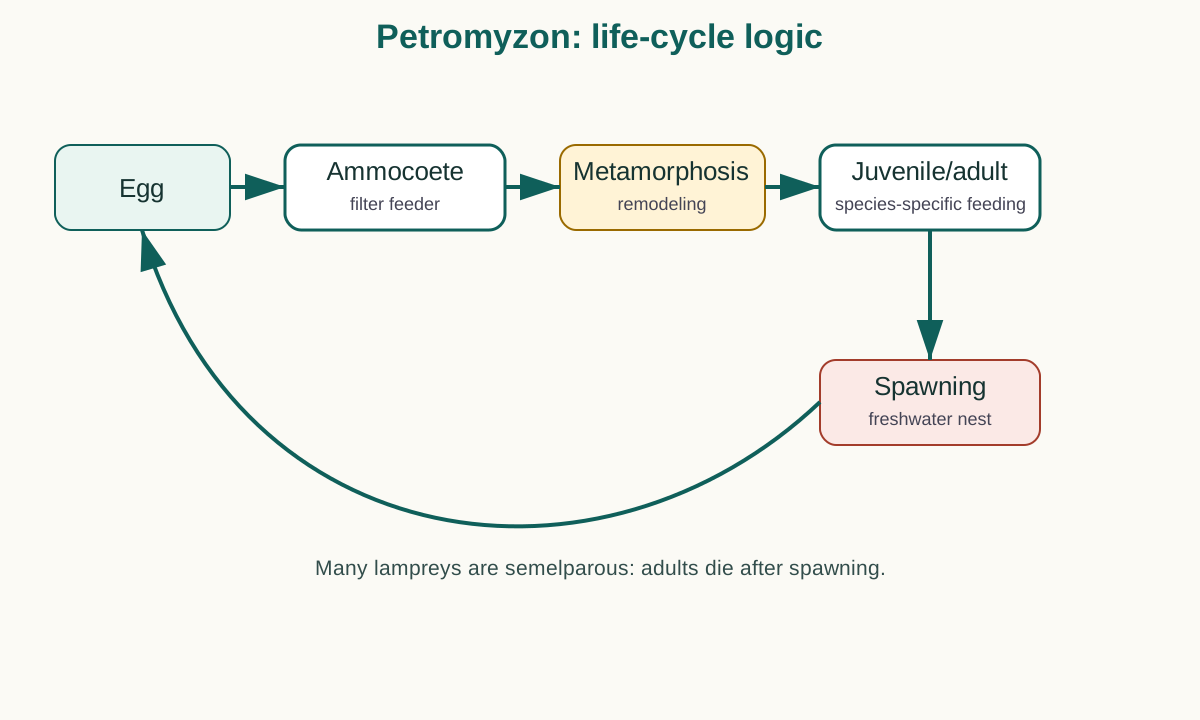
Spawning adult
  ↓
Egg
  ↓
Proammocoete
  ↓
Ammocoete
  ↓
Metamorphosis
  ↓
Juvenile/adult
  ↓
Reproductive migration
  ↓
Spawning
Metamorphosis reorganizes the eyes, oral structures, gills, endostyle/thyroid, gut, kidney and sensory systems.
Many lampreys are semelparous and die after reproduction.
10. Myxine versus Petromyzon
| Character | Myxine | Petromyzon |
|---|---|---|
| habitat | marine | freshwater spawning; adults vary |
| mouth | barbels + tooth plates | suctorial oral disc |
| eyes | reduced | adult eyes well developed |
| slime | extreme | no comparable slime system |
| ammocoete | absent | present |
| metamorphosis | no lamprey-type metamorphosis | pronounced |
| feeding | scavenging/predatory | parasitic or non-feeding depending on species |
11. Circulation and excretion
Both possess vertebrate hearts and a single-circuit arrangement through the gills and body.
Lamprey kidney organization changes during development. Hagfish osmoregulation is unusual because its body fluids are much closer to seawater osmolarity than those of most vertebrates.
12. Reproduction
Hagfishes develop directly without an ammocoete stage.
Lampreys spawn externally; eggs give rise to ammocoetes, which later metamorphose.
13. Evolutionary significance
Cyclostomes inform research on:
- early vertebrate cranial organization;
- pre-jaw feeding systems;
- immune-system origins;
- genome duplications;
- sensory evolution.
They are modern sister lineages of gnathostomes, not direct ancestors of sharks or bony fishes.
14. Section A — one-mark capsule
Ammocoete: burrowing suspension-feeding lamprey larva.
Cyclostomata: living jawless vertebrate clade containing hagfishes and lampreys.
Buccal funnel: circular suctorial oral disc of adult lampreys.
Myxine defense: extensive slime system.
Fate of lamprey endostyle: reorganizes into thyroid follicles during metamorphosis.
15. Section B — compare Myxine and Petromyzon
Use habitat, mouth, eyes, slime, ammocoete, metamorphosis and feeding ecology.
16. Section B — describe ammocoete
Include oral hood, rudimentary eyes, seven branchial openings, median fin fold, endostyle, burrowing habit and filter feeding.
17. Section C — life cycle of Petromyzon
Describe spawning, egg, proammocoete, ammocoete, long larval growth, metamorphosis, juvenile/adult feeding phase, reproductive migration and spawning. Add a labelled life-cycle diagram.
18. Common mistakes
- treating hagfish as a lamprey larva;
- saying every lamprey is a blood-feeding parasite;
- giving ammocoetes an adult sucker;
- leaving the endostyle unchanged in adults;
- ignoring modern Cyclostomata monophyly;
- calling living cyclostomes direct ancestors of gnathostomes.
19. Quick revision
| Feature | Myxine | Petromyzon |
|---|---|---|
| key identity | hagfish | lamprey |
| mouth | barbels + tooth plates | oral disc |
| defense | slime | attachment/teeth |
| larva | no ammocoete | ammocoete |
| eyes | reduced | developed in adult |
| clade | Cyclostomata | Cyclostomata |
20. Research-backed update notes
2024 chromosome-scale hagfish genome studies strongly support cyclostome monophyly. Lamprey metamorphosis is a profound reorganization, and parasitic feeding is not universal among lampreys.
References for Course Authors / Verification
- National University Zoology syllabus, paper 223101.
- Marlétaz et al., Nature (2024).
- Hagfish genome study in Nature Ecology & Evolution (2024).
- Reviews of lamprey development and metamorphosis.
- Studies of cyclostome endostyle–thyroid development.
Next Lecture
Lecture 05 — Scoliodon: shark body plan, Chondrichthyes classification and urinogenital system.