Labeo rohita / Rohu
The Puzzle: পানি থেকে oxygen নেওয়া এত কঠিন কেন?
Water-এ oxygen concentration air-এর তুলনায় কম এবং water dense/viscous। তাই fish gillকে large thin surface, directed ventilation এবং efficient blood flow combine করতে হয়।
Rohu এই problem solve করে:
opercular pump + lamellar gills + countercurrent exchange + branchial circulation
এই lecture শেষে তুমি পারবে:
- Rohu systematic position ও ecology লিখতে;
- bony fish diagnostic characters বলতে;
- gill structure explain করতে;
- mouth–operculum ventilation cycle বুঝতে;
- countercurrent exchange explain করতে;
- afferent ও efferent branchial arteries trace করতে;
- single circulation লিখতে;
- Weberian ossicles ও swim bladder-এর connection বুঝতে;
- ক/খ/গ answer লিখতে।
1. Systematic Position
Current FishBase placement:
- Phylum: Chordata
- Subphylum: Vertebrata
- Teleostei
- Order: Cypriniformes
- Family: Cyprinidae
- Subfamily: Labeoninae
- Genus: Labeo
- Species: Labeo rohita
Distribution
Native South Asia; Bangladesh, India, Pakistan, Nepal, Myanmar region-এ natural distribution reported। Bangladesh aquaculture-এ economically important।
2. Habitat and Mode of Life
- freshwater;
- rivers and floodplain systems;
- widely cultured;
- benthopelagic;
- mostly herbivorous/omnivorous grazing tendency, adults often plant material feed করে;
- monsoon-linked breeding in river/flooded environments common।
3. External Morphology
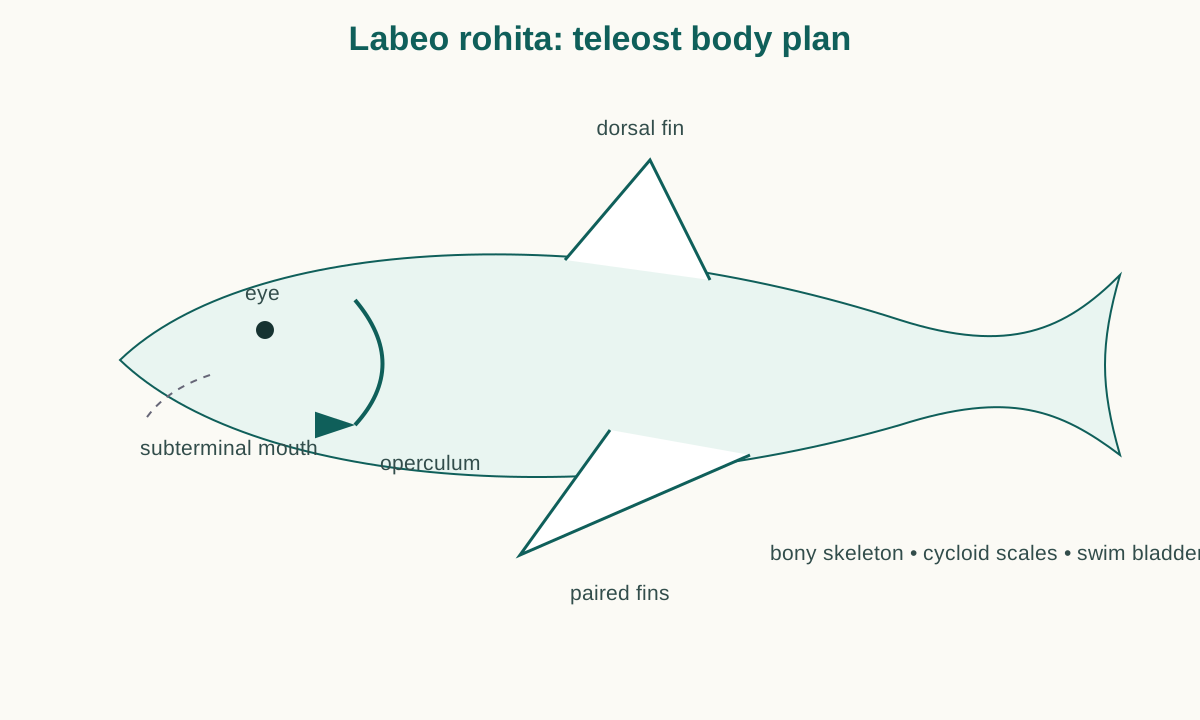
Rohu body spindle-shaped, laterally compressed।
Important structures:
- head;
- trunk;
- caudal region;
- subterminal mouth;
- paired pectoral/pelvic fins;
- dorsal, anal and caudal fins;
- operculum;
- lateral line;
- cycloid scales।
4. Cycloid Scales
Cycloid scales:
- thin bony dermal scales;
- smooth posterior margin;
- concentric growth rings/circuli;
- flexible overlap।
Placoid scales-এর মতো tooth-like spines নেই।
5. Skeleton
Endoskeleton largely ossified।
Important systems:
- skull;
- vertebral column;
- ribs;
- fin rays;
- pectoral/pelvic girdles।
Bony operculum gill chamber cover করে—shark-এর exposed gill slits-এর সঙ্গে strong contrast।
6. Swim Bladder
Gas-filled internal organ।
Functions in many teleosts:
- buoyancy;
- sound production/reception support;
- hydrostatic adjustment।
Cypriniform fishes-এ swim bladder auditory system-এর সঙ্গে Weberian apparatus দ্বারা coupled হতে পারে।
7. Weberian Ossicles
Weberian apparatus হলো anterior vertebrae-derived small ossicles-এর chain, যা swim bladder vibration inner ear-এ transmit করে।
Classical ossicles:
- claustrum;
- scaphium;
- intercalarium;
- tripus।
Function
Swim bladder acoustic pressure changes detect করে → ossicles mechanical vibration inner ear-এ transfer করে → hearing sensitivity বাড়ে।
8. Gill Structure
Each gill arch supports:
- gill rakers on inner/anterior side;
- gill filaments on outer/posterior side;
- each filament bears numerous secondary lamellae।
Secondary lamellae
Primary gas-exchange surface।
Properties:
- thin epithelium;
- dense capillary network;
- large surface area;
- short diffusion distance।
9. Ventilation Mechanism
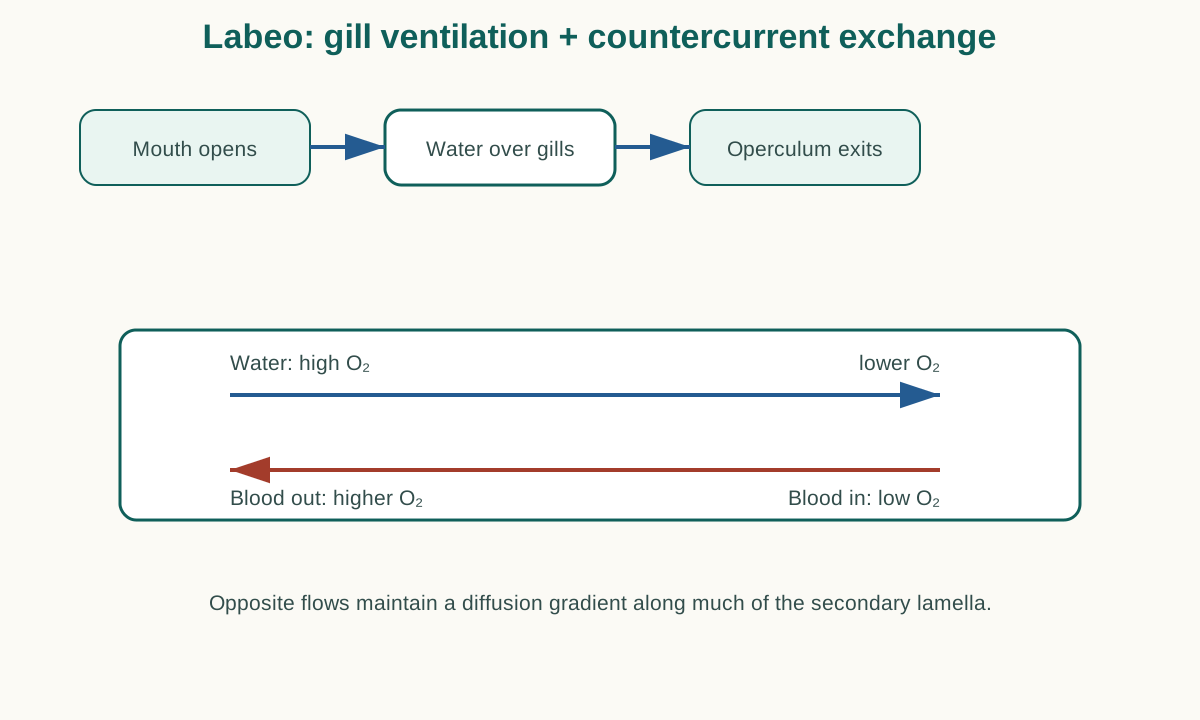
Teleost gill ventilation buccal and opercular cavities coordinated pressure pump হিসেবে কাজ করে।
Simplified:
Phase A — water intake
- mouth opens;
- buccal cavity expands;
- water enters;
- opercular opening closed/narrow।
Phase B — water over gills
- mouth closes;
- buccal cavity compresses;
- opercular cavity pressure draws/pushes water across gill lamellae;
- water exits under operculum।
10. Countercurrent Exchange
Gill secondary lamellae-তে water এবং blood opposite direction-এ flow করে।
Why effective?
If same direction:
- early part-এ rapid oxygen diffusion;
- quickly equilibrium approach;
- later surface underused।
Opposite direction:
- lamella-এর প্রায় পুরো length জুড়ে water-এর PO₂ adjacent blood-এর চেয়ে higher থাকে;
- diffusion gradient maintained হয়;
- more O₂ blood-এ transfer হয়।
Core statement
Countercurrent exchange maintains an oxygen partial-pressure gradient along a large part of the respiratory surface.
11. Branchial Circulation
Afferent = gill-এর দিকে oxygen-poor blood।
Efferent = gill থেকে oxygenated blood away।
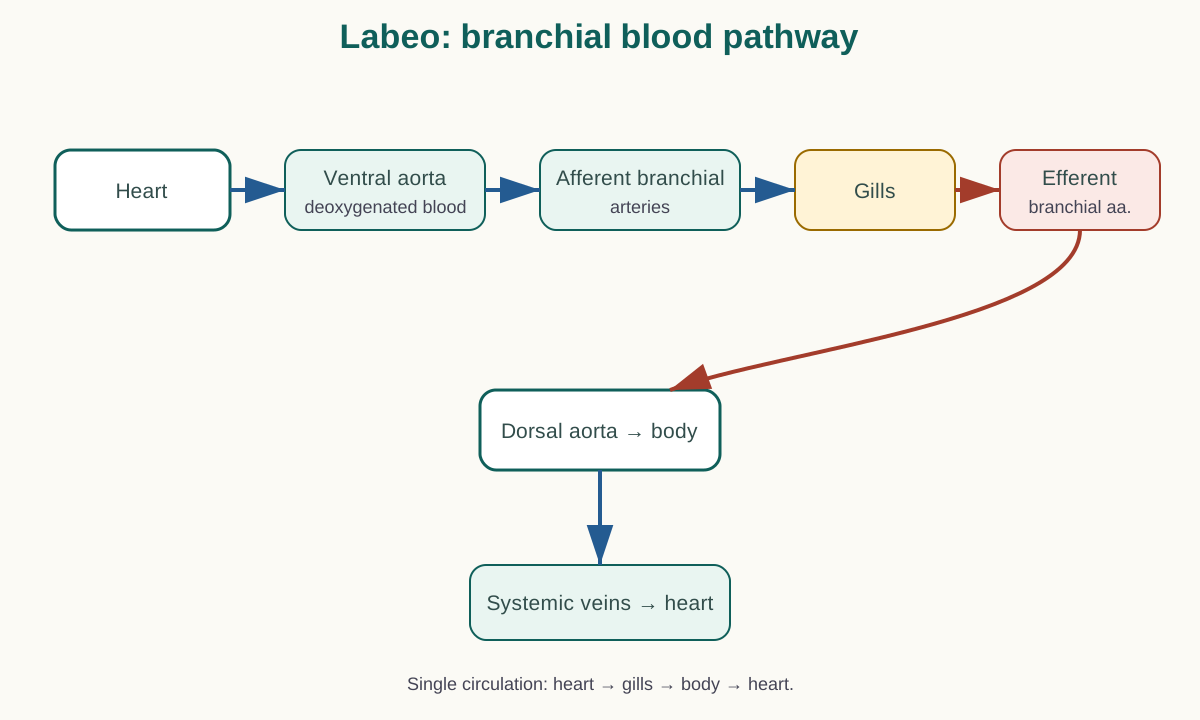
Simplified route:
Heart
 ↓
Ventral aorta
 ↓
Afferent branchial arteries
 ↓
Gill capillaries
 ↓
Efferent branchial arteries
 ↓
Dorsal aorta
 ↓
Body
12. Afferent Branchial Vessels
Ventral aorta থেকে paired afferent branchial arteries gill arches-এর দিকে deoxygenated blood নিয়ে যায়।
At gills:
- branchial vessels subdivide;
- lamellar capillary networks form;
- O₂ uptake, CO₂ loss হয়।
13. Efferent Branchial Vessels
Oxygenated blood lamellae থেকে efferent branchial arteries-এ collect হয়।
These contribute to:
- epibranchial vessels;
- dorsal aorta;
- carotid/head circulation branches।
Exam-এ exact branch naming departmental text অনুসারে লিখবে; core direction ভুল করবে না।
14. Heart and Single Circulation
Teleost heart classical sequence:
- sinus venosus;
- atrium;
- ventricle;
- bulbus arteriosus।
Single circuit:
Heart → gills → body → heart
Why “single”?
এক complete cycle-এ blood heart দিয়ে একবার pass করে।
15. Digestion and Feeding
Rohu:
- no jaw teeth typical cyprinids;
- pharyngeal teeth grind food;
- alimentary canal herbivory-compatible;
- plant material, algae, detritus and natural food components ব্যবহার করে।
FishBase reports adult feeding largely plant-based।
16. Excretion and Osmoregulation
Freshwater fish body fluids environment-এর তুলনায় hyperosmotic।
Problems:
- water enters osmotically;
- salts diffuse out।
Solutions:
- large volume dilute urine;
- kidneys conserve salts;
- gill ionocytes actively take up ions;
- little/no need to drink much freshwater।
Compare shark
Rohu urea-retention marine shark strategy follow করে না।
17. Nervous and Sensory Features
- brain and cranial nerves;
- eyes;
- olfactory organs;
- inner ear;
- lateral line;
- Weberian apparatus-assisted hearing।
Lateral line
Water movement/low-frequency vibration detect করে।
18. Reproduction and Development
- sexes separate;
- external fertilization;
- eggs released in suitable river/flood conditions;
- monsoon spawning important;
- direct fish development through larval/fry stages, not metamorphosis like amphibian/lamprey।
19. Lungfishes, Latimeria and “special bony fishes”
Syllabus brief-note context:
Lungfishes
Sarcopterygian fishes with lungs, air breathing; some tolerate hypoxic water and aestivation।
Latimeria
Coelacanth genus; lobe-finned sarcopterygian। “Living fossil” phrase popular but can mislead—modern Latimeria is an evolving modern lineage, not unchanged ancestor।
Exotic fishes
Exam answer-এ departmental examples use করো; “exotic” means introduced/non-native ornamental or culture species depending on syllabus context।
20. ক-বিভাগ — Exam Capsule
Lateral-line organ কী?
Body-এর mechanosensory canal system, water movement ও vibration detect করে।
Weberian ossicles কী?
Anterior vertebrae-derived ossicles connecting swim bladder vibration to inner ear।
Single circulation কী?
এক complete blood circuit-এ blood heart দিয়ে একবার pass করে।
Afferent branchial artery কী?
Gill-এর দিকে deoxygenated blood বহনকারী artery।
Efferent branchial artery কী?
Gill থেকে oxygenated blood বহনকারী artery।
21. খ-বিভাগ — Model Answer
Weberian ossicles-এর গঠন ও কাজ
Cypriniform fishes-এ anterior vertebrae থেকে modified small bones—claustrum, scaphium, intercalarium ও tripus—swim bladder-এর vibration inner ear-এ transmit করে। ফলে sound pressure sensitivity এবং hearing improve হয়।
22. গ-বিভাগ — Model Long Answer 1
“Rohu মাছের respiration বর্ণনা কর।”
Structures
gill arches, rakers, filaments, secondary lamellae, operculum।
Ventilation
mouth–buccal cavity–opercular cavity pressure cycle water lamellae-এর উপর চালায়।
Exchange
secondary lamellae thin and vascular।
Countercurrent
water ও blood opposite direction → gradient maintained → efficient oxygen extraction।
Conclusion
Gill architecture + ventilation + circulation integrate করে aquatic respiration।
23. গ-বিভাগ — Model Long Answer 2
“Rohu-এর afferent ও efferent branchial blood vessels বর্ণনা কর।”
Afferent
ventral aorta → branchial arches → lamellae; carries deoxygenated blood।
Exchange
lamellar capillaries oxygenate blood।
Efferent
gills → efferent vessels → dorsal aorta/head branches; carries oxygenated blood।
Diagram
Heart → ventral aorta → afferent → gill → efferent → dorsal aorta।
24. Common Mistakes
- Afferent = oxygenated লেখা।
- Efferent = gill-এর দিকে লেখা।
- Fish heart oxygenated systemic blood pump করে লেখা।
- Operculumকে fin বলা।
- Weberian ossiclesকে jaw bones বলা।
- Countercurrent মানে water ও blood same direction লেখা।
- Rohu-কে marine fish বলা।
25. Quick Revision Matrix
| Feature | Rohu |
|---|---|
| order | Cypriniformes |
| family | Cyprinidae |
| habitat | freshwater |
| scales | cycloid |
| gill cover | operculum |
| heart | sinus → atrium → ventricle → bulbus |
| circulation | single |
| afferent | to gill, low O₂ |
| efferent | from gill, high O₂ |
| special hearing | Weberian apparatus |
26. Self-Test
Why does countercurrent flow extract more oxygen?
Because water adjacent to blood maintains a higher oxygen partial pressure along much of the lamella, so diffusion can continue over a larger exchange distance.Why is the fish heart called a “venous heart” in classical zoology?
It mainly receives and pumps deoxygenated blood toward the gills; oxygenated blood then travels from gills to the body without returning to the heart first.27. Transfer Challenge
একটি unknown fish-এর operculum আছে, cycloid scales আছে, swim bladder আছে, and branchial blood passes heart → gill → body।
Diagnosis: typical bony/teleost fish pattern rather than shark-like Chondrichthyes।
28. Research-backed Update Notes
- FishBase currently places Labeo rohita in Cypriniformes, Cyprinidae and records native South Asian distribution including Bangladesh.
- Countercurrent exchange is the key physiological principle for efficient teleost gill gas exchange.
- “Latimeria = unchanged fossil” is an outdated oversimplification; living coelacanths continue to evolve.
References for Course Authors / Verification
- National University Zoology syllabus, paper 223101.
- FishBase, Labeo rohita.
- Standard fish physiology and vertebrate anatomy texts.
- Research literature on teleost gill microcirculation and countercurrent exchange.
Next Lecture
Lecture 07 — Bufo: amphibian body plan, portal circulation and the water–land transition.