Labeo rohita / Rohu
The Puzzle
Water carries far less available oxygen than air and is dense and viscous. A fish therefore needs a large thin respiratory surface, efficient ventilation and precisely directed blood flow.
Rohu solves the problem by combining:
opercular pumping + lamellar gills + countercurrent exchange + branchial circulation
1. Systematic position
Current FishBase placement:
Chordata → Vertebrata → Teleostei → Cypriniformes → Cyprinidae → Labeoninae → Labeo rohita.
The species is native to South Asia, including Bangladesh, and is highly important in aquaculture.
2. Habitat and ecology
Rohu is a freshwater benthopelagic carp of rivers and floodplain systems. Adults feed heavily on plant material and natural food resources. Spawning is strongly associated with monsoon river/flood conditions.
3. External morphology
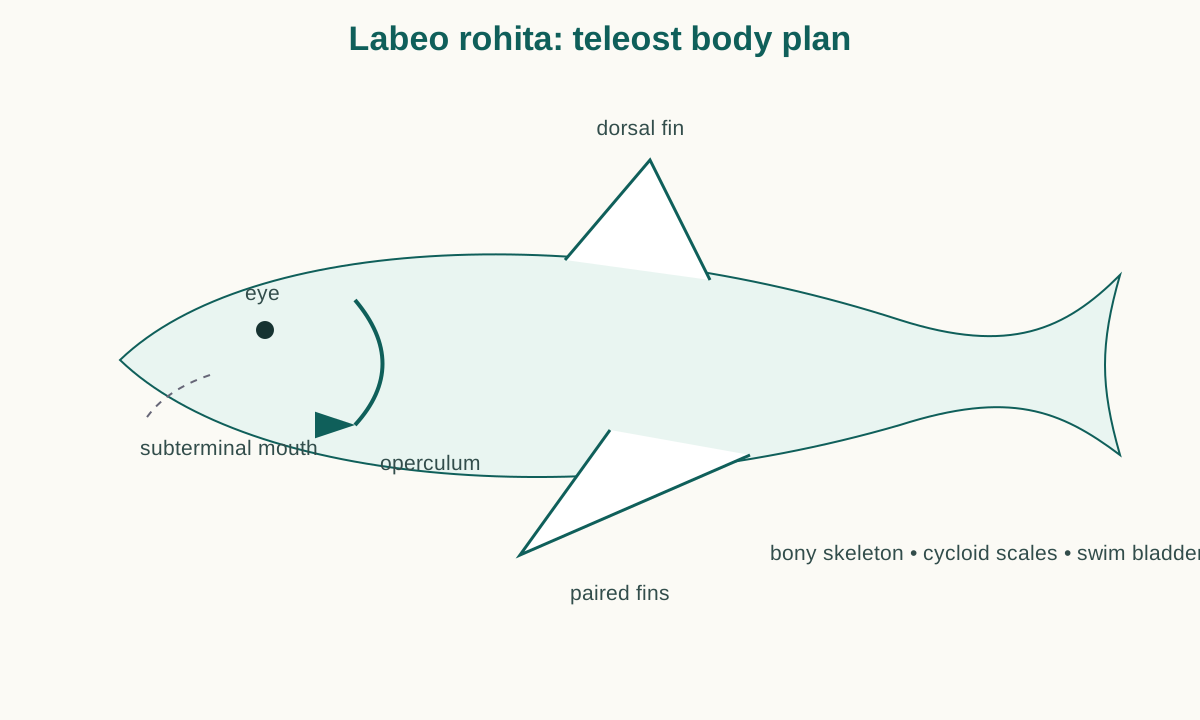
The body is streamlined and laterally compressed, with a subterminal mouth, paired fins, median fins, an operculum, lateral line and cycloid scales.
4. Cycloid scales
Cycloid scales are thin overlapping bony dermal scales with a smooth posterior margin and growth rings. They differ sharply from shark placoid denticles.
5. Skeleton and swim bladder
The skeleton is largely ossified. A gas-filled swim bladder contributes to buoyancy and, in cypriniform fishes, also interacts with hearing through the Weberian apparatus.
6. Weberian ossicles
The classical Weberian chain includes:
- claustrum;
- scaphium;
- intercalarium;
- tripus.
These modified anterior vertebral elements transmit swim-bladder vibration to the inner ear, improving acoustic sensitivity.
7. Gill structure
Each gill arch bears gill rakers and gill filaments. Filaments carry many thin secondary lamellae containing dense capillary networks.
The secondary lamella is the main gas-exchange surface.
8. Ventilation
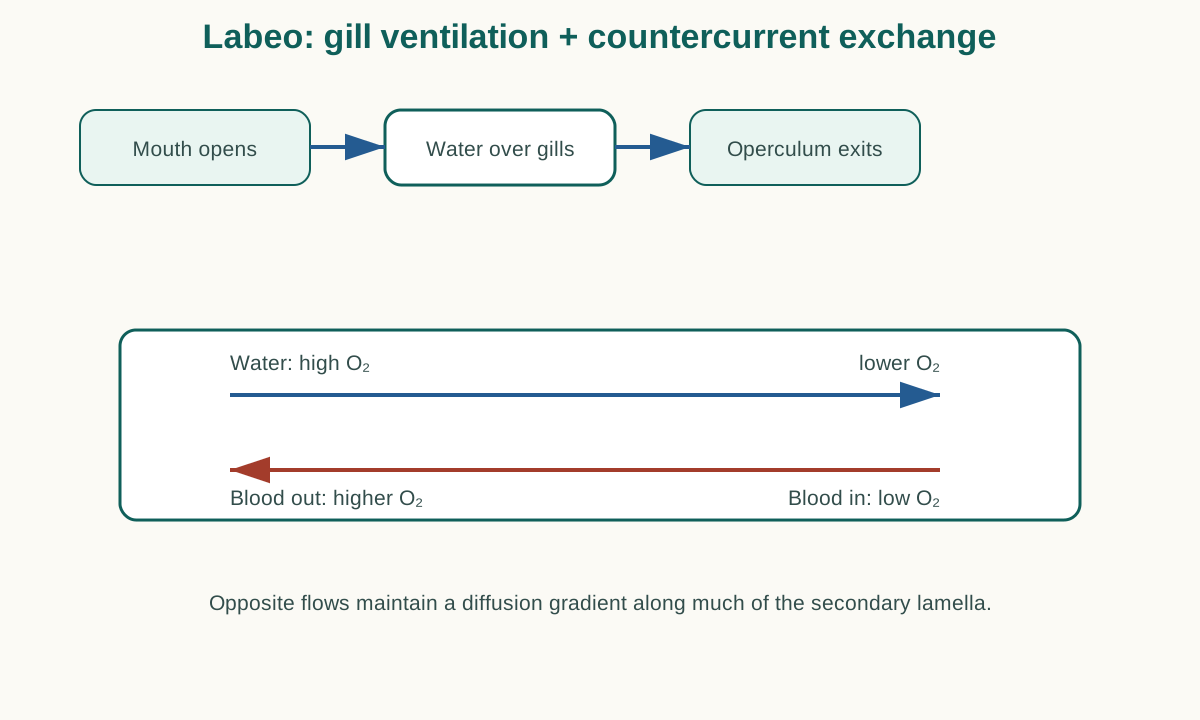
The buccal and opercular cavities form a coordinated pressure pump.
- mouth opens and the buccal cavity expands;
- water enters;
- mouth closes and the buccal cavity compresses;
- water is driven across the gills;
- water exits beneath the operculum.
9. Countercurrent exchange
Blood and water move in opposite directions across a lamellar exchange surface.
This preserves an oxygen partial-pressure gradient over a much greater distance than same-direction flow, allowing sustained oxygen diffusion into blood.
10. Branchial circulation
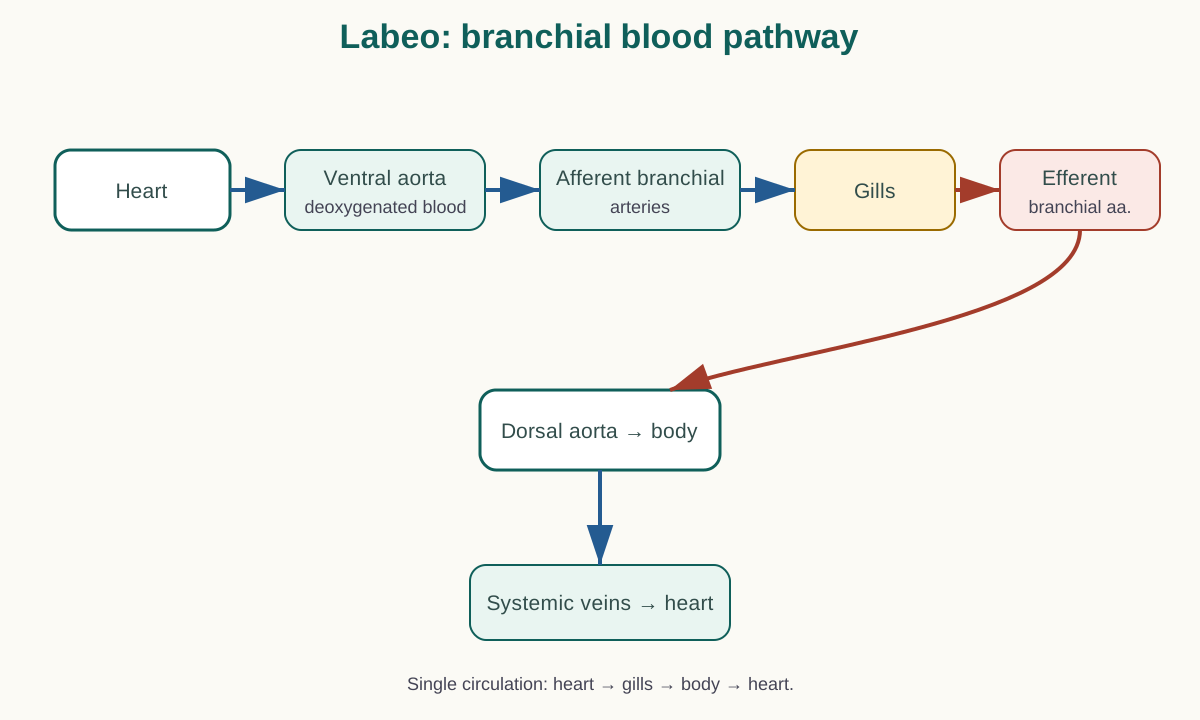
Heart
→ ventral aorta
→ afferent branchial arteries
→ gill capillaries
→ efferent branchial arteries
→ dorsal aorta
→ body
Afferent vessels carry oxygen-poor blood toward the gills.
Efferent vessels carry oxygenated blood away from the gills.
11. Heart and single circulation
Classical teleost sequence:
sinus venosus → atrium → ventricle → bulbus arteriosus.
The circuit is “single” because blood passes through the heart once during a complete heart → gill → body → heart cycle.
12. Feeding and digestion
Cyprinids use pharyngeal teeth rather than typical jaw teeth. Rohu adults feed largely on plant and natural food materials.
13. Freshwater osmoregulation
Freshwater continuously enters the fish by osmosis while salts tend to be lost.
Rohu compensates by:
- producing abundant dilute urine;
- conserving salts in the kidney;
- actively taking ions up across the gills;
- drinking little freshwater.
14. Nervous and sensory systems
Important systems include vision, olfaction, inner ear, the lateral line and Weberian-enhanced hearing.
The lateral line detects low-frequency water movement and vibration.
15. Reproduction
Sexes are separate and fertilization is external. Spawning commonly coincides with monsoon-driven river/flood conditions.
16. Lungfishes and Latimeria
Lungfishes are sarcopterygians with air-breathing lungs. Latimeria is a living coelacanth. The phrase “living fossil” should not be interpreted to mean that modern coelacanths are unchanged ancestors.
17. Section A — one-mark capsule
Lateral line: mechanosensory system detecting water movement.
Weberian ossicles: modified anterior vertebral elements transmitting swim-bladder vibrations to the inner ear.
Single circulation: blood passes through the heart once per complete circuit.
Afferent branchial artery: carries oxygen-poor blood toward the gill.
Efferent branchial artery: carries oxygenated blood away from the gill.
18. Section B — Weberian ossicles
Name the ossicles and explain their role as a mechanical linkage between the swim bladder and the inner ear.
19. Section C — respiration
Discuss gill architecture, buccal–opercular ventilation, secondary lamellae, countercurrent exchange and the branchial blood pathway.
20. Section C — branchial vessels
Trace ventral aorta → afferent vessels → gill capillaries → efferent vessels → dorsal aorta. State the oxygenation status correctly.
21. Common mistakes
- reversing afferent and efferent vessels;
- sending oxygenated systemic blood from the fish heart;
- calling the operculum a fin;
- calling Weberian ossicles jaw bones;
- drawing water and blood in the same direction for countercurrent exchange;
- calling Rohu a marine fish.
22. Quick revision
| Feature | Rohu |
|---|---|
| order | Cypriniformes |
| family | Cyprinidae |
| habitat | freshwater |
| scales | cycloid |
| gill cover | operculum |
| circulation | single |
| afferent | to gill, low O₂ |
| efferent | from gill, high O₂ |
| special hearing | Weberian apparatus |
23. Research-backed update notes
FishBase confirms the current Cypriniformes/Cyprinidae placement and native South Asian distribution. Countercurrent exchange remains the key physiological model for efficient teleost gill gas exchange.
References for Course Authors / Verification
- National University Zoology syllabus, paper 223101.
- FishBase, Labeo rohita.
- Standard fish physiology and comparative anatomy literature.
- Teleost gill microcirculation literature.
Next Lecture
Lecture 07 — Bufo: amphibian body plan, portal circulation and the water–land transition.