Bufo
The Puzzle: land-এ ওঠা, কিন্তু water থেকে পুরো মুক্ত নয়
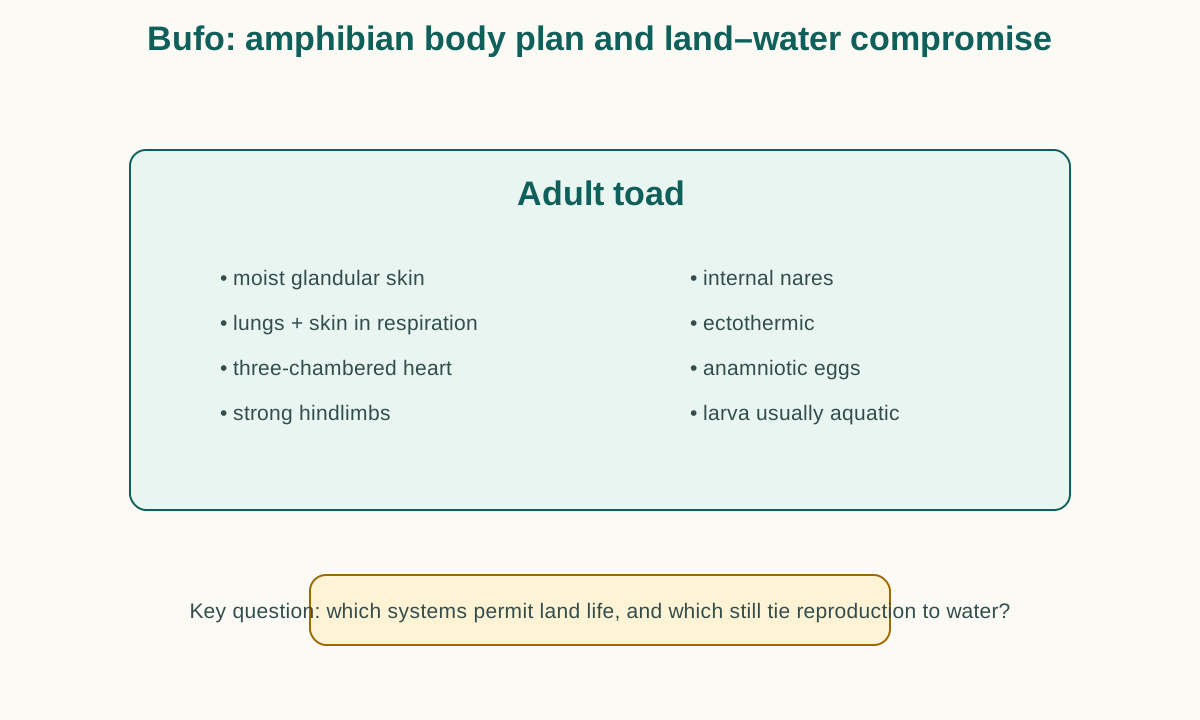
Toad land-এ locomotion করে, lungs ব্যবহার করে, eyelids আছে, limbs আছে। তবু skin moist রাখতে হয়, eggs shell-less, tadpole aquatic।
Amphibia তাই “অসম্পূর্ণ reptile” নয়। এটি একটি distinctive life strategy:
Terrestrial adult + water-dependent reproduction and moist physiological interface
এই lecture শেষে তুমি পারবে:
- Bufo systematic position ও diagnostic features লিখতে;
- amphibian water–land compromises explain করতে;
- respiration-এর cutaneous, buccopharyngeal ও pulmonary routes বুঝতে;
- heart ও double circulation outline করতে;
- hepatic ও renal portal systems trace করতে;
- reproduction, tadpole ও metamorphosis লিখতে;
- living Amphibia classification এবং adaptive radiation বুঝতে;
- ক/খ/গ answer লিখতে।
1. Systematic Position
Traditional teaching genus Bufo broadly refers to true toads; South Asian “common toad” treatments historically used Bufo melanostictus, now commonly placed as Duttaphrynus melanostictus।
NU-friendly framework:
- Phylum: Chordata
- Subphylum: Vertebrata
- Class: Amphibia
- Order: Anura
- Family: Bufonidae
- Traditional genus: Bufo
Taxonomy note
Exam-এ syllabus term Bufo ব্যবহার করবে; modern accepted species name source অনুযায়ী আলাদা note করতে পারো।
2. Amphibia Diagnostic Characters
- ectothermic tetrapods;
- skin thin, moist, glandular;
- scales usually absent in frogs/toads;
- two pairs limbs in typical forms;
- lungs in adult but cutaneous respiration important;
- three-chambered heart;
- eggs usually shell-less/anamniotic;
- fertilization often external in anurans;
- larva often aquatic;
- metamorphosis common।
3. External Morphology
Adult toad:
- head and trunk; neck short;
- tail absent;
- forelimbs shorter, hindlimbs stronger;
- eyes with eyelids/nictitating membrane;
- external tympanum;
- nostrils;
- wide mouth;
- parotoid glands in many toads;
- rough/warty glandular skin।
4. Skin: শুধু covering নয়, physiological organ
Amphibian skin:
- mucus glands;
- poison/granular glands;
- rich capillary supply;
- water exchange;
- gas exchange।
Why must it remain moist?
Gas diffusion membrane-এর জন্য dissolved gases needed। Dry skin cutaneous respiration reduce করে।
5. Skeleton and Locomotion
Adaptations to land:
- strong pectoral/pelvic girdles;
- limbs support body;
- elongated hindlimbs jumping/hopping;
- fused/modified bones reduce mass and handle impact;
- vertebral column stronger than fish।
Toads generally short powerful hops/walks rather than frog-like long jumps।
6. Feeding
Adult toads carnivorous/insectivorous।
Mechanism:
- visual prey detection;
- protrusible sticky tongue;
- rapid tongue projection;
- prey swallowed mostly whole।
Teeth absent/reduced in many true toads compared with frogs।
7. Digestive System
Mouth → buccopharyngeal cavity → esophagus → stomach
→ small intestine → large intestine → cloaca
Associated organs:
- liver;
- gall bladder;
- pancreas।
Cloaca digestive, urinary and reproductive outflow-এর common chamber।
8. Respiration
Adult amphibian একাধিক route ব্যবহার করে।
8.1 Cutaneous respiration
Moist vascular skin দিয়ে O₂/CO₂ diffusion।
Important during:
- rest;
- submergence;
- winter dormancy।
8.2 Buccopharyngeal respiration
Mouth floor movements buccopharyngeal lining-এর উপর air renew করে।
8.3 Pulmonary respiration
Lungs simple sac-like।
Air movement positive-pressure buccal pump দ্বারা:
Nostrils open
 ↓
Buccal cavity fills
 ↓
Glottis opens
 ↓
Buccal floor rises
 ↓
Air forced into lungs
Mammalian negative-pressure diaphragm system নেই।
9. Heart and Double Circulation
Heart:
- sinus venosus;
- right atrium;
- left atrium;
- single ventricle;
- conus/truncus region।
Two circuits
- pulmocutaneous circuit;
- systemic circuit।
Complete separation না হলেও cardiac architecture oxygenated/deoxygenated bloodকে partially segregate করে।
10. Portal System কী?
Portal system-এ blood:
এক capillary bed → vein → আরেক capillary bed
অর্থাৎ vein সরাসরি heart-এ না গিয়ে second capillary network-এ blood নিয়ে যায়।
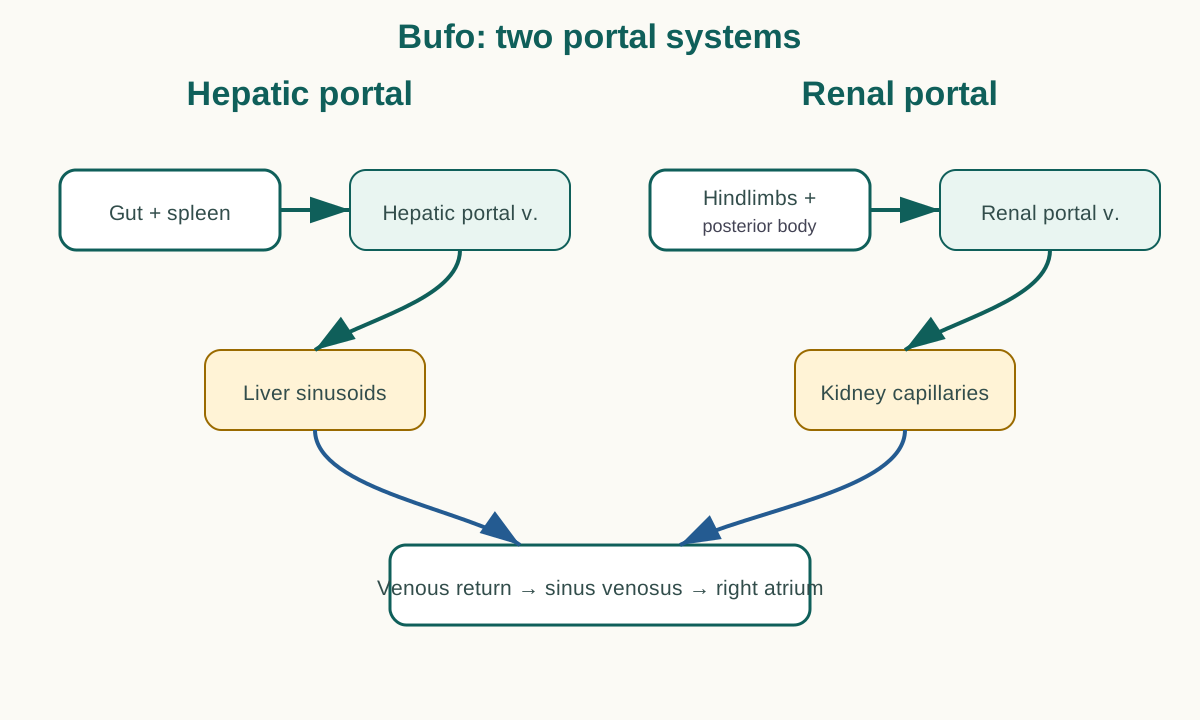
Bufo-তে দুইটি major portal system exam-important:
- hepatic portal;
- renal portal।
11. Hepatic Portal System
Digestive tract থেকে nutrient-rich blood liver-এ আসে।
Simplified pathway:
Stomach/intestine/spleen
      ↓
Hepatic portal vein
      ↓
Liver sinusoids
      ↓
Hepatic veins
      ↓
Postcaval vein
      ↓
Sinus venosus / heart
Functional significance
Liver:
- absorbed nutrients process করে;
- glucose metabolism;
- detoxification;
- storage;
- metabolic regulation।
So intestine → liver first passage physiologically logical।
12. Renal Portal System
Posterior body/hindlimb venous blood-এর একটি portion kidney capillaries-এর দিকে route হতে পারে।
Simplified:
Hindlimb/posterior body
     ↓
Renal portal veins
     ↓
Kidney capillary network
     ↓
Renal veins
     ↓
Postcaval circulation
Bullfrog vascular-cast studies renal portal input into kidney microcirculation confirm করে।
Important correction
Renal portal system মানে “all hindlimb blood must go only to kidneys” নয়। Venous connections/shunts variation থাকতে পারে।
13. Why Portal Systems Matter
Portal design allows organ-specific processing before blood returns to heart।
- hepatic portal → nutrient processing;
- renal portal → kidney perfusion/filter-regulation pathways।
This is a circulation architecture question, শুধু vein names নয়।
14. Excretion
Adult amphibians:
- kidneys mesonephric/opisthonephric type in classical terminology;
- ureters;
- urinary bladder;
- cloaca।
Adults often ureotelic—urea major nitrogenous waste।
Aquatic larvae more ammonotelic হতে পারে।
15. Nervous and Sensory Systems
- differentiated brain;
- cranial nerves;
- eyes with eyelids;
- tympanic membrane + middle ear;
- olfaction;
- balance system।
Tympanum airborne sound detection-এ terrestrial adaptation।
16. Reproduction
Anurans typically breeding water-এ।
- sexes separate;
- male amplexus;
- eggs released in water;
- external fertilization common;
- jelly-coated eggs;
- larval tadpole।
Why water dependence remains?
Egg lacks amniotic shell and desiccates easily; sperm transfer/fertilization and larval gill-based development water-dependent।
17. Tadpole and Metamorphosis
Tadpole:
- aquatic;
- tail;
- gills;
- lateral-line system;
- plant/detrital feeding common;
- initially fish-like locomotion।
Metamorphosis:
- limbs develop;
- tail resorbs;
- gills disappear;
- lungs become dominant;
- gut shortens/remodels for carnivory;
- skull and sensory systems reorganize।
Thyroid hormone metamorphosis regulate করে।
18. Living Amphibia Classification
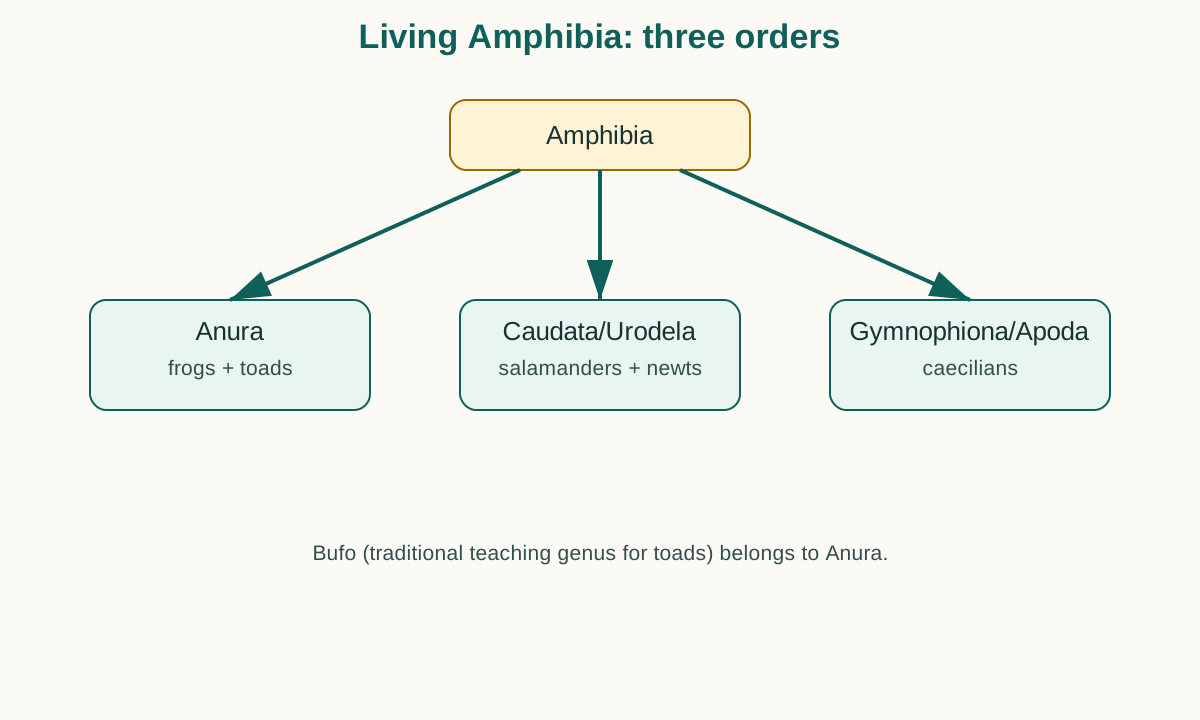
Anura
Frogs and toads; adult tail absent।
Caudata/Urodela
Salamanders and newts; adult tail present।
Gymnophiona/Apoda
Caecilians; limbless burrowing amphibians।
19. Adaptive Radiation of Amphibia
Adaptive radiation মানে different ecological niches-এ structural/functional diversification।
Examples:
- aquatic frogs;
- terrestrial toads;
- arboreal tree frogs;
- burrowing caecilians;
- aquatic/terrestrial salamanders;
- neotenic salamanders retaining larval traits।
Important point
Adaptive radiation = “higher to lower” ranking নয়; ecological diversification।
20. Neoteny
Neoteny হলো reproductive maturity অর্জনের পরও juvenile/larval characters retain করা।
Example: axolotl-type salamander systems।
Amphibian developmental plasticity বোঝাতে important।
21. ক-বিভাগ — Exam Capsule
Portal system কী?
এক capillary bed থেকে venous blood second capillary bed-এ যাওয়ার vascular arrangement।
Aestivation কী?
Hot/dry unfavorable season-এ reduced activity/dormancy।
Neoteny কী?
Sexual maturity অর্জন করেও larval/juvenile characters retain করা।
Tympanum কী?
External membrane transmitting airborne vibration to middle ear।
Amplexus কী?
Anuran breeding embrace facilitating external fertilization।
22. খ-বিভাগ — Model Answer
Hepatic portal এবং renal portal system-এর পার্থক্য
| Feature | Hepatic portal | Renal portal |
|---|---|---|
| origin | digestive organs | hindlimb/posterior body |
| portal vein | hepatic portal vein | renal portal veins |
| second capillary bed | liver sinusoids | kidney capillaries |
| major role | nutrient/metabolic processing | renal perfusion/excretory regulation |
23. গ-বিভাগ — Model Long Answer
“Bufo-এর portal system বর্ণনা কর।”
Definition
Portal circulation second capillary bed-এ venous blood পাঠায়।
Hepatic portal
digestive organs → hepatic portal vein → liver sinusoids → hepatic veins → postcaval system।
Renal portal
posterior body/hindlimbs → renal portal veins → kidney capillary network → renal veins/postcaval।
Significance
Organ-specific processing before return to heart।
Diagram
Two systems side-by-side।
24. গ-বিভাগ — Amphibia classification answer
Start with general characters, then:
- Anura;
- Caudata/Urodela;
- Gymnophiona/Apoda;
for each give 2–3 diagnostic characters + example।
25. Common Mistakes
- Amphibian lungs mammalian alveolar lungs-এর মতো লেখা।
- Renal portal = kidney artery বলা।
- Hepatic portal vein oxygenated artery বলা।
- Tadpole-এ lungs only respiration লেখা।
- Amphibian egg amniotic shell আছে লেখা।
- Caecilianকে snake/reptile বলা।
26. Quick Revision Matrix
| Feature | Bufo |
|---|---|
| class | Amphibia |
| order | Anura |
| skin | moist, glandular |
| adult respiration | skin + buccopharynx + lungs |
| heart | 2 atria + 1 ventricle |
| portals | hepatic + renal |
| adult waste | mainly urea |
| fertilization | usually external |
| larva | tadpole |
| egg | anamniotic |
27. Self-Test
Why is hepatic portal circulation useful?
Nutrient-rich blood from the gut reaches the liver first, allowing metabolic processing, storage and detoxification before systemic return.Why is Bufo not fully independent of water?
Its moist skin and, especially, shell-less eggs and aquatic larval development preserve strong dependence on water/moist environments.28. Transfer Challenge
একটি tetrapod has lungs, limbs and tympanum, but lays shell-less eggs in water and has an aquatic gilled larva।
Diagnosis: Amphibia pattern, not reptilian amniote pattern।
29. Research-backed Update Notes
- Modern amphibian taxonomy recognizes Anura, Caudata and Gymnophiona as the three living orders.
- Renal portal blood supply in frogs is anatomically documented.
- Traditional Bufo melanostictus nomenclature has changed in modern taxonomy; retain syllabus terminology for exam alignment and note accepted names separately.
References for Course Authors / Verification
- National University Zoology syllabus, paper 223101.
- Comparative vertebrate anatomy texts.
- Amphibian renal microcirculation literature.
- Modern amphibian taxonomy references.
Next Lecture
Lecture 08 — Hemidactylus: reptilian terrestrial independence, arterial system and living Reptilia classification.