Homo sapiens: Eye, Ear and Mammalian Diversity
The Puzzle: perception organ-এ নয়, system-এ
Eye “দেখে” এবং ear “শোনে”—এই ভাষা convenient, কিন্তু physiologically incomplete।
বাস্তবে:
Sense organ physical energyকে neural signal-এ convert করে; brain সেই signal interpret করে perception তৈরি করে।
এই lecture শেষে তুমি পারবে:
- Mammalia diagnostic features লিখতে;
- Homo sapiens systematic position দিতে;
- eye-এর three coats/chambers/optical pathway explain করতে;
- retina, rods, cones ও vision mechanism বুঝতে;
- accommodation, pupil reflex basics বলতে;
- ear-এর outer, middle, inner parts লিখতে;
- ossicles ও cochlea-এর hearing mechanism explain করতে;
- eye vs ear sensory transduction compare করতে;
- monotremes, marsupials, aquatic mammals, apes ও Bengal tiger brief notes লিখতে;
- ক/খ/গ answers তৈরি করতে।
1. Systematic Position of Homo sapiens
- Phylum: Chordata
- Subphylum: Vertebrata
- Class: Mammalia
- Order: Primates
- Family: Hominidae
- Genus: Homo
- Species: Homo sapiens
2. Mammalia Diagnostic Characters
- hair at least at some life stage;
- mammary glands;
- three middle-ear ossicles: malleus, incus, stapes;
- dentary-squamosal jaw joint;
- heterodont teeth common;
- muscular diaphragm;
- four-chambered heart;
- endothermy;
- well-developed neocortex;
- internal fertilization;
- parental care usually extensive।
Most diagnostic triad
Hair + mammary glands + three middle-ear ossicles
3. Homo sapiens Type-Study Overview
NU syllabus full type study broad systems include:
- skeletal;
- digestive;
- circulatory;
- respiratory;
- excretory;
- nervous;
- reproductive;
- endocrine;
- food/feeding;
- mode of life/development।
এই lecture eye/ear exam priority-তে focus করে, কিন্তু wider system connection মনে রাখতে হবে।
Part I — Human Eye
4. Eye as an Optical + Neural Organ
Eye-এর কাজ তিন layer-এ ভাবো:
- light capture;
- optical focusing;
- neural transduction।
5. Wall of the Eyeball: Three Coats
5.1 Fibrous coat
- sclera;
- cornea।
Cornea transparent and major refracting surface।
5.2 Vascular coat / uvea
- choroid;
- ciliary body;
- iris।
Iris pupil size control করে।
5.3 Neural coat
- retina।
Retina photoreceptors and neuronal layers contain করে।
6. Chambers and Media
Aqueous humor
Cornea–lens anterior region-এর fluid; pressure, nutrition and optics-এ role।
Lens
Flexible transparent structure; focus fine-tune করে।
Vitreous humor
Posterior cavity-এর gel; eyeball shape support করে।
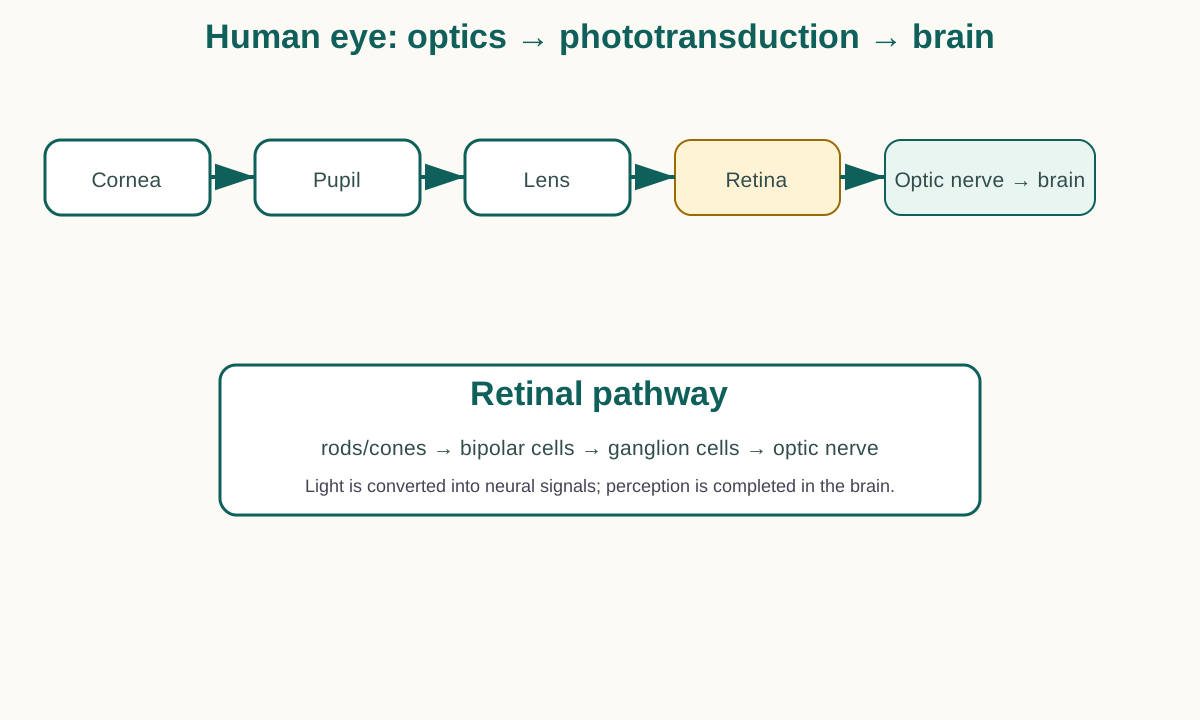
7. Optical Pathway
National Eye Institute summary অনুযায়ী:
Light
 ↓
Cornea
 ↓
Pupil
 ↓
Lens
 ↓
Vitreous
 ↓
Retina
 ↓
Electrical signals
 ↓
Optic nerve
 ↓
Brain
Cornea + lens light retina-তে focus করে।
8. Iris and Pupil
Pupil hole; iris colored muscular diaphragm।
Bright light → pupil constricts।
Dim light → pupil dilates।
This regulates retinal illumination।
9. Accommodation
Near/far focus adjust করতে ciliary muscle lens curvature change করে।
Near object
- ciliary muscle contracts;
- zonular tension decreases;
- lens more convex;
- refractive power increases।
Distant object
- ciliary muscle relaxes;
- zonular tension increases;
- lens flatter।
10. Retina
Retina major neural layers:
- photoreceptors;
- bipolar cells;
- ganglion cells;
- horizontal/amacrine interneurons।
Simplified signal route:
Rods / cones
   ↓
Bipolar cells
   ↓
Ganglion cells
   ↓
Optic nerve
11. Rods and Cones
Rods
- high sensitivity;
- dim-light vision;
- low color discrimination;
- peripheral retina abundant।
Cones
- bright-light vision;
- color;
- high acuity;
- fovea-rich।
Fovea
Central high-acuity region with dense cones।
12. Blind Spot
Optic disc:
- ganglion axons leave eye;
- no photoreceptors;
- physiological blind spot।
Brain perceptually fills missing region using binocular/context information।
13. Vision Mechanism
- light enters cornea;
- pupil regulates quantity;
- lens focuses;
- retinal image forms inverted optically;
- photoreceptors absorb photons;
- phototransduction changes membrane signaling;
- retinal circuits process contrast/color/spatial information;
- ganglion cell action potentials leave via optic nerve;
- visual pathways reach brain;
- cortical processing produces perception।
Important correction
Brain does not simply “turn upside-down image upright” like rotating a photograph। Perception emerges from neural spatial processing।
Part II — Human Ear
14. Three Divisions
- outer ear;
- middle ear;
- inner ear।
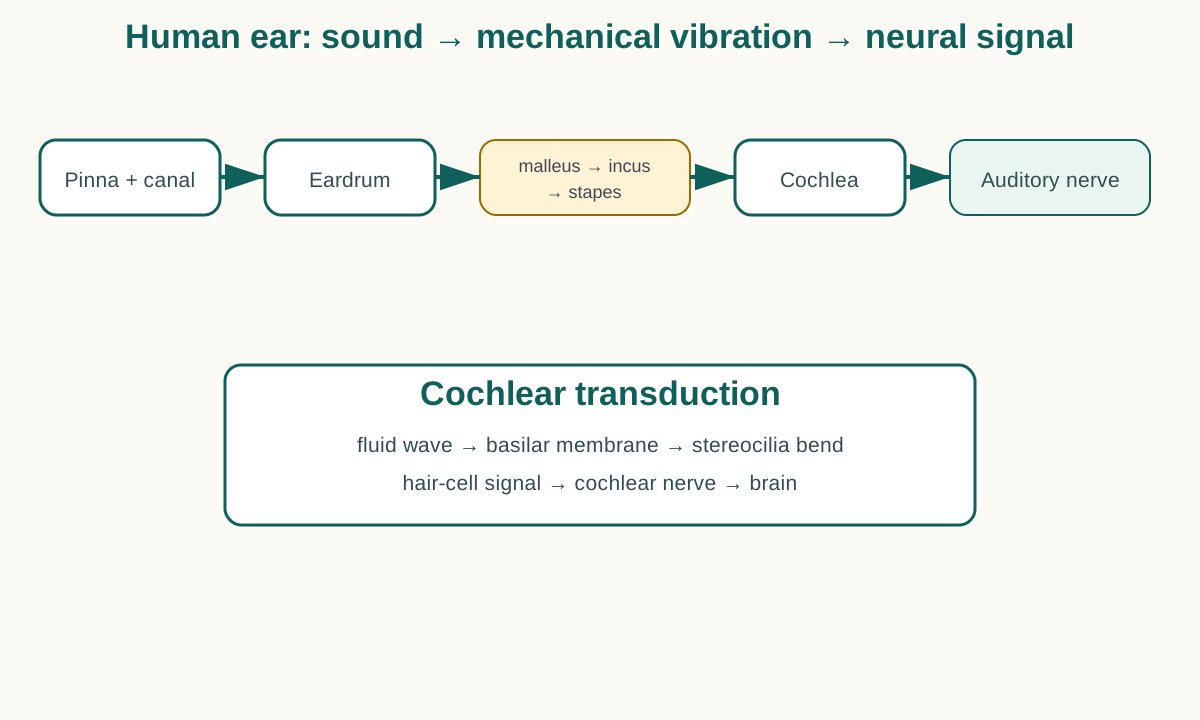
15. Outer Ear
- pinna/auricle;
- external auditory canal;
- tympanic membrane boundary।
Function: sound collect/direct to eardrum।
16. Middle Ear
Contains three ossicles:
- malleus;
- incus;
- stapes।
Why three ossicles matter?
They transfer and amplify/match vibration from air-filled outer ear to fluid-filled cochlea।
Stapes footplate acts on oval window।
Eustachian tube
Middle-ear pressure equalization with pharynx।
17. Inner Ear
Major systems:
- cochlea — hearing;
- vestibule — balance;
- semicircular canals — angular acceleration।
18. Cochlea
Fluid-filled spiral structure।
Important internal elements:
- scala vestibuli;
- scala media;
- scala tympani;
- basilar membrane;
- organ of Corti;
- hair cells;
- tectorial membrane।
19. Organ of Corti
Sensory epithelium on basilar membrane।
Hair-cell stereocilia deflection mechanical energy → receptor electrical signal convert করে।
20. Hearing Mechanism
NIDCD stepwise framework:
Sound wave
 ↓
Ear canal
 ↓
Tympanic membrane vibrates
 ↓
Malleus → incus → stapes
 ↓
Oval window
 ↓
Cochlear fluid wave
 ↓
Basilar membrane motion
 ↓
Hair-cell stereocilia bend
 ↓
Electrical signal
 ↓
Cochlear nerve
 ↓
Brain
21. Pitch Coding
Basilar membrane tonotopic।
- base region stiffer/narrower → high frequencies;
- apical region more flexible → low frequencies।
Thus frequency represented spatially along cochlea।
22. Balance
Semicircular canals
Angular rotation detect করে।
Utricle/saccule
Linear acceleration এবং head tilt detect করে।
Hair cells again mechanotransduction use করে।
23. Eye vs Ear: Common Principle
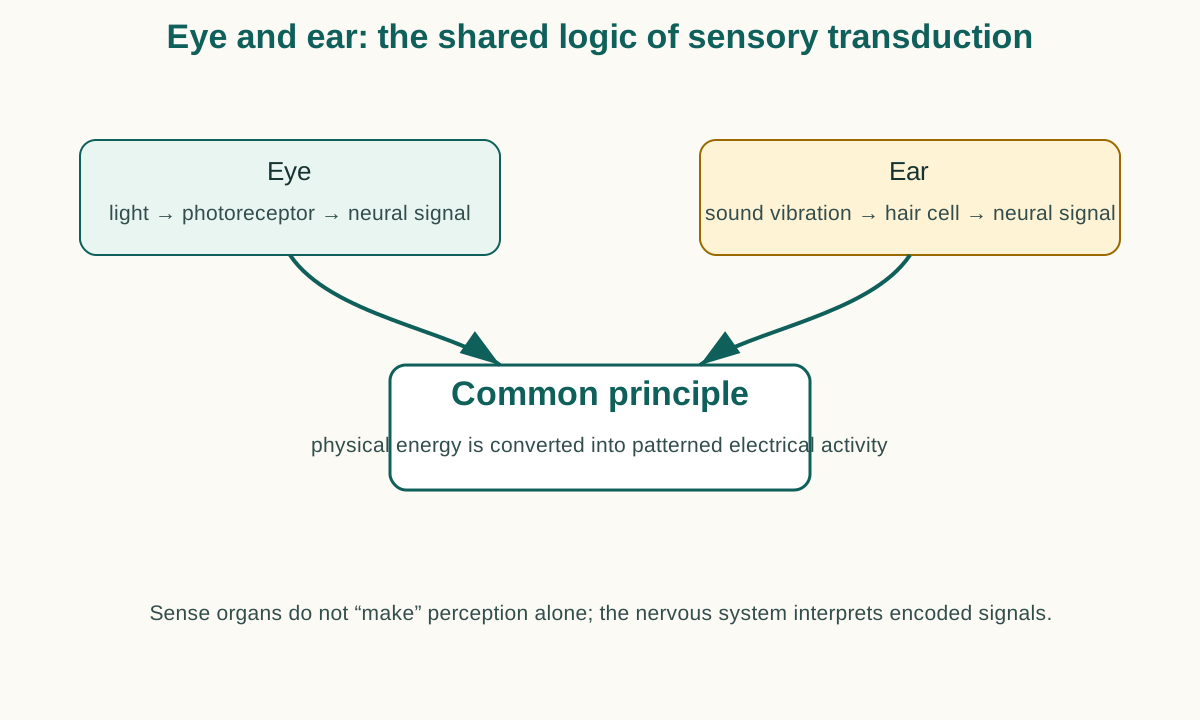
| Eye | Ear |
|---|---|
| stimulus: light | stimulus: sound/mechanical motion |
| receptor: rods/cones | receptor: hair cells |
| transduction: photon → electrical | stereocilia deflection → electrical |
| nerve: optic | cochlear/vestibular |
| brain interprets vision | brain interprets sound/balance |
Core rule:
Different physical energies, same systems logic: transduction → coding → neural interpretation.
24. Mammalian Diversity
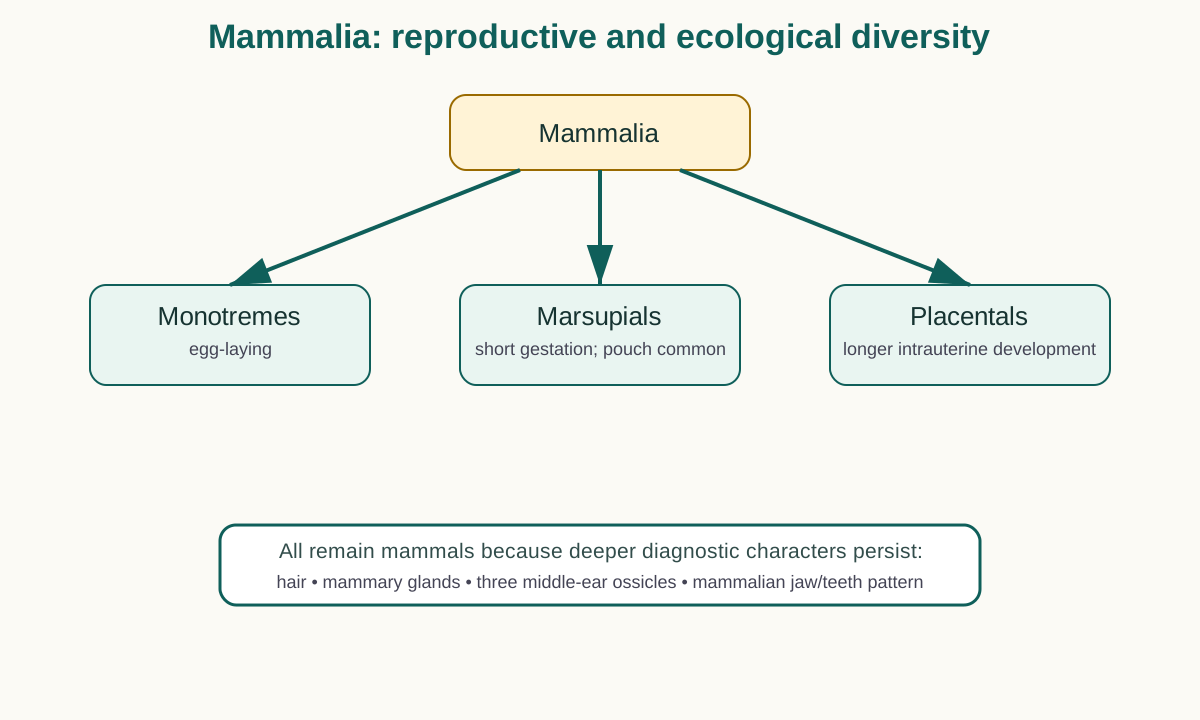
Monotremes
Egg-laying mammals।
Examples:
- platypus;
- echidnas।
Mammary glands আছে, nipples typical নেই; milk skin/fur-associated openings থেকে delivered।
Marsupials
Short gestation; young highly altricial; pouch common but not universal in identical form।
Examples:
- kangaroo;
- opossum।
Placentals
Placenta-mediated prolonged intrauterine development typical।
25. Aquatic Mammals
Examples:
- whales/dolphins;
- seals;
- manatees।
Despite aquatic shape:
- lungs;
- mammary glands;
- hair at some stage;
- three ear ossicles;
- mammalian reproduction।
Convergence lesson
Whale fish নয়। Streamlining analogous environmental adaptation।
26. Apes
Hominoidea includes gibbons and great apes।
General traits:
- no external tail;
- mobile shoulder;
- large brain relative to body;
- complex social/behavioral systems।
Humans are apes in modern taxonomy—family Hominidae, genus Homo।
27. Bengal Tiger
Panthera tigris tigris।
Mammalian diagnostic features plus carnivoran specializations:
- heterodont teeth;
- large canines/carnassials;
- retractile claws;
- predatory sensory system।
Bangladesh ecological relevance: Sundarbans population iconic, conservation context important।
28. ক-বিভাগ — Exam Capsule
Retina কী?
Eye-এর light-sensitive neural layer containing photoreceptors and retinal neurons।
Optic nerve কী?
Retinal ganglion-cell axons carrying visual signals toward brain।
Auditory ossicles-এর নাম?
Malleus, incus, stapes।
Organ of Corti কী?
Cochlea-এর basilar membrane-এর উপর hearing sensory epithelium।
Diastema কী?
Teeth-এর মধ্যে toothless gap; many herbivorous mammals-এ prominent।
29. খ-বিভাগ — Vision Mechanism
Short answer:
Cornea/lens light focus করে retina-তে। Rods/cones lightকে neural signals-এ transduce করে। Bipolar/ganglion cells process করে; optic nerve brain-এ signal বহন করে। Visual cortex interpretation-এর মাধ্যমে perception তৈরি করে।
30. খ-বিভাগ — Hearing Mechanism
Sound → tympanum → ossicles → oval window → cochlear fluid → basilar membrane → hair cells → cochlear nerve → brain।
31. গ-বিভাগ — Model Long Answer 1
“মানবচক্ষুর অন্তর্গঠন ও vision mechanism বর্ণনা কর।”
Structure
- sclera/cornea;
- choroid/ciliary body/iris;
- retina;
- lens;
- aqueous/vitreous;
- optic nerve।
Mechanism
refraction → focus → phototransduction → retinal processing → optic nerve → brain।
Diagram
Cross-section eye + light path।
32. গ-বিভাগ — Model Long Answer 2
“মানবকর্ণের গঠন ও hearing mechanism বর্ণনা কর।”
Outer ear
pinna + canal।
Middle ear
tympanum + malleus/incus/stapes + Eustachian tube।
Inner ear
cochlea + vestibular apparatus।
Hearing
air vibration → ossicles → cochlear fluid → hair-cell transduction → auditory nerve → brain।
Diagram
Outer–middle–inner ear labelled।
33. Common Mistakes
- Pupilকে black tissue বলা—it’s an opening।
- Lens main light-sensitive organ বলা।
- Retina “image stores” লেখা।
- Stapes round window-এ attaches লেখা—primarily oval window।
- Semicircular canals main hearing organ বলা।
- Hair cells regenerate freely in adult humans বলা।
- Whaleকে fish বা platypusকে non-mammal বলা।
34. Quick Revision Matrix
| System | Key sequence |
|---|---|
| vision | cornea → pupil → lens → retina → optic nerve → brain |
| hearing | canal → eardrum → ossicles → cochlea → nerve → brain |
| retina | rods/cones → bipolar → ganglion |
| middle-ear bones | malleus → incus → stapes |
| balance | semicircular canals + vestibule |
| mammal hallmark | hair + mammary glands + 3 ossicles |
35. Self-Test
Why is retina nervous tissue rather than a simple screen?
It contains photoreceptors and multiple neural layers that transduce and preprocess visual information before signals leave through the optic nerve.Why are ossicles necessary?
They improve transfer of vibration from low-impedance air to high-impedance cochlear fluid and mechanically couple eardrum motion to the oval window.Why is a whale a mammal?
Mammary glands, lungs, hair at some life stage, mammalian ear/jaw anatomy and reproduction provide deeper diagnostic evidence than aquatic body shape.36. Transfer Challenge
একটি animal egg lays, but has hair, mammary glands and three middle-ear ossicles।
Diagnosis: Mammalia—specifically monotreme-type mammal। Egg laying alone does not define Reptilia/Aves।
37. Research-backed Update Notes
- National Eye Institute confirms cornea/lens focusing and retinal photoreceptor conversion to electrical signals.
- NIDCD details the tympanum → ossicles → cochlea → hair-cell → auditory nerve sequence.
- Mammalian classification should rely on diagnostic anatomy, not reproductive mode alone.
- “Aquatic = fish” is a classic convergence error।
References for Course Authors / Verification
- National University Zoology syllabus, paper 223101.
- National Eye Institute: How the Eyes Work.
- NIDCD: How Do We Hear?
- Standard human anatomy and physiology texts.
- Modern mammalian taxonomy references.
Course Synthesis: What changed across the 10 lectures?
Chordate body plan
   ↓
Tunicate metamorphic specialization
   ↓
Cephalochordate retention of ancestral-like plan
   ↓
Jawless vertebrate innovations
   ↓
Jawed cartilaginous fish
   ↓
Bony fish branchial efficiency
   ↓
Amphibian land-water compromise
   ↓
Reptilian amniotic independence
   ↓
Avian high-performance respiration
   ↓
Mammalian sensory/neural specialization
This is a comparative study scaffold, not a literal ladder of modern species transforming into one another.
End of Core Lecture Series
Next recommended site layer: Comparative System Matrix + 2022–2024 Past Questions + 2025 Exam Intelligence.