Columba livia / Pigeon
The Puzzle: lung rigid, কিন্তু respiration extraordinarily efficient
Mammalian lung expand/contract করে। Bird lung comparatively rigid। তাহলে high-energy flight-এর oxygen demand কীভাবে মেটে?
Answer:
Air sacs act as bellows; rigid parabronchial lung receives sustained directional airflow.
এই lecture শেষে তুমি পারবে:
- pigeon systematic position ও avian characters লিখতে;
- feathers ও skeleton-এর flight adaptations explain করতে;
- 9 air sacs name/location/function বলতে;
- two-breath cycle ও unidirectional airflow বুঝতে;
- avian circulation outline করতে;
- migration causes, types and navigation mechanisms লিখতে;
- Archaeopteryx ও flightless birds brief note লিখতে;
- ক/খ/গ answers তৈরি করতে।
1. Systematic Position
- Phylum: Chordata
- Subphylum: Vertebrata
- Class: Aves
- Order: Columbiformes
- Family: Columbidae
- Genus: Columba
- Species: Columba livia
IOC World Bird List continues to recognize a dynamic modern avian taxonomy; order-level bird classification is periodically updated।
2. Avian Diagnostic Characters
- feathers;
- forelimbs modified as wings;
- beak, no true teeth in modern birds;
- endothermy;
- four-chambered heart;
- rigid lungs with air sacs;
- lightweight specialized skeleton;
- hard-shelled amniotic eggs;
- high metabolic rate।
3. External Morphology
Pigeon body:
- streamlined;
- head, neck, trunk, tail;
- beak;
- paired wings;
- hindlimbs;
- feathers;
- tail feathers।
Flight surface shaped by wing feathers and body contour।
4. Feathers
Main types:
- contour feathers;
- remiges (flight feathers of wing);
- rectrices (tail feathers);
- down feathers;
- filoplumes;
- bristles, depending on classification।
Typical feather structure
- calamus;
- rachis;
- barbs;
- barbules;
- hooklets।
Interlocking barbules create continuous aerodynamic vane।
5. Flight Adaptations: Integrated System
Flight adaptation কোনো এক structure নয়।
Structural
- streamlined body;
- wings;
- feathers;
- lightweight/fused bones;
- keeled sternum;
- strong pectoral girdle।
Physiological
- endothermy;
- high metabolic rate;
- efficient respiratory system;
- four-chambered heart;
- rapid circulation।
Neuromuscular
- large flight muscles;
- excellent balance/vision;
- cerebellar coordination।
6. Skeleton
Flight-specialized features:
- pneumatic bones in many regions;
- fusion for rigidity;
- furcula;
- strong coracoid;
- keeled sternum;
- synsacrum;
- pygostyle;
- reduced heavy jaw/teeth।
Pygostyle
Fused terminal caudal vertebrae supporting tail feathers।
7. Air Sacs
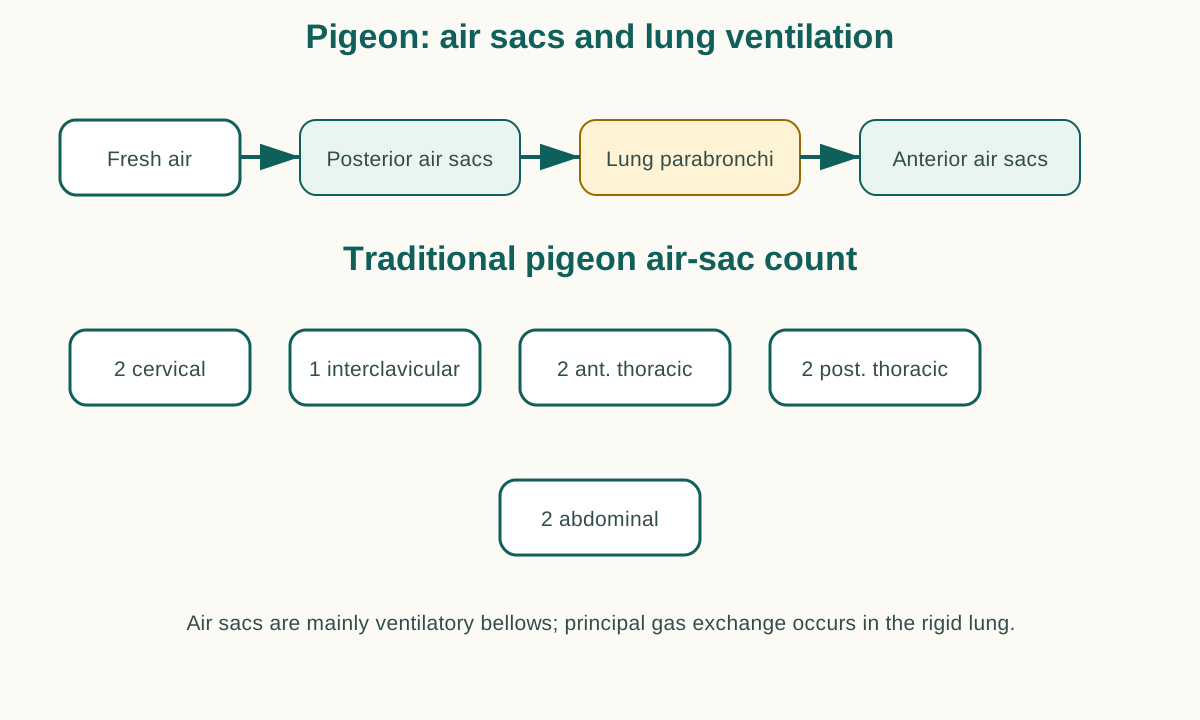
Traditional pigeon description: 9 air sacs
- 2 cervical;
- 1 interclavicular;
- 2 anterior thoracic;
- 2 posterior thoracic;
- 2 abdominal।
Important correction
Air sacs principal gas-exchange surfaces নয়। They are thin-walled ventilatory bellows। Major gas exchange occurs in lung parabronchi/air capillaries।
8. Functions of Air Sacs
- ventilate rigid lungs;
- maintain airflow through parabronchi;
- reduce effective body density;
- extend into pneumatic bones in some regions;
- aid heat dissipation;
- accommodate respiratory volume changes without expanding lung tissue।
9. Two-Breath Cycle
এক parcel fresh airকে trace করলে two respiratory cycles লাগে।
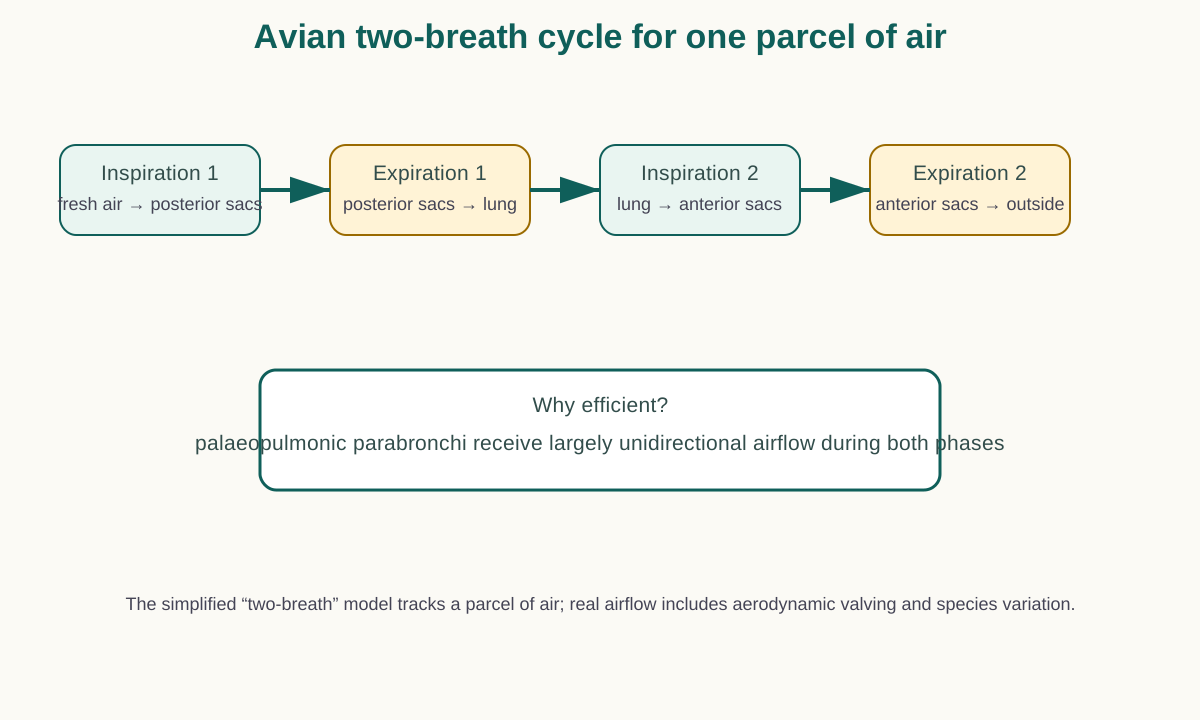
Inspiration 1
Fresh air → trachea → largely caudal/posterior air sacs।
Expiration 1
Posterior sacs contract → air through lung parabronchi।
Inspiration 2
Air from lung → anterior air sacs।
Expiration 2
Anterior sacs → trachea → outside।
Deep principle
Palaeopulmonic parabronchi-তে airflow largely caudal-to-cranial and unidirectional through both phases, aerodynamic valving দ্বারা maintained।
10. Why Efficient?
- rigid exchange tissue collapse করে না;
- unidirectional airflow fresh and spent air mixing reduce করে;
- crosscurrent blood-flow arrangement efficient exchange support করে;
- air sacs keep ventilation continuous।
Exam caution
“Bird breathes twice” phrase misleading। A parcel of air may require two cycles to pass through system; bird obviously continuously breathes।
11. Circulation
Bird heart four-chambered:
- right atrium;
- right ventricle;
- left atrium;
- left ventricle।
Complete pulmonary/systemic separation supports high aerobic metabolism।
Birds retain the right systemic arch as main aortic arch, contrasting with mammals’ left systemic arch।
12. Excretion
Bird kidneys metanephric।
- uric acid excretion;
- water conservation;
- urinary bladder absent in most birds including pigeon;
- cloaca present।
13. Reproduction
- sexes separate;
- internal fertilization;
- oviparous;
- hard-shelled amniotic egg;
- parental incubation;
- crop milk in pigeons।
Pigeon milk
Crop epithelium-derived nutrient-rich secretion produced by both male and female pigeons under hormonal regulation; mammalian milk-এর homologous glandular system নয়।
14. Migration কী?
Migration হলো predictable, often seasonal, repeated movement between regions, usually linked to breeding, feeding or climate/resource cycles।
Not every movement = migration। Local wandering/dispersal আলাদা।
15. Why Birds Migrate
Major drivers:
- breeding opportunity;
- seasonal food availability;
- climate;
- day length/photoperiod;
- inherited circannual programs;
- competition/predation trade-offs।
16. Migration Types
Exam-friendly categories:
- latitudinal migration;
- altitudinal migration;
- longitudinal/short-distance movement;
- partial migration;
- complete migration;
- local/seasonal migration।
Classification schemes vary; explain criterion clearly।
17. Navigation and Orientation
Birds may combine multiple cues:
- sun compass;
- star compass;
- geomagnetic field;
- polarized light;
- landmarks;
- odors;
- learned route memory।
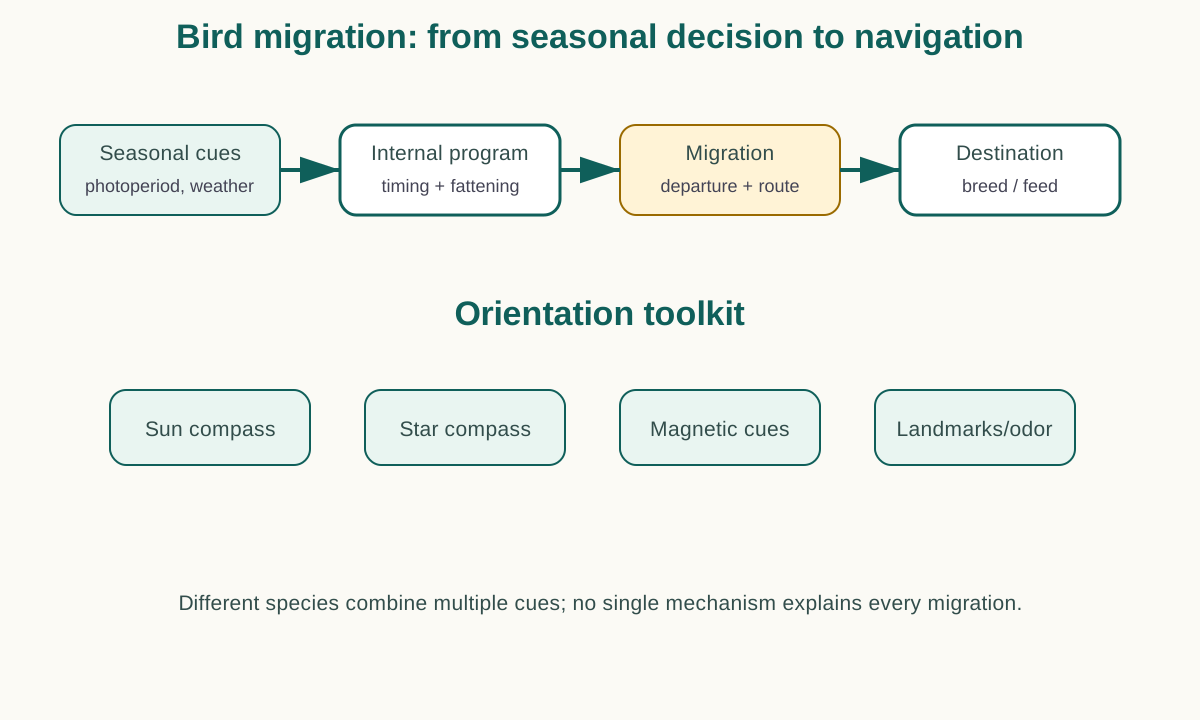
Modern migration research shows no single universal compass explains all species/routes।
18. Energetics of Migration
Before long-distance migration many birds:
- hyperphagia;
- fat deposition;
- muscle/organ remodeling;
- timing adjustments।
Fat is high-energy fuel।
Stopover sites allow refueling।
19. Archaeopteryx
Archaeopteryx historically taught as reptile–bird “connecting link” because it combines:
Bird-like:
- feathers;
- wings;
- furcula।
Reptile/dinosaur-like:
- teeth;
- long bony tail;
- clawed fingers।
Modern interpretation
It is an early avialan/near-bird dinosaur in a broader feathered theropod evolutionary context; not a simple 50:50 transitional “half reptile, half bird।”
20. Flightless Birds
Examples:
- ostrich;
- emu;
- kiwi;
- penguin (flightless aerially but highly specialized swimmer)।
Key lesson
Flight is not required to be a bird। Feathers, avian skeleton, physiology and ancestry define Aves more deeply than current ability to fly।
21. ক-বিভাগ — Exam Capsule
Pterylosis কী?
Body surface-এ feathers-এর tract-wise arrangement pattern।
Pygostyle কী?
Fused terminal caudal vertebrae supporting tail feathers।
Pecten কী?
Bird eye-এর vascular pigmented structure projecting into vitreous body।
Pigeon milk কী?
Crop epithelium-derived nutrient-rich secretion fed to squabs।
Air sacs-এর প্রধান কাজ?
Rigid avian lungকে ventilate করা।
22. খ-বিভাগ — Air Sacs
Name nine air sacs, then functions:
- 2 cervical;
- 1 interclavicular;
- 2 anterior thoracic;
- 2 posterior thoracic;
- 2 abdominal।
Functions: lung ventilation, continuous airflow, weight/space adaptation, thermoregulation।
23. গ-বিভাগ — Model Long Answer 1
“Pigeon-এর air sacs-এর গঠন, অবস্থান ও কার্যাবলি বর্ণনা কর।”
Introduction
Thin-walled extensions of respiratory system; no major gas exchange।
Names
Nine classical sacs।
Connection
Anterior and posterior groups communicate with lungs/bronchial pathways।
Function
Ventilatory bellows, support unidirectional lung airflow, reduce density, heat exchange, pneumatic extension।
Diagram
Label all sacs।
24. গ-বিভাগ — Model Long Answer 2
“Bird migration বর্ণনা কর।”
Definition
Seasonal directed movement।
Causes
food, breeding, photoperiod, climate, inherited rhythms।
Types
latitudinal, altitudinal, partial, complete etc।
Navigation
sun, stars, magnetic field, landmarks, odors।
Adaptations
fat storage, timing, stopover behavior।
Conclusion
Migration is integrated behavior involving physiology, orientation and ecology।
25. Common Mistakes
- Air sacs-এ main gas exchange হয় লেখা।
- Pigeon has “9 pairs” air sacs লেখা।
- Unidirectional airflowকে air sacs-এর ভিতর all directions same বলা।
- Migration = random movement।
- Flightless bird bird নয় বলা।
- Archaeopteryxকে direct ancestor of all modern birds বলা।
26. Quick Revision Matrix
| Concept | Pigeon |
|---|---|
| order | Columbiformes |
| feather | unique avian hallmark |
| heart | 4 chambers |
| lung | rigid parabronchial |
| air sacs | classical 9 |
| main gas exchange | lung, not sacs |
| systemic arch | right |
| waste | uric acid |
| egg | hard-shelled amniotic |
| migration cues | celestial + magnetic + landmarks etc. |
27. Self-Test
Why are air sacs essential if they do not perform major gas exchange?
They act as bellows that ventilate the rigid lungs and help maintain efficient directional airflow through the parabronchi.Why is “flight = bird” a poor classification rule?
Many birds are flightless; deeper diagnostic characters such as feathers, skeletal/physiological traits and ancestry define the group.28. Transfer Challenge
একটি animal has feathers, air sacs and a four-chambered heart but cannot fly।
Diagnosis: still Aves। Flight ability is functional, not the sole diagnostic character।
29. Research-backed Update Notes
- Modern avian respiratory research confirms largely unidirectional airflow through palaeopulmonic parabronchi.
- Air sacs primarily ventilate the lung rather than exchanging gases.
- Bird migration uses multiple compass/navigation systems; no single cue explains every species.
- IOC avian taxonomy continues to update order/family relationships।
References for Course Authors / Verification
- National University Zoology syllabus, paper 223101.
- Recent reviews of avian respiratory structure and function.
- Reviews of bird compass mechanisms and migration.
- IOC World Bird List (2026).
Next Lecture
Lecture 10 — Homo sapiens: mammalian identity, human eye and ear, sensory transduction and special mammal groups.