Scoliodon
The Puzzle
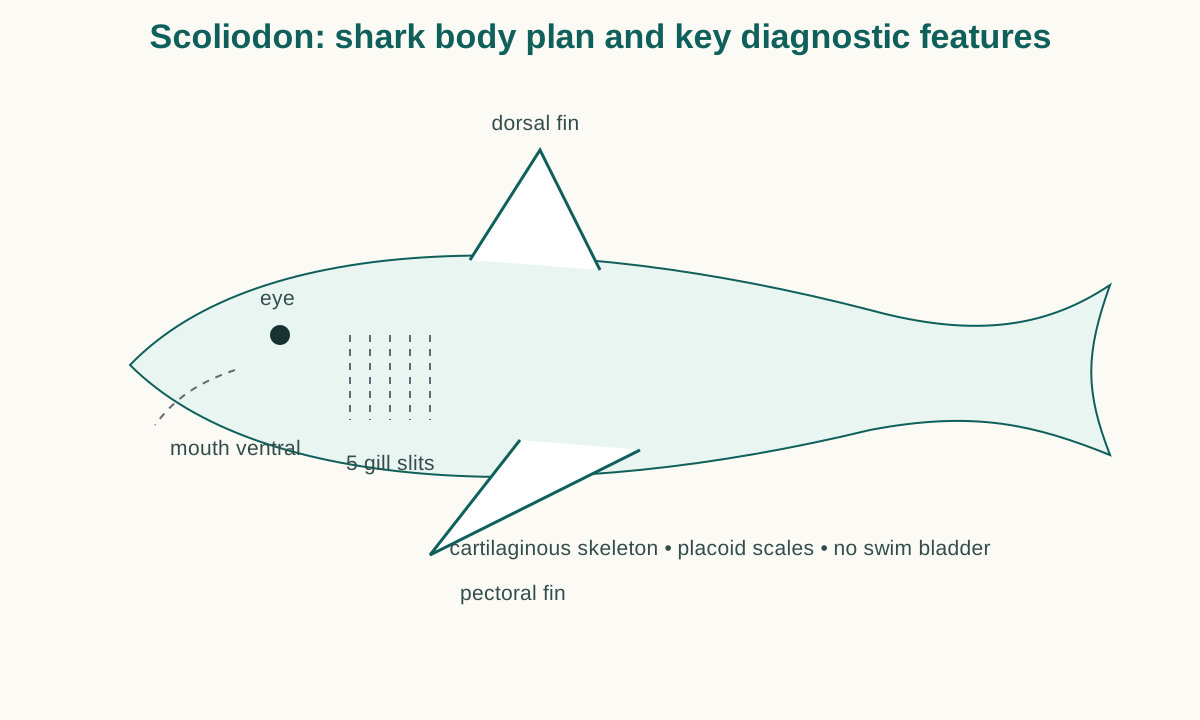
A cartilaginous skeleton is not evidence of biological inferiority. Sharks combine hydrodynamic form, placoid scales, powerful senses, internal fertilization and a sophisticated osmotic strategy.
1. Systematic position
Current placement of Scoliodon laticaudus:
Chordata → Vertebrata → Chondrichthyes → Elasmobranchii → Carcharhiniformes → Carcharhinidae → Scoliodon.
FishBase currently places the species in Carcharhiniformes and Carcharhinidae.
2. Diagnostic characters of Chondrichthyes
- predominantly cartilaginous skeleton;
- jaws and paired fins;
- placoid scales common;
- multiple exposed gill slits in many elasmobranchs;
- no typical swim bladder;
- internal fertilization;
- male claspers;
- spiral valve;
- rectal gland;
- high urea/TMAO osmotic strategy.
3. External morphology
The body is streamlined, with a ventral mouth, paired nostrils, eyes, five gill slits, paired pectoral and pelvic fins, dorsal fins and a heterocercal caudal region. Males carry claspers.
4. Placoid scales
Placoid scales are dermal denticles composed of a basal plate, dentine and an outer mineralized cap/spine.
Functions include protection and modification of boundary-layer flow.
Their structural/developmental similarity to teeth is evolutionarily important.
5. Skeleton
The endoskeleton is cartilaginous and includes the chondrocranium, vertebral column, visceral arches, girdles and fin supports.
6. Digestion
Mouth → pharynx → esophagus → stomach
→ spiral-valve intestine → rectum → cloaca
The spiral valve increases absorptive area without requiring an extremely long intestine.
A large oil-rich liver contributes to energy storage and buoyancy.
7. Respiration and circulation
Water passes across gill lamellae and exits through gill slits.
Single circulation:
sinus venosus → atrium → ventricle → conus arteriosus
→ ventral aorta → gills → dorsal aorta → body → veins
8. Osmoregulation
Sharks retain high concentrations of urea, stabilized by TMAO. A rectal gland removes excess salts, while kidneys regulate ions, water and urea retention.
This is a fundamentally different solution from typical freshwater teleost osmoregulation.
9. Urinogenital system
Adult kidneys are opisthonephric in classical terminology.
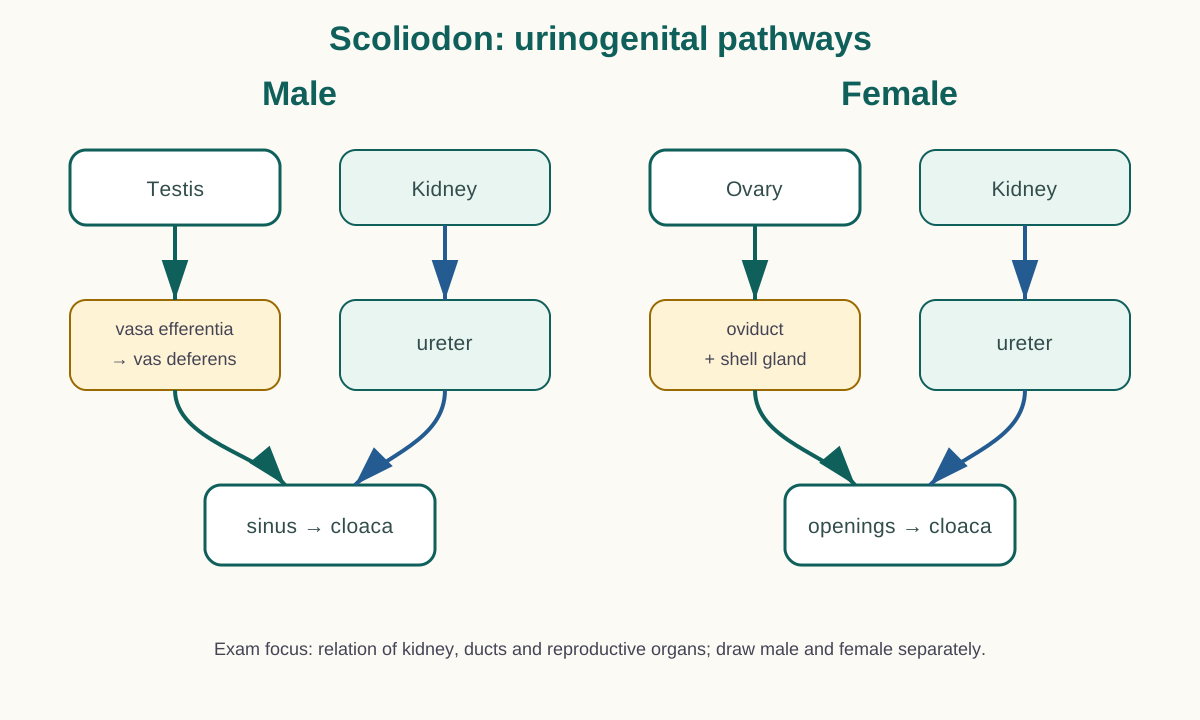
Male
- paired kidneys;
- urinary ducts;
- testes;
- vasa efferentia;
- mesonephric/Wolffian duct modified for sperm transport;
- cloacal pathway;
- claspers for sperm transfer.
Female
- kidneys and ureters;
- ovaries;
- oviducal funnels;
- Müllerian/oviducts;
- shell glands;
- posterior uterine regions;
- cloacal opening.
The male excretory and reproductive duct systems are more tightly integrated; female genital and urinary pathways are more separate.
10. Reproduction
Fertilization is internal.
Chondrichthyans show oviparity, yolk-dependent live bearing and placental/live-bearing modes. Current species accounts report Scoliodon laticaudus as viviparous with placental nutrient transfer.
11. Sensory systems
Important systems include:
- olfaction;
- lateral line;
- inner ear;
- vision;
- electroreceptive ampullae of Lorenzini.
12. Sharks, skates and rays
Sharks are generally fusiform with lateral gill slits.
Batoids are dorsoventrally flattened with greatly expanded pectoral fins and ventral gill slits.
Skates are often oviparous and commonly lay egg cases, whereas many rays are live-bearing; specific tail and defensive structures vary by lineage.
13. Chondrichthyes classification
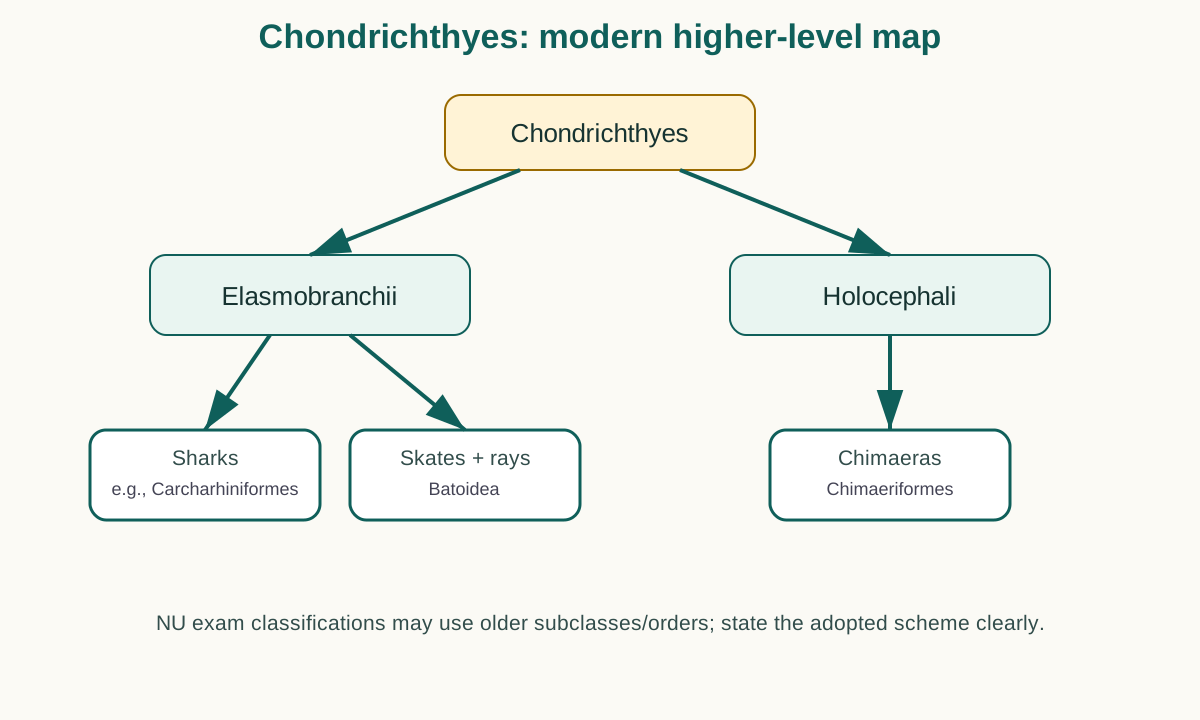
Modern high-level division:
- Elasmobranchii — sharks, skates, rays;
- Holocephali — chimaeras, living order Chimaeriformes.
For an NU “up to order” answer, use the classification scheme prescribed by the department/textbook and state the scheme clearly because older order-level systems differ.
14. Section A — one-mark capsule
Placoid scale: tooth-like dermal denticle of sharks.
Clasper: male pelvic-fin copulatory organ used for sperm transfer.
Spiral valve: spiral intestinal fold increasing absorptive area.
Chondrocranium: cartilaginous neurocranium surrounding the brain and sensory capsules.
Rectal gland: salt-secreting organ important in marine osmoregulation.
15. Section B — skates versus rays
Compare body form, tail, reproduction and lineage-specific defensive/electric structures. Avoid reducing the answer to size.
16. Section C — urinogenital system
Describe male and female separately. Emphasize the relationship between the kidney and mesonephric duct in the male and the separate female oviductal system.
A labelled male–female diagram is essential.
17. Common mistakes
- giving Scoliodon a bony skeleton;
- adding a swim bladder;
- calling claspers female organs;
- saying all sharks are oviparous;
- using one reproductive mode for every shark;
- confusing the rectal gland with the kidney;
- confusing placoid and cycloid scales.
18. Quick revision
| Feature | Scoliodon |
|---|---|
| skeleton | cartilage |
| scale | placoid |
| gills | 5 exposed slits |
| swim bladder | absent |
| gut | spiral valve |
| male organ | claspers |
| kidney | opisthonephric |
| order | Carcharhiniformes |
| family | Carcharhinidae |
19. Research-backed update notes
FishBase supports the current Carcharhiniformes/Carcharhinidae placement and reports placental viviparity in S. laticaudus. Elasmobranch reproductive modes are diverse and should not be oversimplified.
References for Course Authors / Verification
- National University Zoology syllabus, paper 223101.
- FishBase, Scoliodon laticaudus.
- FAO Sharks of the World.
- Standard comparative vertebrate anatomy texts.
Next Lecture
Lecture 06 — Labeo rohita: teleost body plan, gill respiration and branchial circulation.