Bufo
The Puzzle
A toad is neither an “unfinished fish” nor an “incomplete reptile.” It combines a terrestrial adult lifestyle with water-dependent reproductive and physiological features.
1. Systematic position
Traditional NU teaching uses Bufo for true toads. Many South Asian species historically placed in Bufo are now classified differently.
Chordata → Vertebrata → Amphibia → Anura → Bufonidae → traditional Bufo.
2. Amphibian diagnostic features
- ectothermic tetrapods;
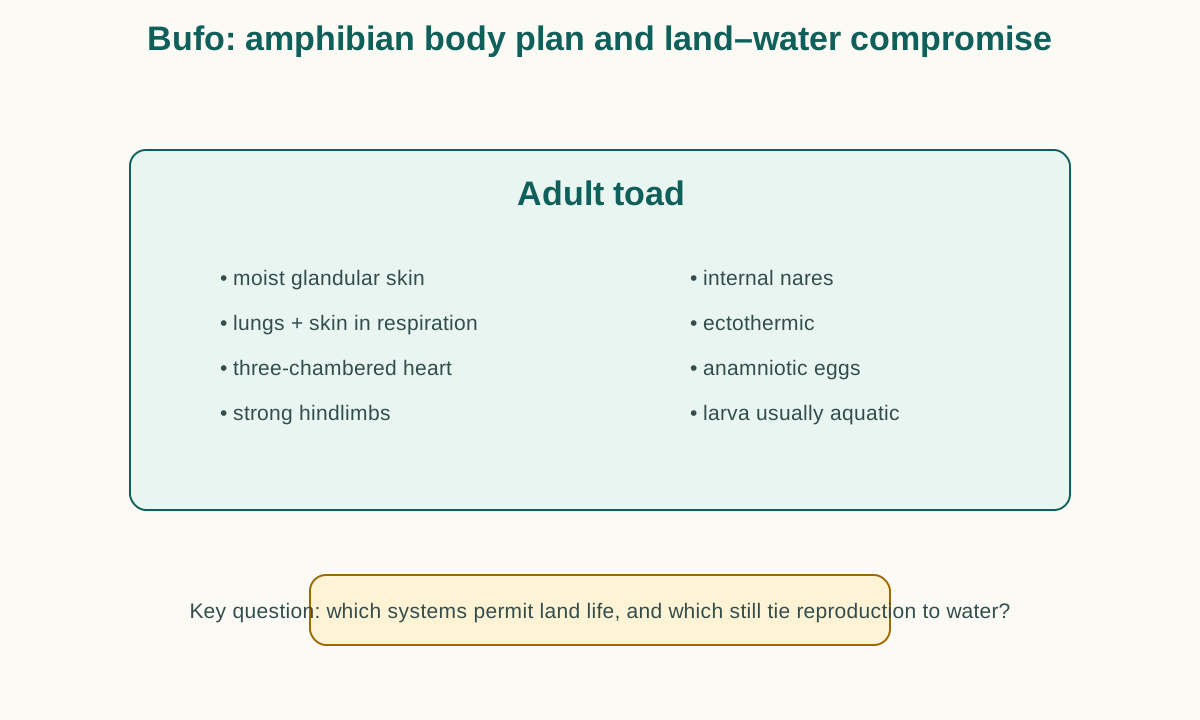
- moist glandular skin;
- lungs plus important cutaneous respiration;
- three-chambered heart;
- anamniotic eggs;
- water/moisture-linked reproduction;
- aquatic larva common;
- metamorphosis common.
3. External morphology
Adult toads have a head and trunk, no adult tail, strong hindlimbs, eyelids, tympanum, nostrils, a broad mouth, rough glandular skin and often prominent parotoid glands.
4. Skin as a physiological organ
The moist vascular skin contributes to gas exchange and water balance. Mucus glands help maintain the wet diffusion surface; granular glands provide chemical defense.
5. Locomotion and skeleton
Limbs, strong girdles and a reinforced axial skeleton support the body on land. Hindlimbs generate hopping forces.
6. Feeding and digestion
Adults are largely insectivorous/carnivorous and use a rapidly protrusible sticky tongue.
Mouth → esophagus → stomach → intestine → large intestine → cloaca
7. Respiration
Adults combine:
- cutaneous respiration through moist skin;
- buccopharyngeal respiration;
- pulmonary respiration using positive-pressure buccal pumping.
There is no mammalian diaphragm-driven negative-pressure mechanism.
8. Heart and double circulation
The heart has two atria and one ventricle plus sinus venosus/outflow regions.
Blood moves through systemic and pulmocutaneous circuits. Separation is incomplete but functionally organized.
9. Portal circulation
A portal system carries blood from one capillary network through a vein to a second capillary network.
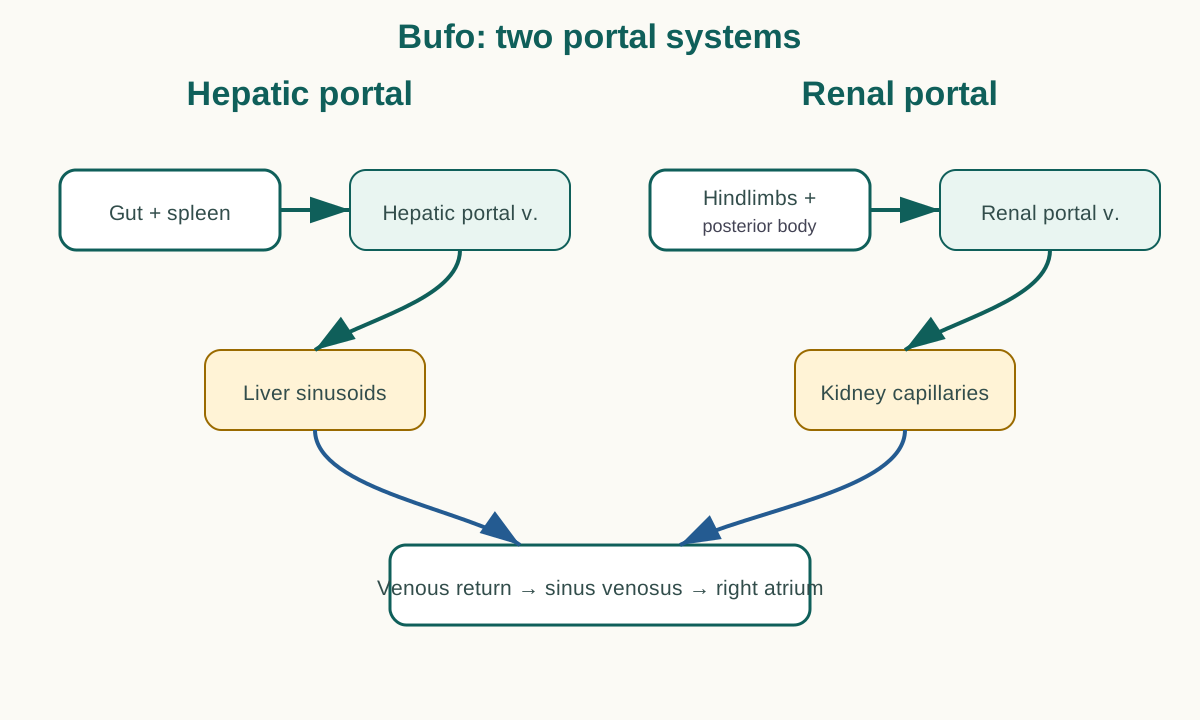
Hepatic portal
gut/spleen → hepatic portal vein → liver sinusoids → hepatic veins → systemic venous return.
Renal portal
hindlimb/posterior body → renal portal veins → kidney capillaries → renal veins/systemic return.
Portal systems enable organ-specific processing before blood returns to the heart.
10. Excretion
Adult amphibians possess functional kidneys, ureters, urinary bladder and cloaca. Adults are mainly ureotelic, whereas aquatic larvae may excrete more ammonia.
11. Nervous and sensory systems
Important terrestrial adaptations include eyelids, tympanum/middle ear and well-developed olfaction and balance systems.
12. Reproduction
In typical anurans:
- sexes are separate;
- amplexus occurs;
- eggs are released into water;
- fertilization is usually external;
- jelly-coated anamniotic eggs develop into tadpoles.
The absence of an amniotic shell is a central reason reproduction remains water-dependent.
13. Tadpole metamorphosis
Tadpoles are aquatic, tailed and gill-breathing. During metamorphosis:
- limbs develop;
- tail is resorbed;
- gills disappear;
- lungs become dominant;
- the gut remodels;
- sensory and cranial systems reorganize.
Thyroid hormones regulate the metamorphic program.
14. Living Amphibia
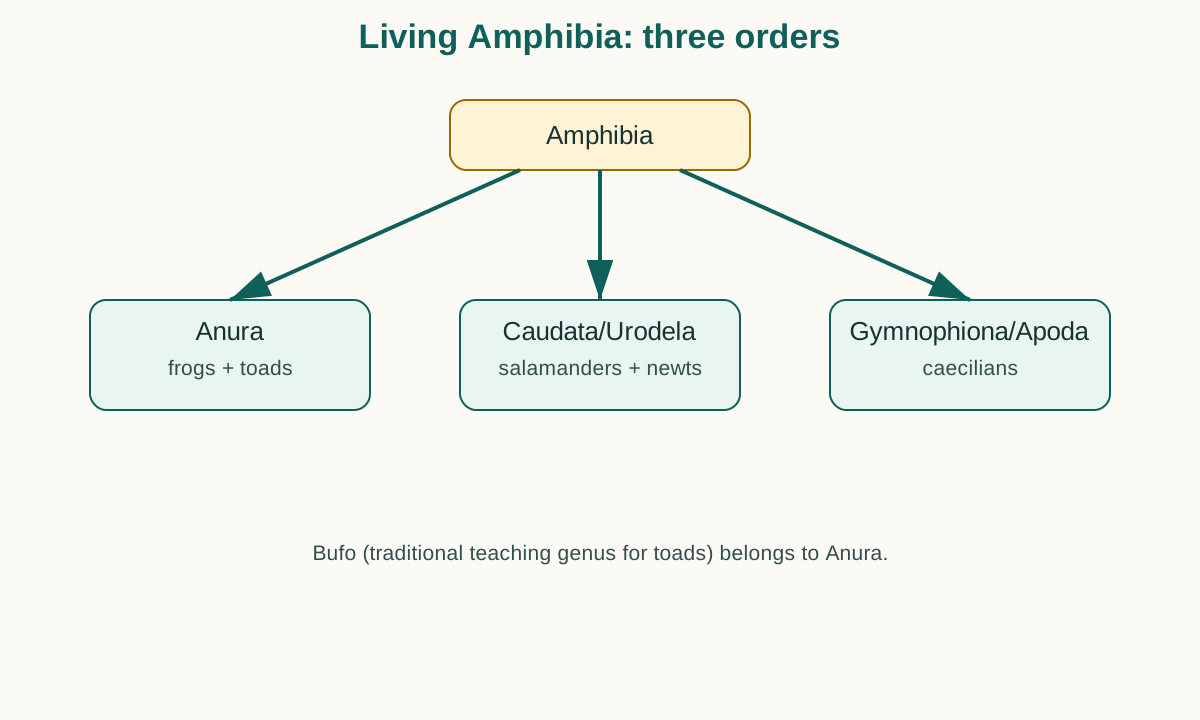
- Anura: frogs and toads;
- Caudata/Urodela: salamanders and newts;
- Gymnophiona/Apoda: caecilians.
15. Adaptive radiation and neoteny
Amphibians occupy aquatic, terrestrial, arboreal and burrowing niches.
Neoteny is the retention of juvenile/larval characters after reproductive maturity, as seen in famous salamander examples.
16. Section A — one-mark capsule
Portal system: venous pathway connecting one capillary bed to a second capillary bed.
Aestivation: reduced activity during hot/dry unfavorable conditions.
Neoteny: retention of larval traits in a sexually mature animal.
Tympanum: membrane transmitting airborne vibration to the middle ear.
Amplexus: anuran breeding embrace.
17. Section B — hepatic versus renal portal
Compare origin, portal vein, target capillary bed and function.
18. Section C — portal system
Define a portal system, trace hepatic and renal portal pathways, explain physiological significance, and include a labelled diagram.
19. Common mistakes
- describing mammalian alveolar lungs;
- calling the renal portal vein an artery;
- calling hepatic portal blood oxygenated arterial blood;
- giving tadpoles only lung respiration;
- giving amphibian eggs an amniotic shell;
- classifying caecilians as reptiles.
20. Quick revision
| Feature | Bufo |
|---|---|
| class | Amphibia |
| order | Anura |
| skin | moist/glandular |
| respiration | skin + buccopharynx + lungs |
| heart | 2 atria + 1 ventricle |
| portals | hepatic + renal |
| adult waste | mainly urea |
| fertilization | usually external |
| larva | tadpole |
21. Research-backed update notes
The three living amphibian orders are Anura, Caudata and Gymnophiona. Frog renal portal supply is anatomically documented. Modern taxonomy has changed the names of several species historically taught under Bufo.
References for Course Authors / Verification
- National University Zoology syllabus, paper 223101.
- Comparative vertebrate anatomy texts.
- Amphibian renal microcirculation studies.
- Modern amphibian taxonomy references.
Next Lecture
Lecture 08 — Hemidactylus: reptilian terrestrial independence, arterial system and living Reptilia classification.