Hemidactylus
The Puzzle: land-এ সত্যিকারের reproductive independence
Amphibian adult land-এ বাস করতে পারে, কিন্তু egg ও larva water-dependent। Reptiles-এর decisive innovation হলো amniotic reproduction—embryo developmentকে external pond-এর বদলে self-contained egg environment-এ নিয়ে আসা।
Hemidactylus-এর terrestrial package:
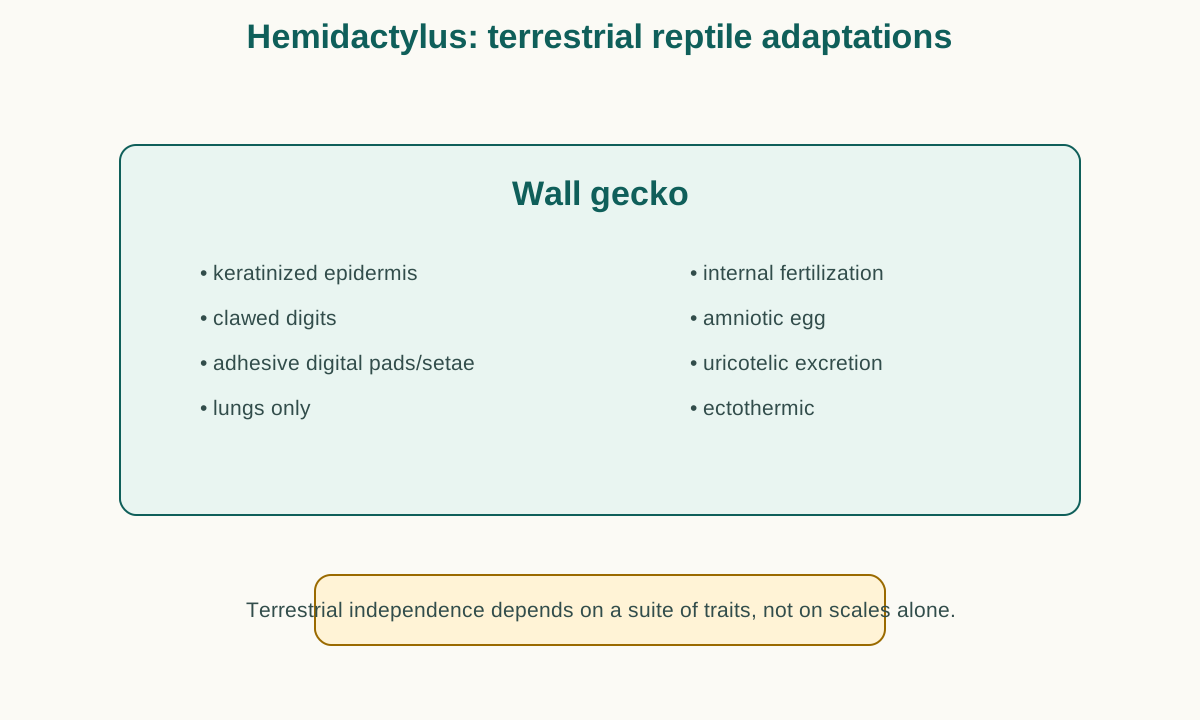
keratinized skin + internal fertilization + amniotic egg + lungs + water-conserving uric acid excretion
এই lecture শেষে তুমি পারবে:
- Hemidactylus systematic position লিখতে;
- terrestrial reptile adaptations explain করতে;
- arterial system-এর carotid, systemic ও pulmonary arches trace করতে;
- uricotelism ও amniotic egg-এর significance বলতে;
- living Reptilia up to order classify করতে;
- Sphenodon ও dinosaurs brief note লিখতে;
- traditional Reptilia vs modern sauropsid phylogeny আলাদা করতে;
- ক/খ/গ answer লিখতে।
1. Systematic Position
For Hemidactylus flaviviridis modern placement:
- Phylum: Chordata
- Subphylum: Vertebrata
- Amniota / Sauropsida
- Order: Squamata
- Infra-group: Gekkota
- Family: Gekkonidae
- Genus: Hemidactylus
Reptile Database currently places H. flaviviridis in Gekkonidae, Squamata।
2. Reptilian Diagnostic Features
Traditional Reptilia exam framework:
- dry keratinized skin;
- epidermal scales/scutes;
- claws;
- lungs only;
- internal fertilization;
- amniotic egg;
- ectothermy;
- metanephric kidneys;
- uric acid major nitrogenous waste in many reptiles;
- stronger terrestrial skeleton;
- heart usually incompletely divided ventricles except crocodilians।
3. External Morphology
Wall gecko:
- head, neck, trunk, tail;
- four limbs;
- five digits;
- adhesive digital pads with microscopic setae/lamellae;
- large eyes;
- dry scaly skin;
- tail autonomy/regeneration capacity in many geckos;
- cloacal opening।
4. Adhesive Pads
Gecko toe pads contain microscopic setae branching into fine structures that increase contact with surfaces।
Adhesion relies mainly on intermolecular van der Waals interactions plus surface geometry—not suction cups।
Socratic point
A gecko on glass demonstrates how nanoscale structure can create whole-animal locomotor performance।
5. Skin and Water Conservation
Keratinized epidermis:
- reduces water loss;
- provides mechanical protection;
- permits more terrestrial independence than amphibian moist skin।
Trade-off:
- cutaneous respiration becomes negligible;
- lungs must handle gas exchange।
6. Skeleton
Important terrestrial adaptations:
- strong vertebral column;
- cervical mobility;
- ribs and thoracic support;
- robust girdles;
- clawed limbs।
Skull shows reptilian temporal region modifications; squamates belong to diapsid lineage।
7. Feeding and Digestion
Hemidactylus insectivorous/carnivorous small prey feeder।
Digestive tract:
mouth → pharynx → esophagus → stomach → small intestine → large intestine → cloaca।
Teeth generally homodont and polyphyodont in many lizards।
8. Respiration
Lungs are more internally subdivided than typical amphibian sacs।
Ventilation:
- rib/intercostal muscular movements;
- negative-pressure expansion of thoracic cavity;
- no amphibian buccal positive-pressure dependence as primary mechanism।
9. Heart
Lizard heart:
- right atrium;
- left atrium;
- ventricle incompletely subdivided into functional regions;
- arterial trunks leave ventricle।
Although “three-chambered” is a useful simplified label, ventricular internal anatomy permits substantial flow separation।
10. Arterial System Overview
Three principal arterial arch systems:
- carotid arches;
- right and left systemic arches;
- pulmonary arch(es)।
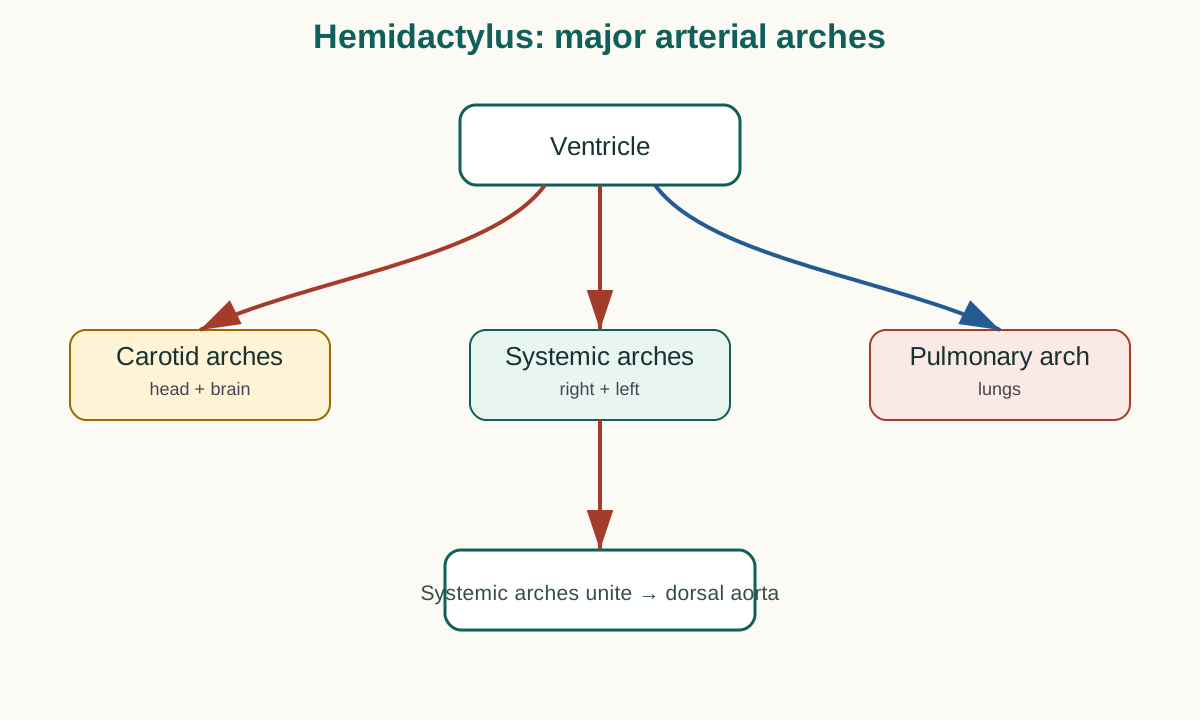
Historical anatomical study of Hemidactylus flaviviridis describes three arterial trunks leaving the heart and crossing systemic arches।
11. Carotid System
Carotid arches supply:
- head;
- brain;
- sensory structures।
Branches include internal/external carotid pathways depending on textbook nomenclature।
12. Systemic Arches
Both right and left systemic arches persist in non-crocodilian reptiles।
They curve and unite posteriorly to form the dorsal aorta।
Dorsal aorta supplies:
- viscera;
- kidneys;
- pelvic region;
- tail;
- body wall।
Compare Aves/Mammalia
- birds retain primarily right systemic arch;
- mammals retain primarily left systemic arch।
This becomes comparative anatomy bridge।
13. Pulmonary Arch
Pulmonary artery/arch carries deoxygenated blood toward lungs।
Lung oxygenation → pulmonary veins → left atrium।
Functional concept
Reptile circulation partially separates pulmonary and systemic circuits while retaining potential shunting under specific physiological states।
14. Excretion and Water Conservation
Metanephric kidneys।
Major nitrogen waste:
- uric acid;
- low solubility;
- excreted with relatively little water।
Why useful on land?
Water conservation।
Cloaca and hindgut may also reabsorb water/ions।
15. Reproduction
- sexes separate;
- internal fertilization;
- copulatory organs in male squamates: paired hemipenes;
- oviparity common in many geckos;
- amniotic egg;
- direct development, no aquatic larva।
Reptile Database lists H. flaviviridis as oviparous।
16. Amniotic Egg
Four extraembryonic membranes:
- amnion;
- chorion;
- allantois;
- yolk sac।
Functions:
- fluid environment;
- gas exchange;
- waste storage;
- nutrition।
This is a key innovation in terrestrial vertebrate reproduction।
17. Living Reptilia Classification
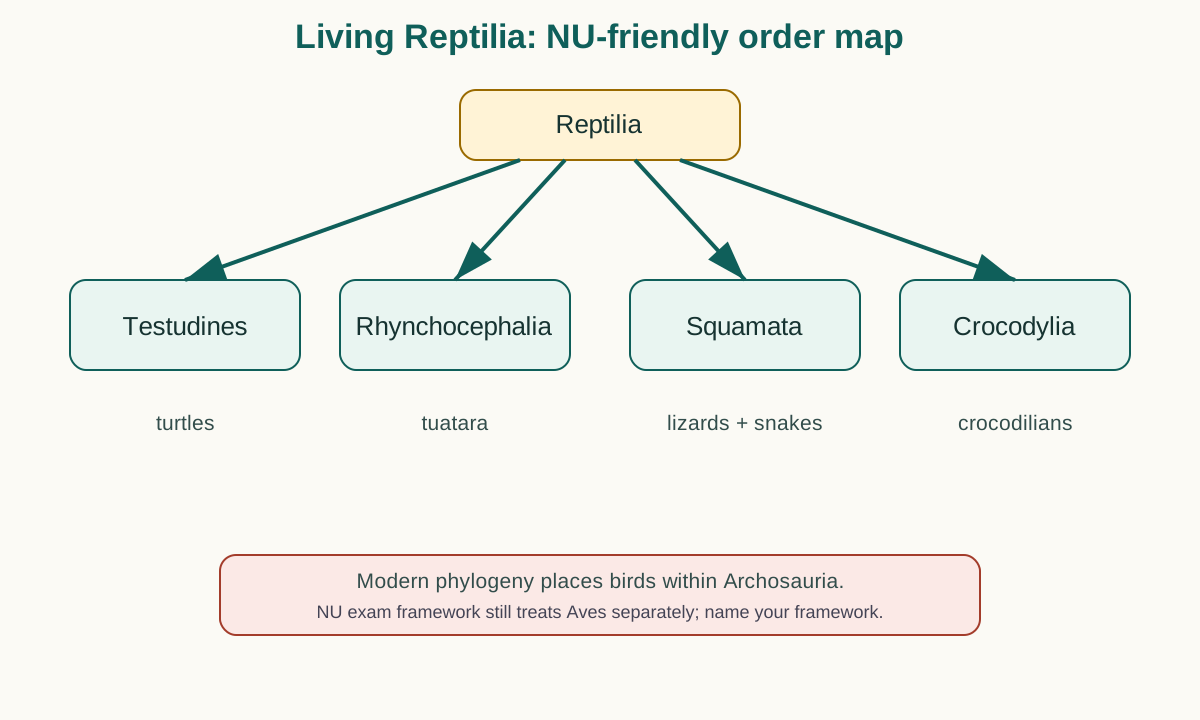
Modern living orders recognized by Reptile Database:
- Testudines — turtles/tortoises
- Rhynchocephalia — tuatara
- Squamata — lizards, snakes, amphisbaenians
- Crocodylia — crocodilians
18. Order-wise Diagnostic Characters
Testudines
- shell formed by carapace + plastron;
- toothless beak;
- ribs integrated with shell।
Rhynchocephalia
- living tuatara lineage;
- primitive-looking lepidosaur combination;
- acrodont-type dentition;
- parietal eye notable।
Squamata
- kinetic skull common;
- paired hemipenes in males;
- includes lizards/snakes/amphisbaenians;
- sheds skin।
Crocodylia
- secondary bony palate;
- four-chambered heart;
- powerful semiaquatic archosaur body plan।
19. Sphenodon / Tuatara
Sphenodon New Zealand-এর surviving rhynchocephalian।
Important:
- not a lizard;
- acrodont dentition;
- diapsid skull architecture;
- parietal eye;
- slow growth/longevity;
- phylogenetically distinct lepidosaur lineage।
Exam trap
“Sphenodon is a living lizard” ভুল। It resembles lizards superficially but belongs to Rhynchocephalia।
20. Dinosaurs
Dinosaurs Mesozoic archosaurs।
Key modern point:
Non-avian dinosaurs extinct, but birds are living avian dinosaurs in modern phylogeny।
Classical exam phrase “dinosaurs became extinct” should be made precise: non-avian dinosaurs disappeared at end-Cretaceous mass extinction ~66 Ma।
Probable drivers include asteroid impact and interacting environmental stressors।
21. Reptilia and Aves: Traditional vs Modern
Traditional NU:
- Reptilia separate class;
- Aves separate class।
Modern cladistics:
- birds nested within Archosauria;
- “Reptilia excluding birds” paraphyletic।
Exam rule
Main answer syllabus-compatible; 1–2 line modern note after।
22. ক-বিভাগ — Exam Capsule
Diapsid skull কী?
Skull-এর temporal region-এ ancestrally two temporal openings per side থাকা archosaur/lepidosaur pattern।
Rhynchocephalia কী?
Tuatara-containing living reptile order।
Hemipenis কী?
Male squamate-এর paired copulatory organ।
Amnion কী?
Embryo-কে fluid-filled protective cavity-তে ঘিরে রাখা extraembryonic membrane।
Uricotelism কী?
Uric acid major nitrogenous waste হিসেবে excrete করা।
23. খ-বিভাগ — Sphenodon Short Note
Write:
- order Rhynchocephalia;
- New Zealand distribution;
- lizard-like but not a lizard;
- diapsid skull;
- acrodont teeth;
- parietal eye;
- evolutionary significance।
24. গ-বিভাগ — Model Long Answer
“Hemidactylus-এর arterial system বর্ণনা কর।”
Introduction
Heart থেকে carotid, systemic এবং pulmonary arterial pathways emerge।
Carotid arches
head/brain supply।
Systemic arches
right + left persist; unite posteriorly into dorsal aorta; systemic organs supply।
Pulmonary arch
lungs supply।
Functional significance
Partial ventricular separation + separate arterial arches permit regulated pulmonary/systemic distribution।
Diagram
Ventricle → carotid/systemic/pulmonary pathways।
25. গ-বিভাগ — Reptilia Classification
Start with general characters then:
- Testudines;
- Rhynchocephalia;
- Squamata;
- Crocodylia;
for each give diagnostic characters + example।
26. Common Mistakes
- Sphenodonকে lizard বলা।
- All reptiles three-chambered heart বলা—crocodilians exception।
- Hemidactylus-এ only one systemic arch লেখা।
- Reptile eggকে anamniotic বলা।
- Gecko pads suction cups বলা।
- “all dinosaurs extinct” without avian distinction।
27. Quick Revision Matrix
| Feature | Hemidactylus |
|---|---|
| order | Squamata |
| family | Gekkonidae |
| skin | keratinized |
| respiration | lungs |
| heart | 2 atria, incompletely divided ventricle |
| systemic arches | right + left |
| kidney | metanephric |
| waste | uric acid |
| fertilization | internal |
| development | amniotic/direct |
28. Self-Test
Why are amniotic eggs more terrestrial than amphibian eggs?
Extraembryonic membranes create a protected aqueous microenvironment, support gas exchange/nutrition and reduce dependence on external water.Why does uric acid conserve water?
Its low solubility allows nitrogen excretion in a concentrated/semi-solid form with relatively little water.29. Transfer Challenge
একটি tetrapod has dry keratinized skin, internal fertilization, amniotic egg, lungs only, and uric acid excretion।
Diagnosis: reptilian/amniote terrestrial pattern rather than amphibian pattern।
30. Research-backed Update Notes
- Reptile Database (2026) recognizes the four major living reptile orders shown above.
- Hemidactylus flaviviridis is placed in Gekkonidae, Squamata and listed as oviparous.
- Modern phylogeny includes birds within Archosauria, so classical “Reptilia vs Aves” is an exam framework rather than a fully cladistic partition.
References for Course Authors / Verification
- National University Zoology syllabus, paper 223101.
- The Reptile Database (2026).
- Historical anatomical description of the arterial system of Hemidactylus flaviviridis.
- Comparative vertebrate anatomy texts.
Next Lecture
Lecture 09 — Columba livia: avian respiratory system, air sacs, flight and migration.