Hemidactylus
The Puzzle
The major reproductive transition beyond amphibians is the amniotic condition: the embryo carries its own protected fluid environment rather than requiring an external pond.
The reptilian terrestrial package combines:
keratinized skin + internal fertilization + amniotic development + lungs + water-conserving excretion
1. Systematic position
Modern placement of Hemidactylus flaviviridis:
Chordata → Vertebrata → Amniota/Sauropsida → Squamata → Gekkota → Gekkonidae → Hemidactylus.
The Reptile Database currently places the species in Gekkonidae, Squamata.
2. Reptilian diagnostic characters
Traditional exam framework:
- keratinized integument;
- lungs;
- internal fertilization;
- amniotic egg;
- ectothermy;
- metanephric kidneys;
- uric acid excretion in many groups;
- reinforced skeleton;
- incompletely divided ventricle in most non-crocodilian reptiles.
3. External morphology and gecko adhesion
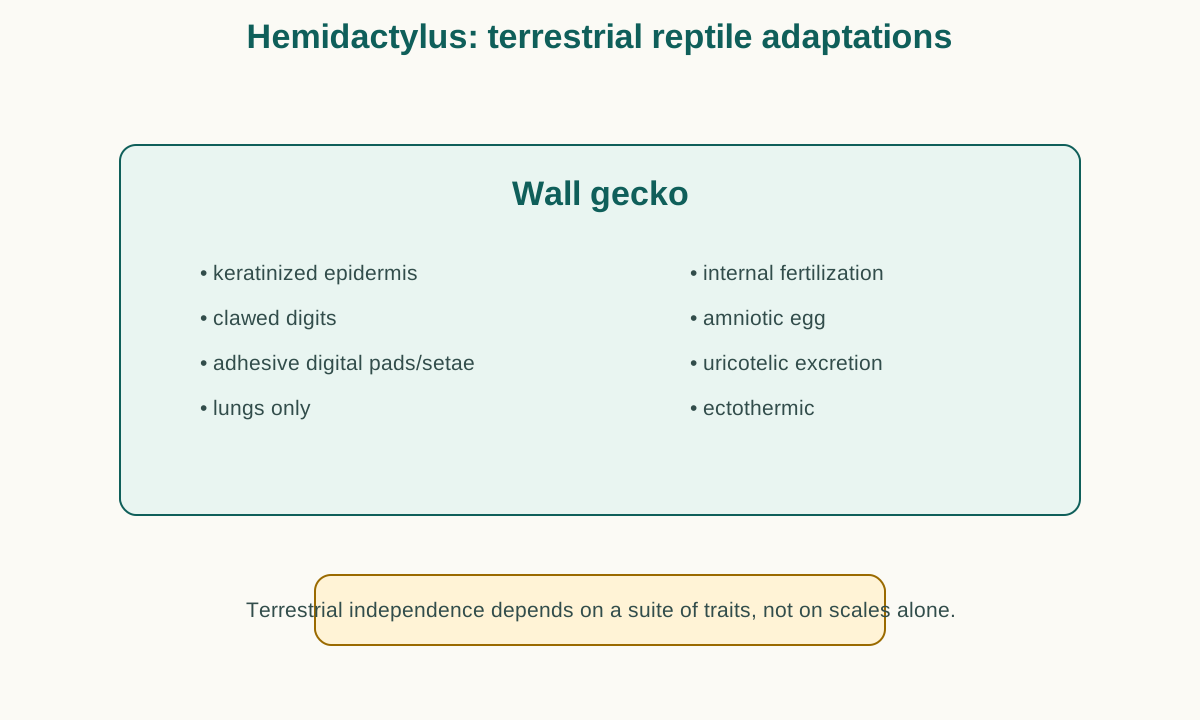
Geckos have a head, neck, trunk, tail, four limbs, clawed digits and adhesive pads. Microscopic setae greatly increase contact area and allow van der Waals forces to support adhesion.
4. Skin and water conservation
Keratinized epidermis reduces evaporative water loss. The trade-off is that skin is no longer a major respiratory surface; lungs take over gas exchange.
5. Skeleton, feeding and respiration
A stronger axial skeleton, ribs and girdles support land locomotion.
Hemidactylus feeds on small animal prey. Respiratory ventilation is mainly generated by rib/intercostal movements that expand and compress the thoracic cavity.
6. Heart and arterial system
The heart has two atria and an incompletely divided ventricle in the standard lizard condition.
Three major arterial pathways leave the ventricular/outflow region:
- carotid arches;
- right and left systemic arches;
- pulmonary arch(es).
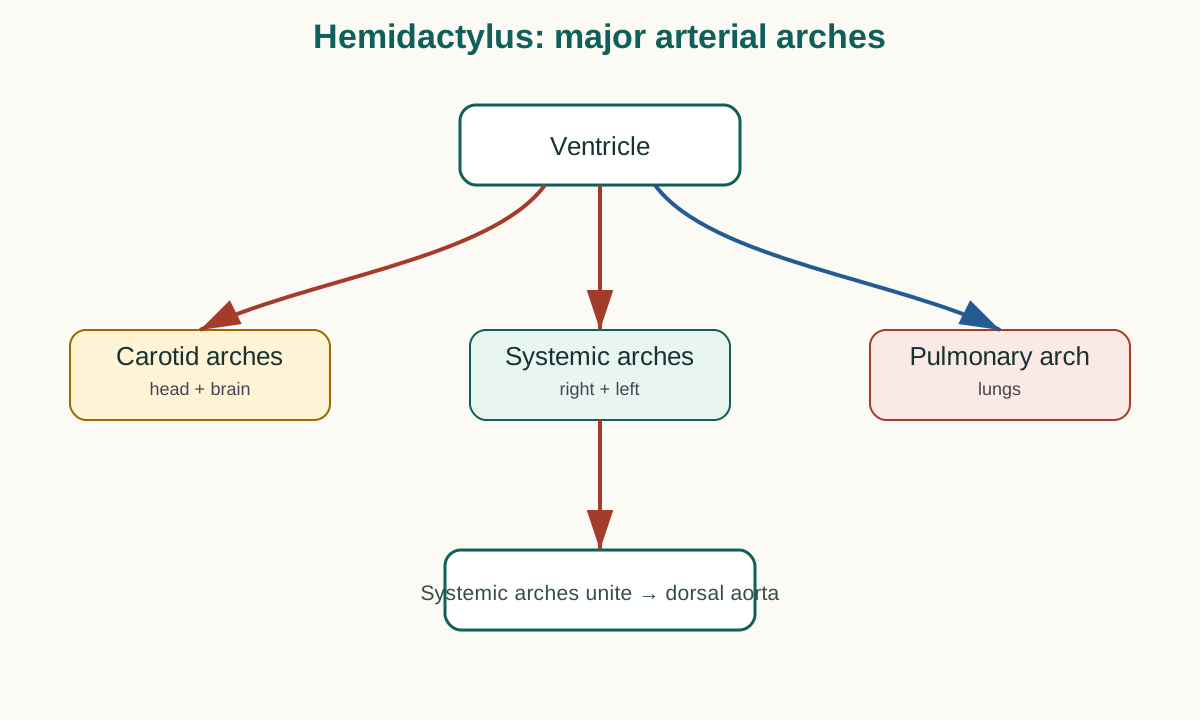
The paired systemic arches join posteriorly to form the dorsal aorta.
Birds retain mainly the right systemic arch; mammals retain mainly the left, making this an important comparative-anatomy transition.
7. Excretion
Metanephric kidneys produce nitrogenous waste largely as uric acid. Low-solubility uric acid can be eliminated with relatively little water.
8. Reproduction and the amniotic egg
Fertilization is internal. Male squamates possess paired hemipenes. H. flaviviridis is listed as oviparous in the Reptile Database.
The amniotic egg includes amnion, chorion, allantois and yolk sac, creating a self-contained developmental environment.
9. Living Reptilia
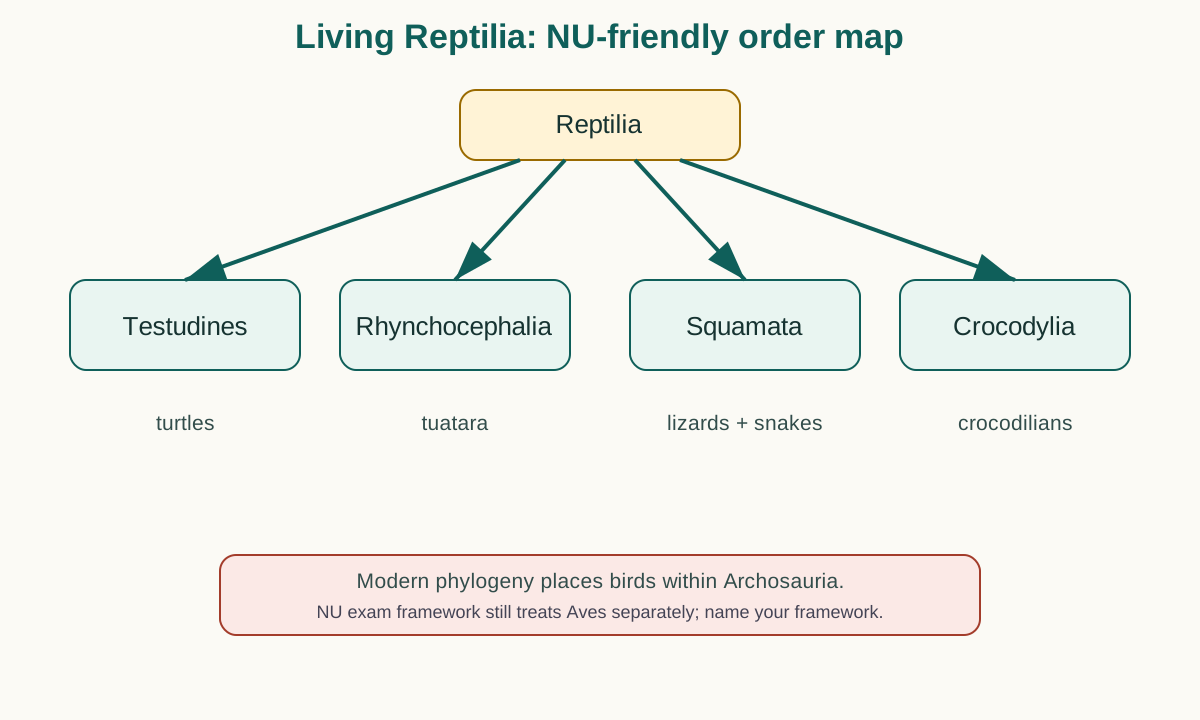
- Testudines;
- Rhynchocephalia;
- Squamata;
- Crocodylia.
The Reptile Database explicitly notes that a simple hierarchy does not fully represent phylogeny and that birds are a subset of archosaurs.
10. Sphenodon
Tuatara belongs to Rhynchocephalia, not Squamata.
Important points:
- New Zealand lineage;
- acrodont dentition;
- diapsid skull;
- parietal eye;
- distinctive lepidosaur history.
11. Dinosaurs
Dinosaurs are archosaurs. Non-avian dinosaurs disappeared at the end-Cretaceous mass extinction, but birds are living avian dinosaurs in modern phylogeny.
12. Traditional versus modern framework
NU exams treat Reptilia and Aves as separate classes. Modern cladistics nests birds within the archosaur/reptile lineage. State clearly which framework is being used.
13. Section A — one-mark capsule
Diapsid skull: ancestral two-temporal-opening skull pattern.
Rhynchocephalia: living reptile order containing tuatara.
Hemipenis: paired male squamate copulatory organ.
Amnion: extraembryonic membrane enclosing the embryo in fluid.
Uricotelism: excretion of nitrogen mainly as uric acid.
14. Section C — arterial system
Trace ventricle → carotid arches, right/left systemic arches and pulmonary arch. The systemic arches unite as the dorsal aorta.
15. Section C — living Reptilia
Classify Testudines, Rhynchocephalia, Squamata and Crocodylia with diagnostic characters and examples.
16. Common mistakes
- calling Sphenodon a lizard;
- saying every reptile has a three-chambered heart;
- drawing only one systemic arch in a lizard;
- calling reptile eggs anamniotic;
- treating gecko pads as suction cups;
- saying all dinosaurs are extinct without the avian qualification.
17. Quick revision
| Feature | Hemidactylus |
|---|---|
| order | Squamata |
| family | Gekkonidae |
| skin | keratinized |
| respiration | lungs |
| systemic arches | right + left |
| kidney | metanephric |
| waste | uric acid |
| fertilization | internal |
| egg | amniotic |
18. Research-backed update notes
The Reptile Database recognizes Testudines, Rhynchocephalia, Squamata and Crocodylia among living reptiles and places H. flaviviridis in Gekkonidae. Modern phylogeny nests birds within Archosauria.
References for Course Authors / Verification
- National University Zoology syllabus, paper 223101.
- The Reptile Database (2026).
- Historical anatomical study of Hemidactylus flaviviridis arterial circulation.
- Comparative vertebrate anatomy texts.
Next Lecture
Lecture 09 — Columba livia: avian respiratory system, air sacs, flight and migration.