Columba livia / Pigeon
The Puzzle
Bird lungs are relatively rigid, yet flight demands extraordinary oxygen delivery.
The solution is:
air sacs as bellows + rigid parabronchial lungs + largely directional airflow
1. Systematic position
Chordata → Vertebrata → Aves → Columbiformes → Columbidae → Columba livia.
Modern bird taxonomy remains dynamic and is periodically revised by global checklists such as the IOC World Bird List.
2. Avian diagnostic characters
- feathers;
- wings;
- beak;
- endothermy;
- four-chambered heart;
- rigid lungs and air sacs;
- specialized lightweight skeleton;
- hard-shelled amniotic eggs.
3. Feathers and flight
A typical feather contains calamus, rachis, barbs, barbules and hooklets.
Important types include contour feathers, remiges, rectrices and down feathers.
Flight is an integrated system involving aerodynamic feathers, wings, a keeled sternum, strong pectoral muscles, fused skeleton, high metabolism and efficient circulation.
4. Air sacs
Traditional pigeon anatomy recognizes nine air sacs:
- 2 cervical;
- 1 interclavicular;
- 2 anterior thoracic;
- 2 posterior thoracic;
- 2 abdominal.
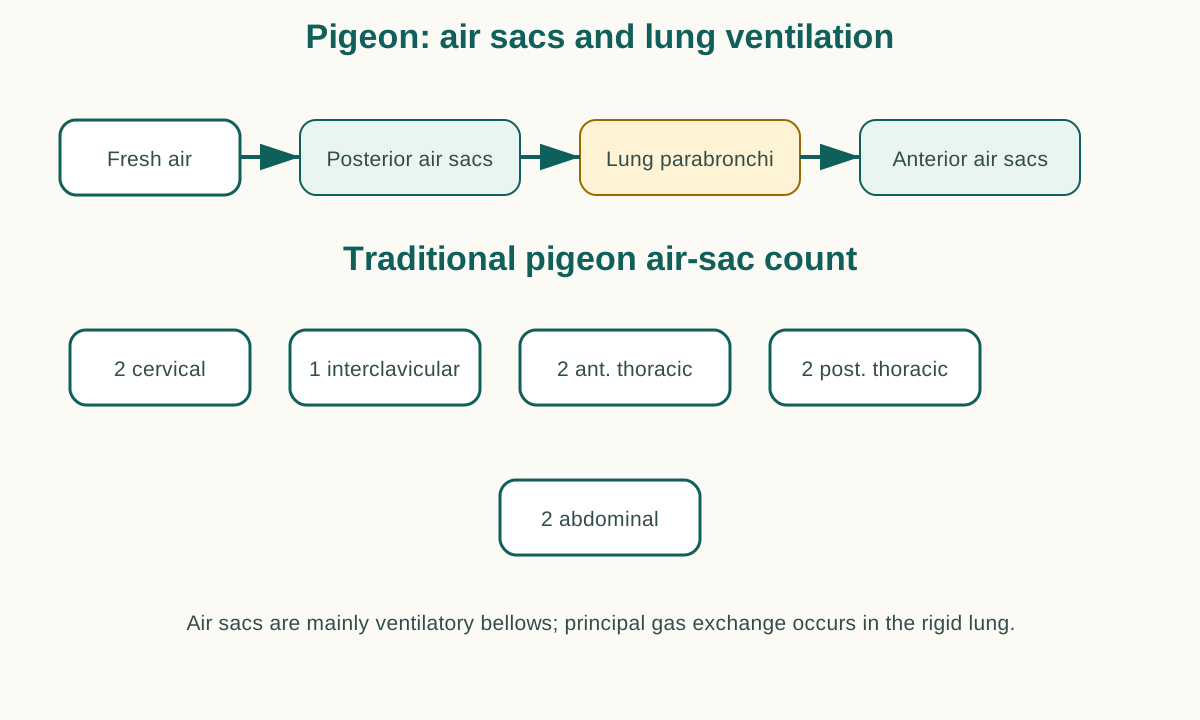
Air sacs mainly ventilate the rigid lungs. Principal gas exchange occurs in pulmonary parabronchi/air capillaries.
5. Two-breath model
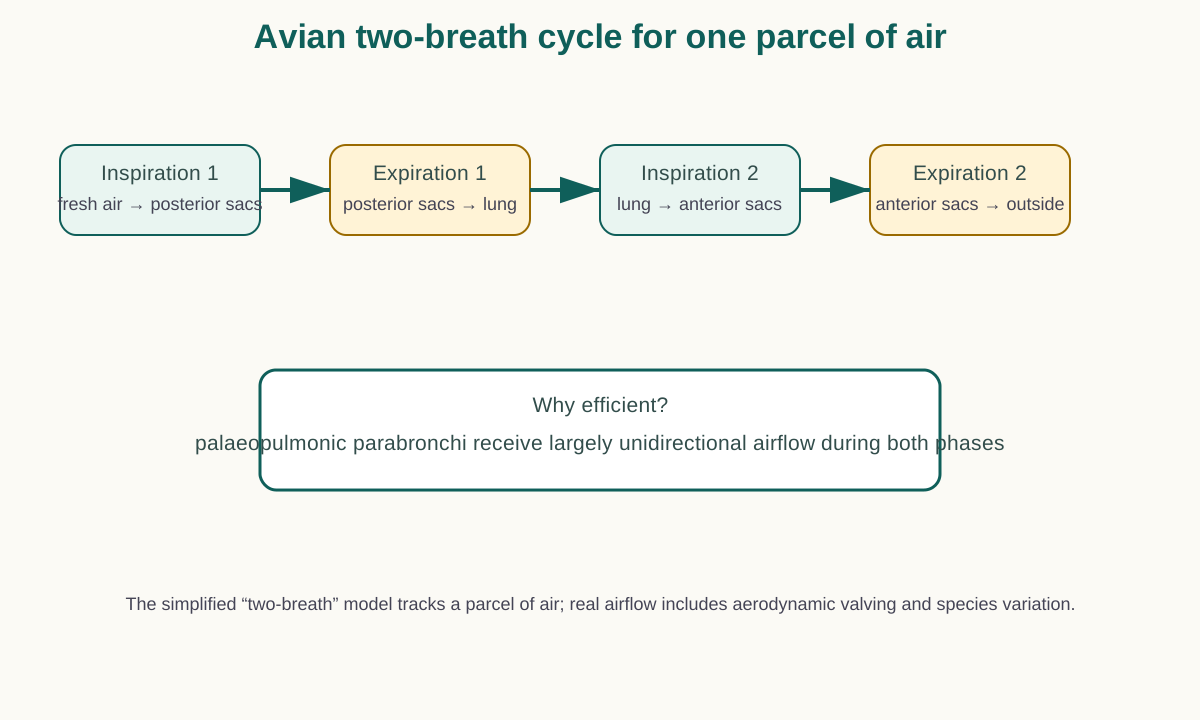
For one parcel of air:
- Inspiration 1 → posterior sacs;
- Expiration 1 → through lungs;
- Inspiration 2 → anterior sacs;
- Expiration 2 → outside.
Palaeopulmonic parabronchi receive largely caudal-to-cranial unidirectional airflow during both breathing phases.
6. Why this system is efficient
- rigid exchange surfaces remain open;
- directional airflow reduces mixing;
- crosscurrent blood flow supports effective gas exchange;
- air sacs maintain ventilation without expanding the lung itself.
7. Circulation and excretion
The heart has four chambers and completely separates pulmonary and systemic blood.
Birds retain the right systemic arch.
Kidneys are metanephric; uric acid conserves water. Most birds, including pigeons, lack a urinary bladder.
8. Reproduction and crop milk
Pigeons are oviparous amniotes with parental incubation.
“Pigeon milk” is a nutrient-rich secretion produced from crop epithelium in both sexes. It is not homologous to mammalian milk.
9. Migration
Migration is repeated, directed, often seasonal movement between regions used for breeding, feeding or seasonal survival.
Major influences include photoperiod, food, climate, endogenous timing and inherited programs.
Navigation can use:
- sun;
- stars;
- geomagnetic cues;
- polarized light;
- landmarks;
- odor;
- learned route memory.
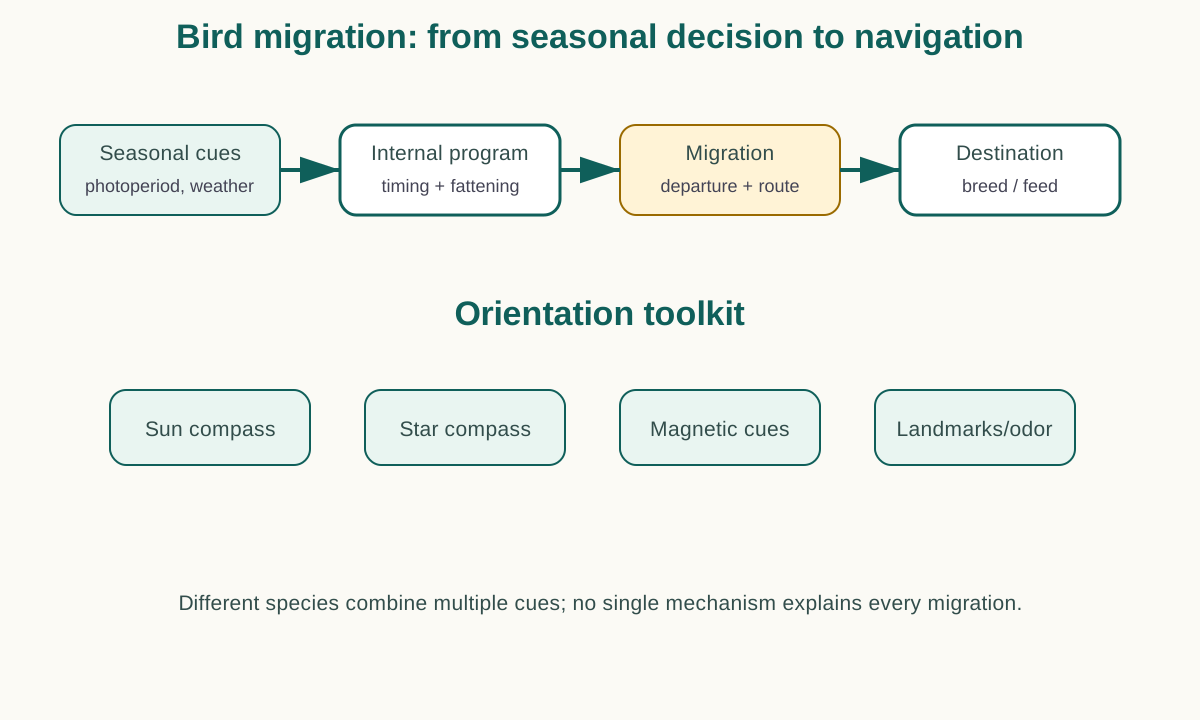
Different species combine cues differently.
10. Archaeopteryx
Archaeopteryx combines feathered wings and a furcula with teeth, a long bony tail and clawed fingers.
Modern interpretation places it within the broader radiation of feathered theropod/early avialan dinosaurs rather than as a simple half-reptile, half-bird organism.
11. Flightless birds
Ostriches, emus, kiwis and penguins demonstrate that current flight ability is not required for avian identity.
12. Section A — one-mark capsule
Pterylosis: arrangement of feathers in tracts.
Pygostyle: fused terminal vertebrae supporting tail feathers.
Pecten: vascular pigmented structure projecting into the avian vitreous body.
Pigeon milk: nutrient-rich crop epithelial secretion.
Main role of air sacs: ventilation of the lungs.
13. Section B — air sacs
Name the nine sacs and explain ventilation, airflow support, weight reduction and heat-dissipation roles.
14. Section C — air sacs
A full answer should distinguish air sacs from the gas-exchange lung, list the sacs, explain the two-breath model and include a labelled diagram.
15. Section C — migration
Define migration, explain causes, types, orientation/navigation mechanisms, energetic preparation and stopover behavior.
16. Common mistakes
- placing major gas exchange in the air sacs;
- saying pigeons have nine pairs of sacs;
- treating migration as random wandering;
- excluding flightless birds from Aves;
- calling Archaeopteryx the direct ancestor of all modern birds.
17. Quick revision
| Concept | Pigeon |
|---|---|
| order | Columbiformes |
| heart | 4 chambers |
| lung | rigid parabronchial |
| air sacs | classical 9 |
| gas exchange | lung |
| systemic arch | right |
| waste | uric acid |
| egg | amniotic |
| migration | multi-cue navigation |
18. Research-backed update notes
Recent reviews confirm unidirectional airflow through the palaeopulmonic parabronchi, with air sacs acting as ventilatory bellows. Migration studies support multiple celestial, magnetic and landscape cues.
References for Course Authors / Verification
- National University Zoology syllabus, paper 223101.
- Recent avian respiratory-system reviews.
- Reviews of avian compass mechanisms.
- IOC World Bird List (2026).
Next Lecture
Lecture 10 — Homo sapiens: mammalian identity, human eye and ear, sensory transduction and special mammal groups.